
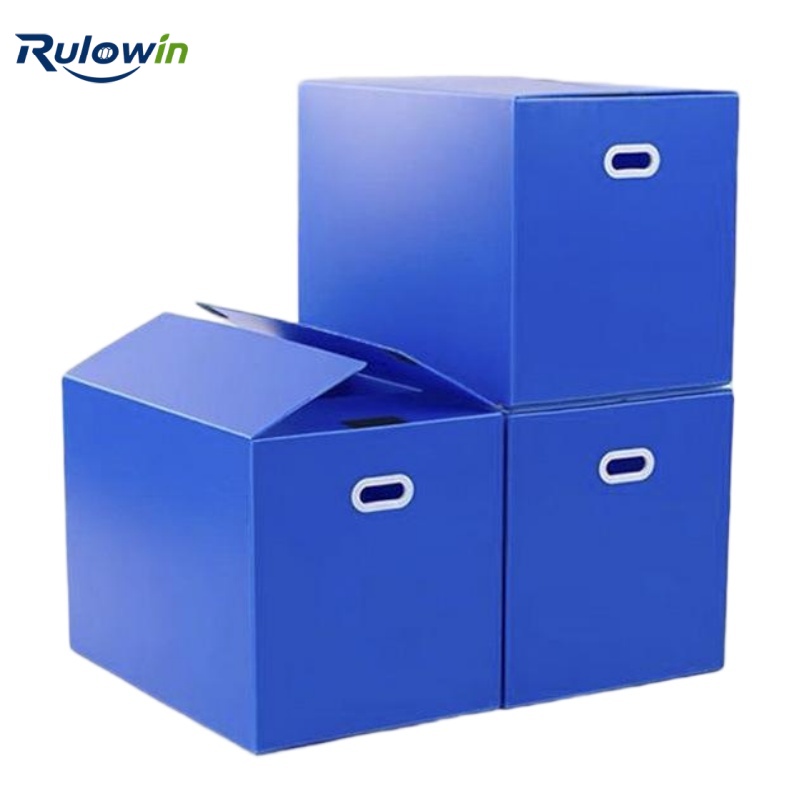
The assumption behind most box enquiries is that a custom size means expensive tooling and a large minimum order. Sometimes true, often not: for corrugated PP boxes the tooling is usually a cutting die and a set of bending or welding jigs, and the minimum order is set by set-up time rather than by anything exotic. Understanding what you are actually paying for makes the decision much easier.
What the tooling actually is
For a standard rectangular box made from flat sheet, the tooling is a die to cut the blank and crease the folds, plus a jig to hold the box while the corners are welded or stitched. That is a modest one-off cost. What pushes it up is special features: a moulded handle, a living hinge, a recessed label panel formed in the sheet. Each of those either adds a tool or adds a process step, and each should be justified by how much it is used.
Minimum order quantity is set by set-up
A production run on a box line has a set-up time – die fitted, jigs set, first articles checked – that is the same whether the run is fifty or five thousand. The supplier amortises that across the run, which is why unit price falls steeply at first and then flattens. Understanding that shape tells you when a larger order is worth it: if the price falls twenty per cent between five hundred and two thousand, and you will need two thousand within a year, ordering them is usually right.
A standard size avoids both
If a standard footprint from the supplier’s existing tooling will do the job, there is no tooling charge and the minimum order is usually much lower. Given that most box applications do not need a bespoke footprint, this is the first question to ask. Bespoke sizing earns its keep for awkward parts and high volumes, not as a default.
Amortise tooling against the fleet, not the first order
If the first order is a trial of two hundred boxes and the fleet will be two thousand, the tooling cost per box on the trial looks enormous and the tooling cost per box across the fleet is small. Ask the supplier to confirm that the tooling is yours and will not be re-charged on the production order. Most will confirm it; asking is how you find out which ones will not. The structure is the same for tooling elsewhere – see tooling, MOQ and lead time.
Trial quantities and how to structure them
A trial order should be big enough to be representative and small enough to be cheap. For a box fleet that usually means between fifty and two hundred boxes: enough to run one loop properly, to put boxes into racking, through a wash and into a stack, and to find the problems that only appear at scale. Fewer than about fifty and the trial does not touch enough of the operation to be meaningful.
Ask the supplier to quote the trial at the production unit price where possible, with the tooling charged separately and credited against the production order. Most will do it, and it prevents the common outcome where a trial is priced so high per unit that the scheme looks uneconomic before it has been tested. Where a supplier will not do that, ask what the production price will be at the full volume and evaluate the scheme on that number, because the trial price is not the number that will apply.
What we can do
We make PP corrugated turnover boxes to standard and custom sizes, and we will tell you upfront which of your requirements trigger tooling and what the minimum run is. Send us the dimensions and the annual volume and we will quote both the standard size that nearly fits and the custom one that fits exactly, with the tooling shown separately.