
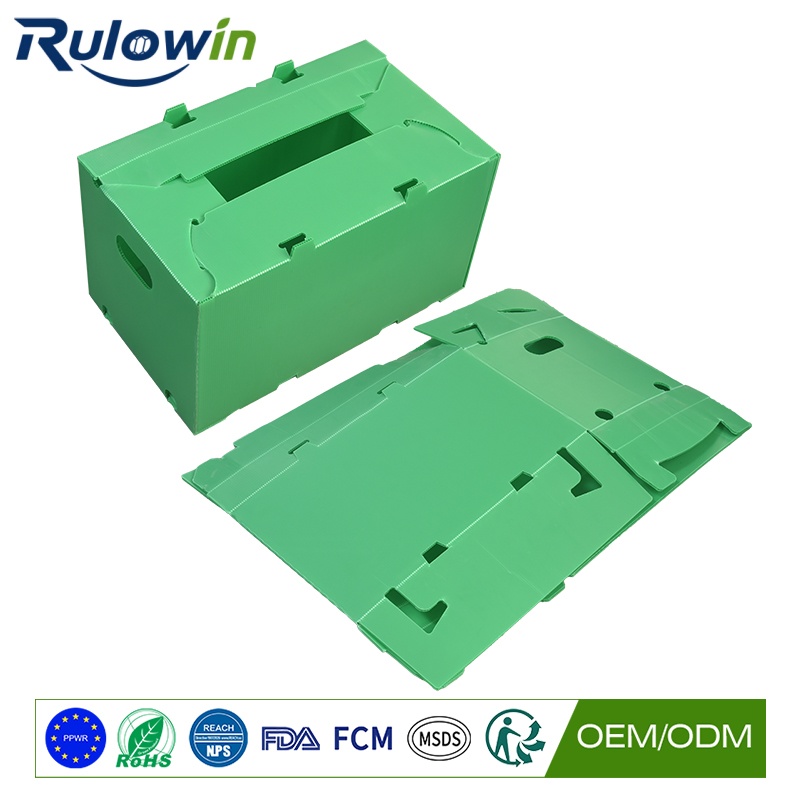
Most crate specifications are written around the produce. The person carrying the crate gets a hand hole and not much else. In a wet field or a wash bay that is where injuries and dropped loads come from, and it is a design question that is settled in the first ten minutes of handling a sample.
What a wet hand hole does
A smooth moulded surface with water on it and a glove on the hand gives very little friction, and a loaded crate is heavy enough that the failure is sudden – the crate goes, the produce goes with it, and the person instinctively grabs. That is the mechanism behind a lot of field packing injuries, and it is also the mechanism behind a lot of bruised produce that gets blamed on something else.
Shape matters more than size
A bigger hole is not the answer if the shape is wrong. What helps is a lip the fingers can get under rather than a slot the fingers slide out of, a radiused edge rather than a sharp one, and enough depth that the hand is not sharing the hole with the crate contents. Crates designed for automated handling often have minimal hand openings, and they are the ones that cause trouble when people have to move them by hand.
Gloves
Wet gloves reduce grip further, and heavy gloves reduce it again. The honest answer is that a crate designed to be carried by a bare hand may not be carryable by a gloved one, and it is worth testing with the gloves the site actually uses. Where cold morning picking means gloves are mandatory, that is a specification input, not an afterthought.
Weight and frequency
Grip failures cluster at the end of a shift and late in the season, which is when people are tired. A crate that is comfortable at 12 kg carried twenty times an hour is a different proposition at 18 kg carried forty times. Where the fill weight is set by the crop rather than the crate, the only lever is the crate design, and it is worth stating the actual repetition rate when specifying.
Secondary handholds
Crates that can be lifted from the base as well as the sides give people an option when the top of a stack is awkward. That matters in a field where crates are stacked three or four high on a trailer and the top one has to come off one-handed. It also matters at the grader infeed, where the same awkward lift happens hundreds of times a day.
Where the crate is not the answer
If the real problem is that people are carrying loaded crates too far, the fix is a trolley, a trailer alongside the row, or a different field layout – not a better hand hole. Packaging design has limits and it is worth saying so. The sizing and layout question is connected to how many crates a fleet actually needs, because the same distance problem drives both.
The two-minute test
Fill a sample crate to working weight, wet it, put on the gloves the site uses, and carry it twenty times. Then try a second design. The difference is obvious within ten carries and it settles a specification question that no datasheet answers.
Do it at the end of a shift if possible, because grip failures cluster with fatigue and a test done fresh in the morning understates the problem. Where the site picks in cold early mornings, do it cold – the combination of cold, wet and gloved is where crates get dropped.
What we can do
We supply produce crates with hand openings shaped for a gloved hand, and we will send samples to carry wet and loaded rather than asking you to judge from a photograph. Tell us the fill weight, the repetition rate and whether gloves are mandatory.