
Printing on protection board is usually requested for three reasons: zone identification, safety messaging, and making the site look deliberate to a client. All three work. What they need is the right face and a realistic expectation of how long the print lasts under traffic.
What prints well
A flat, smooth polypropylene face takes screen print, digital print and applied vinyl reliably. A corrugated or embossed face does not – the surface is uneven and the ink or adhesive only contacts the high points. Where branding matters, specify a flat-faced board for the printed panels and keep the textured face for the walk-on areas where grip is the priority.
Surface preparation matters more than ink
Polypropylene is a low-surface-energy material and most inks and adhesives will not bond to it untreated. Corona or flame treatment at manufacture solves this and it has to be specified – untreated board takes print that wipes off. Ask whether the board is treated, and ask for a rub test on a sample before committing to a run.
How long the print lasts
Under foot traffic, not long. Print on a walking surface abrades off in weeks regardless of the method. Print on vertical surfaces – hoarding, wall protection, signage panels – lasts for years. Setting that expectation is most of the job; the rest is choosing where the printed panels go.
Minimum quantities and setup
Printing has a setup cost and a minimum run, so small quantities of custom print are disproportionately expensive. Where the requirement is a few panels, a cut vinyl letter or a stencil is cheaper and faster. Where it is a full site set, print is the right answer.
What to print and what to stencil
Fixed, repeated messages – a company name, a zone identity, a safety instruction – are worth printing because they appear on every panel. Variable messages – a phase number, a date, a room – are better stencilled or labelled on site because they change. Mixing the two, printing the fixed part and stencilling the variable part, is usually the cheapest combination.
What printing actually costs you
Printing adds a setup charge and a lead time, and it makes the panels harder to sell on or reuse elsewhere once the job ends. Most contractors who print do it for one reason: boards left in a public area get moved, borrowed or thrown away by other trades, and a printed board is visibly somebody’s property. If that is your problem, a single-colour logo is enough. Full-colour artwork across the whole panel costs more and rarely survives the first month of site traffic.
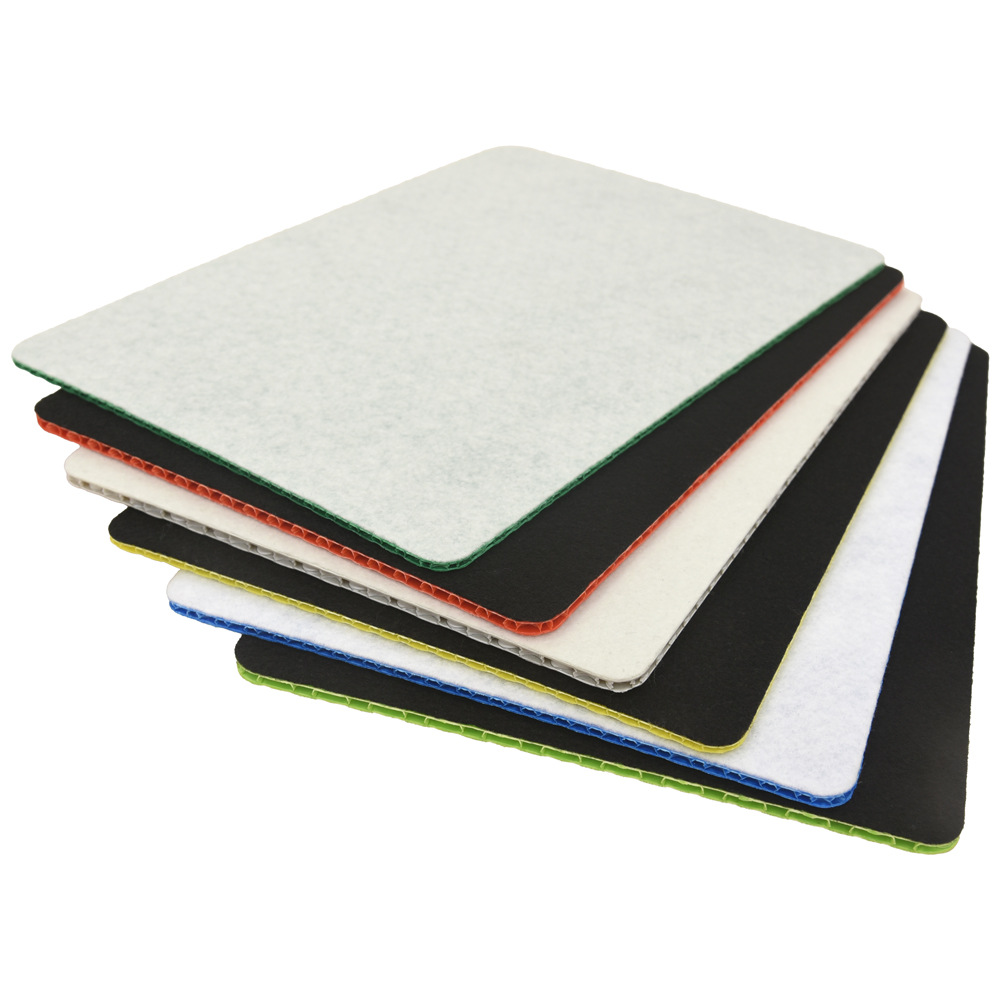
Ask which face can be printed. The felt face takes print poorly; the flat face holds it. If you need the felt face down for grip and the print visible, the artwork has to go on the edge or on a small corner mark, not across the panel. We print to order on the flat face and can keep the felt face untouched. Before you commit, it helps to know what to put in a protection panel specification so the artwork instruction does not get lost between the buyer and the factory.
What we can do
We supply surface-treated PP board ready for printing, and can supply printed panels where the quantity justifies the setup. Tell us what needs printing, where it goes and how long it has to last, and we will say whether print, vinyl or a stencil is the right method.