
A sports hall floor is not a floor covering, it is a performance system: a sprung structure with a timber or synthetic surface engineered to a specified force reduction and deflection. Anything laid on it during works has to spread load without changing how the system behaves, and without holding moisture against a surface that is usually timber.
Point loads are the enemy
A sprung floor distributes load by design, but only up to a limit. A scaffold foot, a scissor lift or a stack of seating concentrates load at a point and can crush the surface or damage the structure underneath. Protection on a sports floor is load spreading above everything else, which means a stiff board rather than a soft one – a soft cover compresses and the load still arrives concentrated.
Moisture and ventilation
Timber sports surfaces expand and contract with humidity, and a sealed cover traps moisture and produces cupping or a bloom on the finish. Any cover on a sports floor has to be breathable at the edges, or lifted and aired periodically. This is the failure that costs the most and it is entirely about ventilation rather than about the board.
What happens during a hall closure
Halls get used for exams, events and storage while works run elsewhere, which means seating, staging and equipment going in and out over the finished floor. Those are the loads that damage it. A defined protected route for equipment, and load-spreading boards wherever anything stands, is the practical answer.
Specifying and buying
Hall refurbishments are usually one-off and short, so reuse economics do not apply and the requirement is a board that spreads load, breathes and lifts cleanly. Ask the floor supplier what they allow – some systems have a stated maximum point load and some specify what may be laid on them, and that overrides everything else.
Where nothing is needed
On a synthetic surface in a hall being re-laid, and in changing rooms and plant areas with hard floors. Sports hall budgets get wasted protecting ancillary areas while the hall itself is under-specified.
What the floor supplier will say
Ask before specifying. Sports floor systems usually have a stated maximum point load and often a stated requirement for what may be laid on them – some prohibit impermeable covers outright because of the moisture risk. That instruction overrides everything else, and it is available in a phone call. On a sprung floor, guessing is expensive.
Sprung floors and point loads
A sports hall floor is usually a sprung timber system designed to deflect under load. That is a problem for protection, because a rigid sheet laid over a sprung floor bridges the deflection and can concentrate load at its edges, and because fixings into the surface are not allowed at all. Protection has to be laid loose and held only at the perimeter.
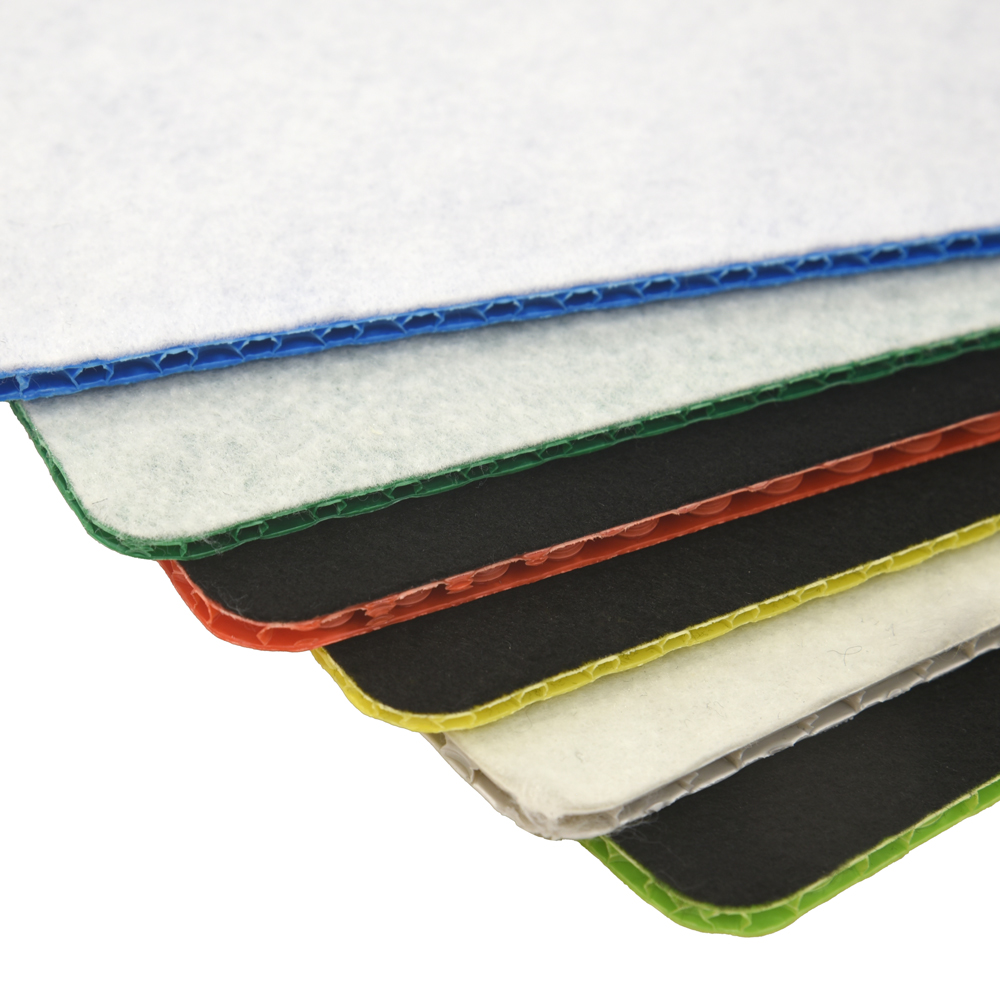
The panels also have to stay put during set-up and breakdown of equipment, which is when a hall gets its worst damage – not from play but from staging, seating and trolleys. A felt face down grips a sealed timber surface without adhesive; a studded face down gives more grip but can mark a soft seal over time, so the choice depends on the finish. Weight matters too: a lightweight panel is easier to lift in and out between bookings, which is what makes reuse realistic. The point-load behaviour is covered in protecting timber sports hall floors from point loads.
What we can do
We supply stiff PP honeycomb board for load spreading on sprung floors, with guidance on ventilation under the cover. Tell us the floor system, what will stand on it and what the supplier allows, and we will recommend a thickness. Timber behaviour under load is covered in protecting timber sports hall floors from point loads.