
An electronics assembly floor is not a normal industrial floor. It is usually a raised access system with an anti-static finish, it costs a great deal per square metre, and it runs continuously – which means whatever protects it during a refit has to work without shutting the line down and without altering the electrical properties of the surface it sits on.
What is actually at risk
Two things. The floor finish, which is a laminate or coating carrying a specified surface resistance, and the floor structure, which is a raised access system designed for distributed loads and not for concentrated ones. A panel rack rolled across a bare raised floor concentrates load at the pedestals and can crack a tile; a server cabinet set down on it does worse. Protection here is mostly load spreading, not scratch protection.
Why the board has to be specified, not picked
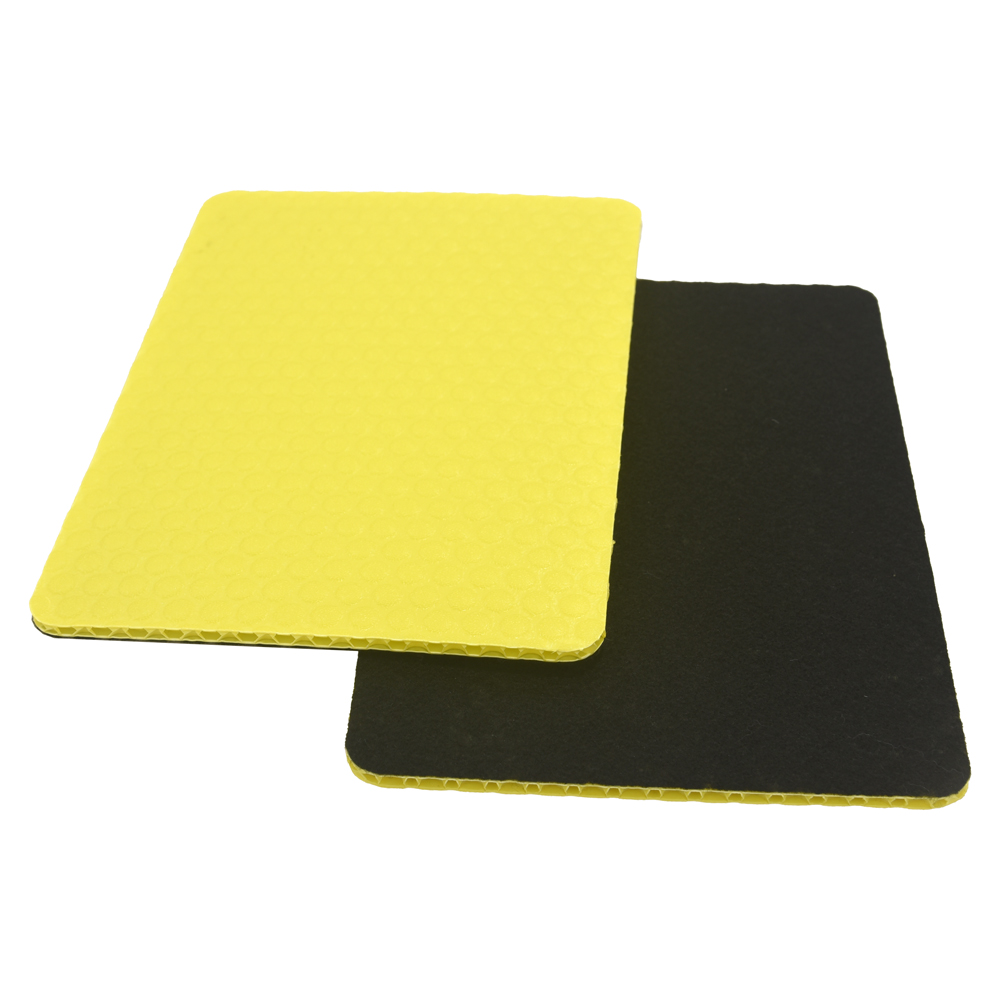
A general-purpose protection board will do the scratch job and fail the load job, because what matters on a raised floor is bending stiffness rather than surface softness. A honeycomb core puts material at the two faces where bending stress is highest, which is exactly the property needed to bridge between pedestals. It is also light, which matters because panels have to be carried up and down and moved repeatedly during a phased refit.
Anti-static behaviour
Standard polypropylene is an insulator, and on a floor where static control is the point, an insulating cover on top changes the picture. Where the process needs the floor’s dissipation to remain effective, the specification has to be an anti-static grade of board with a stated surface resistance, and that has to be on the enquiry rather than assumed. We would rather be asked than have someone discover it after installation.
Procurement notes for this sector
Plant refits are usually phased around production, which means call-off deliveries against a fixed specification rather than one bulk drop. Quantities are measured against the phasing plan, and lead time matters more than unit price because a late panel stops a line. Ask for a stated lead time per call-off and for the panels to be held to a consistent batch, because mixing batches on an anti-static floor can produce visible and electrical inconsistency.
Where the board is the wrong answer
On a solid concrete electronics floor with no static requirement and no raised system, this is an ordinary industrial floor and a cheaper board will do. Specifying an anti-static honeycomb board there is spending money on a property nobody needs. Say what the floor is when you enquire and the answer is usually quick.
Phasing around a live line
Electronics refits are almost always done with production running in the next bay. That means the works are separated by a temporary partition and the protection has to serve both sides: it takes the works traffic without generating dust or debris that migrates into the clean side. A board that is swept clean and does not shed is the requirement, and the partition line is where the effort goes rather than the open floor.
What we can do
We supply PP honeycomb protection board in standard and anti-static grades, cut to the panel size you need, with a stated surface resistance on the anti-static version. Tell us the floor type, the phasing and whether static control applies, and we will quote against that rather than against the area. Load behaviour on raised floors is covered in temporary protection over raised access floors.