
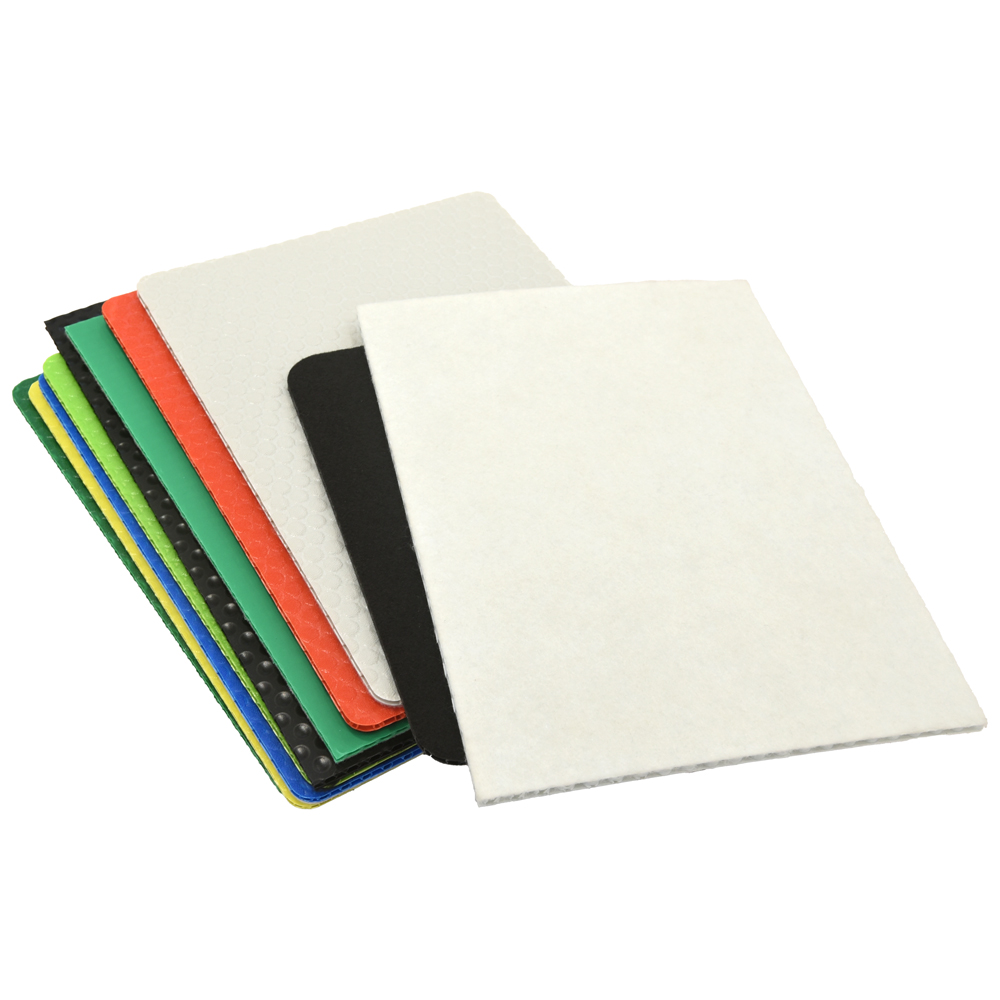
The places protection fails to protect are the places where something comes through the floor: columns, pipework, service risers, conduit, stanchions. On most sites the panels are laid up to the obstruction and stop, leaving an unprotected ring that is simultaneously the hardest area to clean and the one most likely to be hit by whatever is being carried past. Cutting the panel to fit is easy and it is routinely not done.
Why the gap around a column matters
Two reasons. The floor around the base of a column gets the concentrated traffic, because people and trolleys route around the obstruction and the route is narrow. And anything dropped near a column tends to hit the floor right at the base, where the panel is not. A 200 mm unprotected ring around forty columns is a meaningful area of exposed finish in exactly the wrong places.
What can be cut on site
Polypropylene cuts with ordinary tools. A sharp utility knife scores and snaps thinner sheet; a jigsaw with a coarse blade or a circular saw with a fine-tooth blade handles thicker honeycomb panel. The cut edge on honeycomb panel is open cell, which is fine for a notch that butts against a column but needs sealing where the edge is exposed to traffic and water. Cutting is quick, and the dust is minimal compared with cutting timber or MDF on site.
Cut to fit or cut oversize
Two approaches and the right one depends on the obstruction. Cut to fit tightly and the notch sits close around the pipe, which looks better and collects less debris, but it has to be accurate and it cannot be re-used elsewhere. Cut oversize and lap two panels around the column and the job is faster and the panels stay reusable, at the cost of a less tidy detail. On long programmes with reuse planned, the lap is usually right.
Sealing the cut edge
An open honeycomb edge wicks water into the core if it is standing in it, collects grit, and delaminates slowly under traffic. Where a cut edge is in a traffic route or a wet area, seal it – a hot-air weld, an edge tape, or a purpose-made edge trim. Where the notch is tucked against a column and never sees traffic or water, leave it; sealing every cut on a job is wasted labour. Edge behaviour and repair are covered in repairing a crushed honeycomb panel edge.
Tolerances worth knowing
Do not cut to the millimetre. A notch cut exactly to a column diameter will not go on if the column is out of round or if the panel has bowed slightly, and site-cut notches want ten millimetres of clearance plus a gap for whatever the column is wrapped in. Cutting for a pipe needs clearance for the pipe insulation, which is almost always thicker than the spec says.
What to do about pipes that move
A notch cut tightly around pipework that is not yet finally fixed will bind when the pipe is clipped, and it either cracks the panel or gets abandoned. Leave clearance and fill the gap afterwards with a cut collar, or wait until the services are signed off before cutting. On most programmes the second option is available, and it avoids cutting the same panel twice.
What we can do
We supply honeycomb panels cut to size at the factory where the layout is known, with sealed edges where the drawing shows exposed cuts. Tell us what is coming through the floor and where, and we will produce a cutting schedule – or tell you which obstructions are better dealt with by lapping panels on site.