
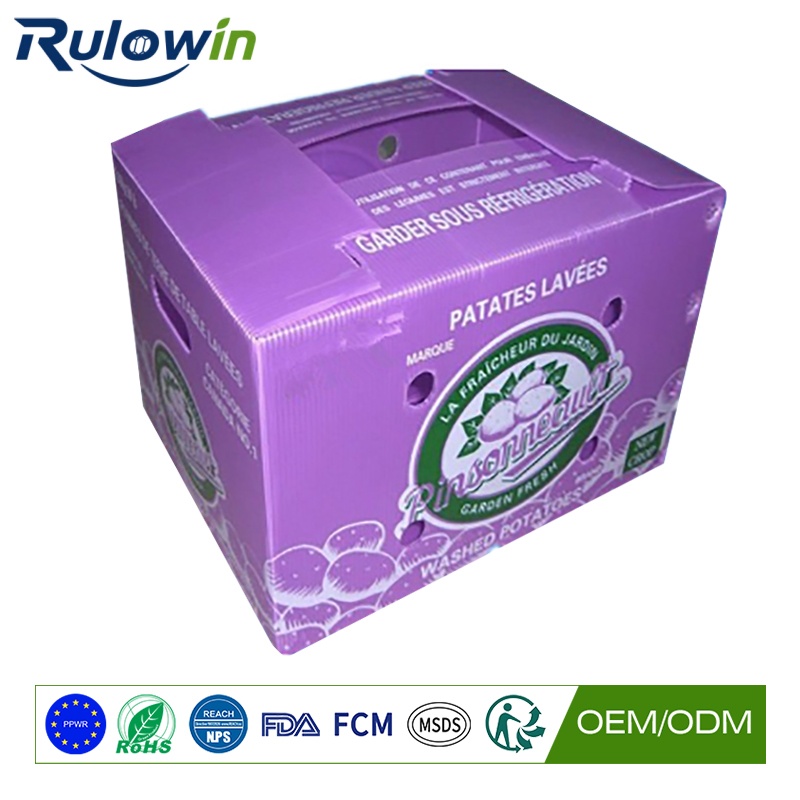
Ask anyone running a seafood operation what kills their crates and the answer is rarely load. It is ice, salt and odour, in that order, and mostly it is what gets missed between trips rather than what happens during them.
Ice is a mechanical load disguised as nothing
A crate of fish and ice is heavy and wet, and the weight arrives as a shifting, partly liquid mass rather than a static stack. That dynamic loading is harder on walls and bases than a heavier but rigid load. Drained meltwater carrying grit adds abrasion at the base.
Crates specified on dry product weight alone tend to fail here. If the fill includes a substantial ice fraction, specify for the wet weight with margin.
Salt attacks everything except the polymer
Polypropylene is essentially unbothered by salt water, which is one reason it replaced a lot of other materials in this industry. What fails instead is anything metal – staples, rivets, springs in handles – and any adhesive-backed component, which lifts in brine.
That points at a simple design rule for seafood: no exposed metal, and closures that are mechanical rather than bonded.
Odour is the real constraint
Returnable crates that carried fish will not pass a smell test after a normal wash unless the process is set up for it. Amines bind to polymer surfaces and to any microscopic damage. Odour also transfers, so a crate that smells of one catch will taint the next product put into it.
Two things help more than detergent changes: drying completely between uses, and keeping the crates ventilated rather than nested solid while stored. Moisture plus trapped air is what develops odour, and that is the same reasoning we used for the more general question of drying crates after washing.
Drainage beats cleaning
A crate that drains completely leaves far less residue than one that holds a few hundred millilitres in a low corner. Check any candidate design by filling it with water and watching where the last of it sits. That puddle is your cleaning problem and your odour source, and it is obvious in ten seconds with a hose.
The hygiene release question
Seafood sites generally need a documented release step, which is six checks done in the same order every time – the structure we set out in the hygiene release checklist. Nothing about it changes for fish except that the smell check carries more weight.
Temperature cycling
Crates move from chilled rooms to ambient docks to blast freezers, repeatedly. Polypropylene handles this well down to ordinary freezer temperatures, but the joints and hardware are the weak points, particularly if they combine different materials with different expansion rates. The polymer copes; the joints do not always. Check suspension points and every joint that combines metal with board twice a year.
Where another material genuinely wins
For iced display and for anything going through a very aggressive alkaline clean daily, some operations prefer moulded HDPE crates with heavier sections. They cost more and they handle abuse better. Where crates are being lost to cracking rather than to the loop, that is often the honest recommendation, and we would give it rather than sell more board.
What we can do
We supply returnable crates for wet, salted product and can specify drainage slots and metal-free construction for seafood work. Tell us your wash temperature, how the crates dry, and how long they sit loaded, and we will say whether the standard grade is enough or whether you need the heavier construction.