
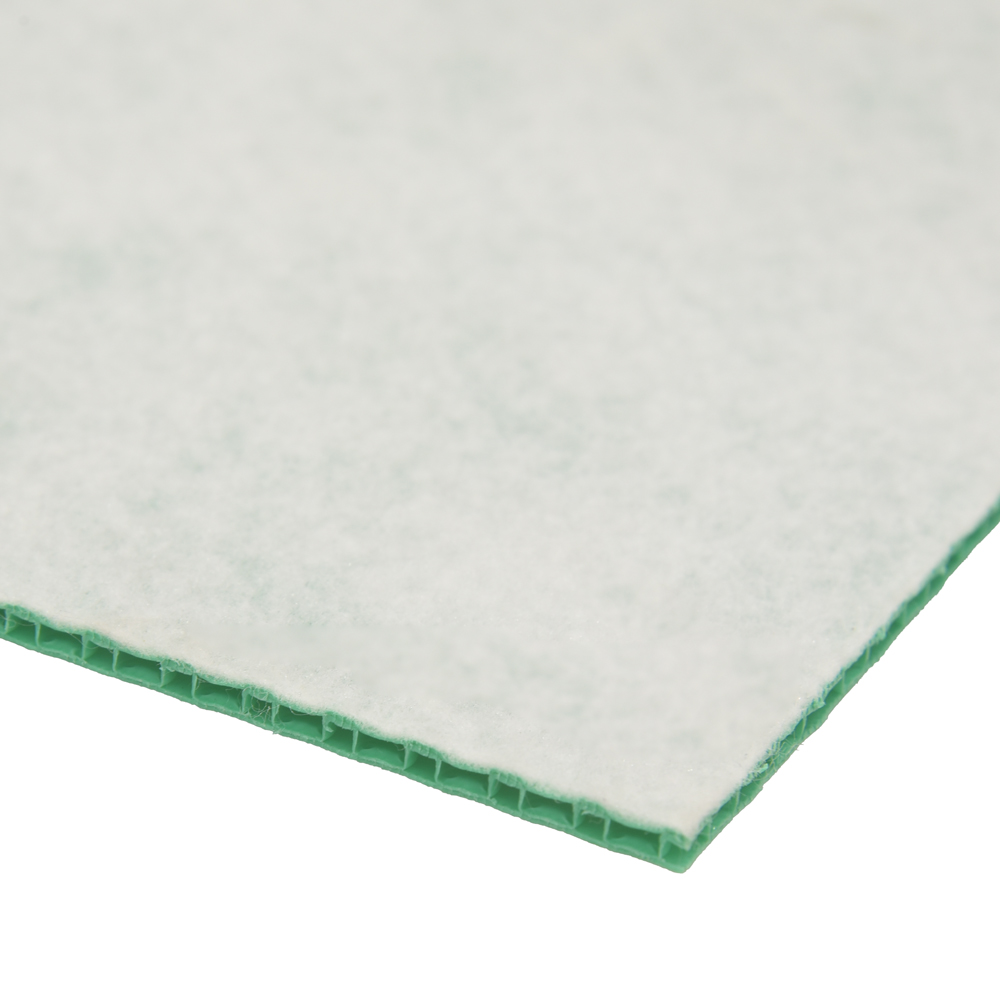
Honeycomb panel offcuts – the trim from cutting panels to size, and panels retired from service – are the most useful waste material in a packaging operation. They are stiff, light, clean, and they cost nothing. Two applications are genuinely good and one is a waste of them.
Good use one: spreading a point load
An offcut laid under something heavy with a small footprint spreads the load across a larger area of whatever is beneath it. Under a machine foot, under a coil, under a concentrated carton stack – it does the job that a layer pad does, for free.
This is the best use because it uses the property the material actually has, which is compressive stiffness.
Good use two: edge protection
A strip of panel along a load edge takes the strap pressure and stops it cutting into cartons. Cut an offcut into strips and you have reusable edge protectors, which are otherwise a consumable you buy.
Panel is better at this than corrugated sheet, because it does not have a flute direction to get wrong – it protects equally whichever way the strip is cut. The comparison is set out in honeycomb panel vs corrugated sheet for pallet liners.
The use that wastes them: gap filling
Stuffing offcuts into voids to stop a load shifting looks like blocking and is not. Loose pieces move, and once they have moved they are doing nothing. Proper blocking is fitted and wedged; offcuts thrown into a gap are just debris.
If you need to fill a void, fit a piece and wedge it, or use a purpose-made void fill. Loose offcuts in a container arrive as a pile on the floor.
Cutting and preparing them
A sharp utility knife or a saw; honeycomb cuts cleanly either way. The exposed cells at the cut edge are the weak point, so for anything load-bearing, seal the edge with tape at minimum. An unsealed offcut used as a pad will crush at the edge first.
What they cannot do
Carry a bending load. An offcut spanning a gap will fold – honeycomb is stiff in compression and weak in bending across a span. If you need to bridge, use something with a section to it, not a flat piece.
And they are not cushioning. A panel does not absorb impact the way foam does; if you need shock absorption, use foam.
Housekeeping
Keep a bin near the cutting area and cut offcuts to a few standard sizes as they arise. Loose irregular offcuts do not get used, because nobody can find one that fits. Standardised offcuts get used constantly.
Offcuts you genuinely cannot use
PP is recyclable and honeycomb panel offcuts are clean, single-material feedstock, which makes them worth more than general waste. Bale them or bag them separately and they find a recycler easily.
What they are not is something to put in a general skip. Clean PP has value and mixed waste does not, and the difference is a separate bin.
Keeping them usable
Store offcuts flat and dry, sorted by rough size. A heap of offcuts on the floor is not a resource, it is a hazard, and it is the reason most operations say offcuts are not worth keeping.
What we can do
We supply PP honeycomb panels and can supply cut-to-size so the offcut volume is smaller in the first place. Tell us what your offcuts are being used for – if the answer is gap filling, we will suggest something better.