
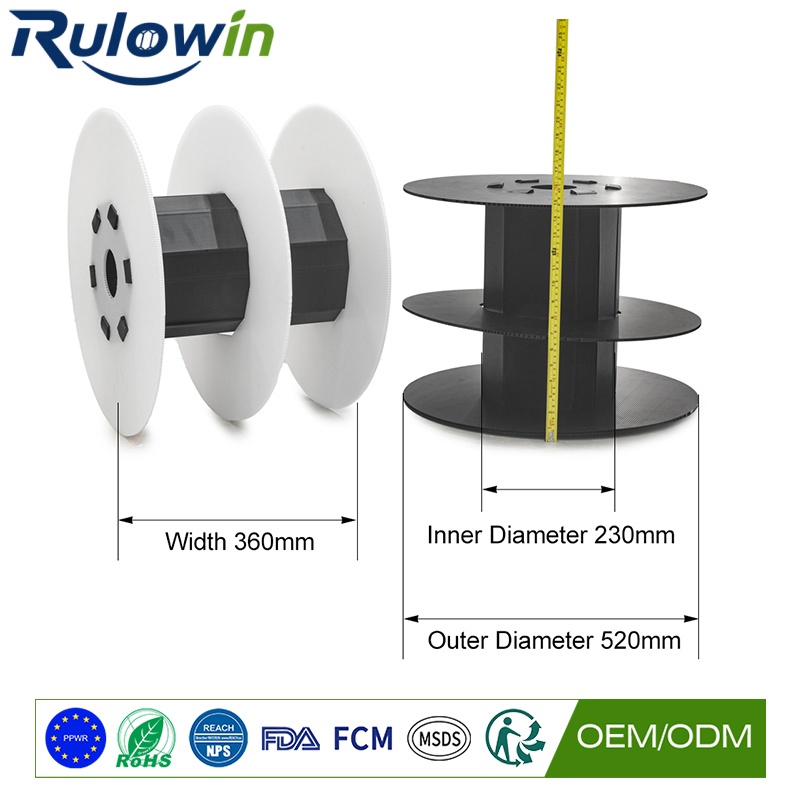
Anyone sourcing fiber cable reels ends up comparing plastic against plywood or wooden drums. The comparison is usually made on unit price, which is the least useful axis. The things that actually differ are weight, consistency, export treatment and what happens at the end of the run.
Weight, and what it costs you
A wooden drum is heavy. That weight is freight, it is handling effort, and on a long haul it is a meaningful share of the cost of getting the cable there. A plastic reel carrying the same length is a good deal lighter.
The counter is that wood is stiffer per unit of material and takes rougher handling. If the reel is going to be dragged, dropped and left in a yard, wood forgives more. If it is going on a truck and onto a payout stand, the weight is pure cost.
Consistency
This is the underrated one. A moulded plastic reel is the same reel every time: same flange diameter, same hub bore, same balance. Wooden drums vary. Bores go out of round, flanges differ slightly, and a drum that wobbles on the payout spindle produces a periodic tension variation that shows up on sensitive cable.
If you are winding very fine fiber or tight-tolerance drop cable, consistency is worth more than it appears on a spreadsheet.
Export and treatment
Wood moving between countries needs to be treated and stamped under ISPM 15. That is a process, a document and occasionally a delay at a border. Plastic does not need any of it. For anyone shipping reels across several borders, this is often the deciding factor, and it is a paperwork cost rather than a material cost – which is why it gets missed in comparisons.
End of life
Plastic reels can be returned, cleaned and rewound, which is where the economics get interesting. Wooden drums can be reused too, but they accumulate damage faster and a damaged drum is a disposal problem. We went into the reuse question for plastic in can plastic cable reels be reused.
Where neither comes back, the honest comparison is different again, and it usually favours whatever is cheaper to dispose of locally.
Where wood still wins
Very large diameters, very heavy cable, and outdoor storage measured in months. Wood takes ultraviolet and long-term weathering better than polypropylene, which will chalk and embrittle in sun unless it is stabilised. A big outdoor drum yard is still a wood application.
Repair, and what happens at the end
A damaged wooden drum can often be repaired – a new board, a re-nailed flange – with ordinary tools. A cracked plastic flange generally cannot be repaired in any way worth doing, because the crack is at the point of highest stress and any repair is weaker than the original section.
At end of life the positions reverse. Polypropylene is a single material and is recyclable where a collection exists. Treated wood cannot go into ordinary wood waste in many places, and a drum that has been treated is a disposal item rather than a recyclable one.
If your reels get damaged and repaired locally, wood has an advantage. If they get scrapped, plastic usually does.
What we can do
We supply export-grade plastic fiber optic cable reels and we will quote against wooden drums, including the freight difference. Tell us the cable diameter, length per reel, and whether reels come back, and we will tell you which way it falls – including when wood is the right answer.