
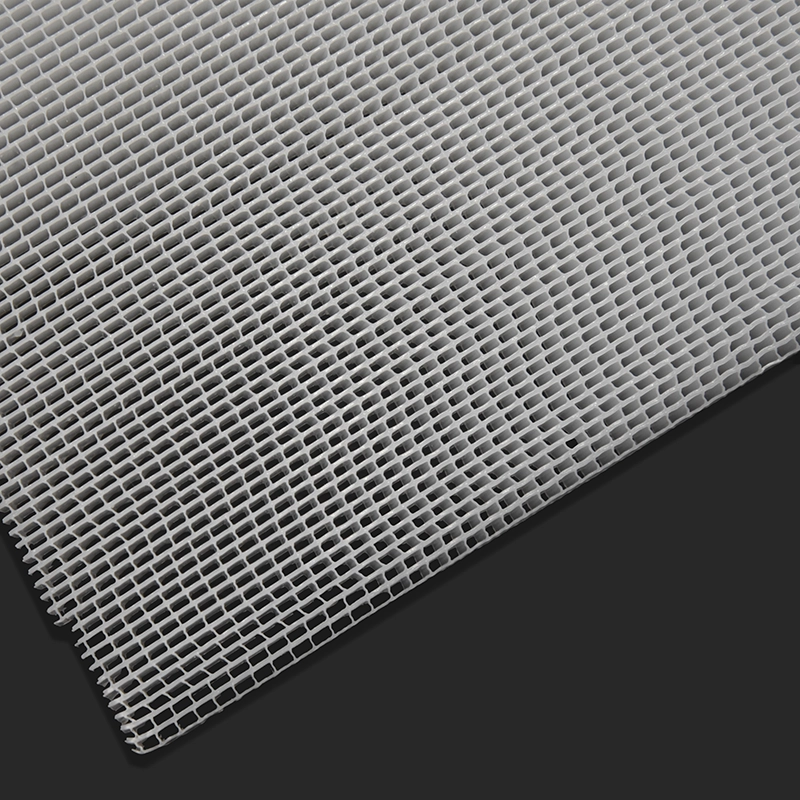
Two environments end conventional air filters early: coastal air with chloride in it, and process air carrying chemical vapour. In both, the failure is corrosion or chemical attack rather than loading, and in both the filter usually looks serviceable until it has already failed.
Coastal air
Chloride in salt-laden air attacks galvanised mesh and, in the right conditions, stainless steel as well. A galvanised intake screen a few hundred metres from the sea will rust within a couple of years; the rust then sheds into the air stream, which means the filter becomes a source of the contamination it was fitted to stop.
The structural failure follows the cosmetic one. Rusted mesh loses section, and the thin wire of a coarse screen does not have much to lose. Panels tear at the frame, and a torn panel bypasses.
Chemical environments
Acid and alkali vapour, solvent vapour in some processes, and ammonia in agricultural buildings. Paper media and many metals do poorly in all of these. Polypropylene is broadly resistant to dilute acids and alkalis at ambient temperature, which is the reason it is specified in these places rather than because it is cheap.
The caveat worth stating: resistance is chemical-specific and concentration-dependent. Polypropylene is not resistant to everything, and a solvent that is fine in trace amounts may attack it at process concentration. Check the specific exposure rather than assuming.
What changes in service
Screens stop being replaced because of corrosion and start being washed because of loading, which is a different maintenance profile entirely. The service interval becomes a function of dust rather than of what the air is doing to the material.
The inspection changes too. Instead of looking for rust, look for mechanical damage and for loading that will not wash out. Both are slower to develop than corrosion, so the interval between replacements lengthens substantially.
How far inland this matters
Salt does not stop at the shoreline. Chloride deposition falls off with distance but remains significant several kilometres inland depending on wind, and the practical rule is that any site with a salt-laden onshore wind has some exposure. Where a plant is within sight of the sea, assume it.
Inland sources exist too: some industrial processes, road de-icing salt on nearby routes, and certain agricultural chemicals. A screen failing without visible loading is worth investigating for chemical exposure even a long way from the coast.
What to ask the material supplier
Ask about the specific chemicals present, not about “chemical resistance” in general – that question has no useful answer. Provide what you know about concentration and temperature, and expect a conditional answer where the data is thin.
Polypropylene is broadly resistant to dilute acids and alkalis at ambient temperature and is attacked by some solvents and oxidising agents. Where the exposure is uncertain, a sample immersed in the actual fluid for a week answers the question more reliably than any datasheet.
Washing in aggressive environments
Salt deposits rinse off readily, which is convenient – a coastal screen often needs nothing more than water. Chemical deposits vary: some rinse, some need a specific cleaner, and a few are best left in place and the screen retired.
Where a deposit does not come off with water and detergent, find out what it is before reaching for a stronger solvent. A solvent that attacks polypropylene will do more damage in one wash than a season of exposure did.
What we can do
We supply corrosion-resistant PP honeycomb air filter media for coastal, chemical and agricultural duty. Tell us what the air actually carries – including approximate concentrations if you have them – and we will confirm suitability rather than assume it.