
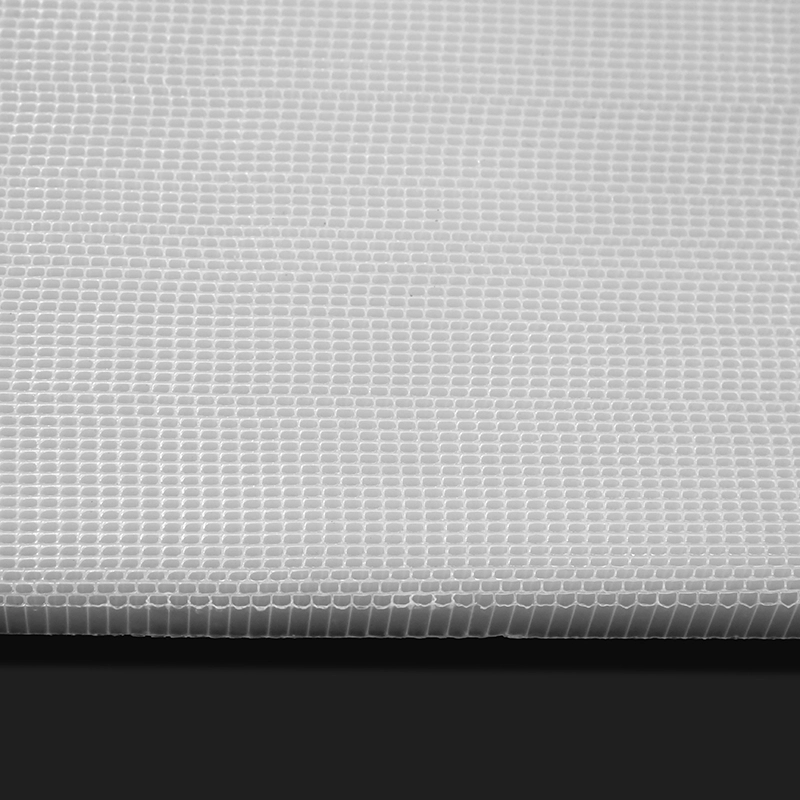
Filtration in food and beverage processing has the same mechanical requirements as anywhere else – the right aperture, the right open area, the right strength – plus two more that override everything else when they conflict.
The two additional requirements
Cleanability to a demonstrable standard. Not just visually clean. The screen has to be cleanable by a documented procedure to a standard you can show, because it is in contact with product or with a product stream.
Design that does not harbour. No crevices, no absorbent parts, no joints that hold residue, and no surfaces that cannot be reached by the cleaning method.
These interact with normal screen selection. A screen with the ideal open area that has a crevice at the frame fails the second requirement and is therefore the wrong screen, whatever its flow performance.
What this means for construction
- Welded or overmoulded frames rather than mechanically clamped ones, because clamping creates a crevice. This is the single most consequential choice in food service.
- Smooth surfaces with no recesses or blind pockets.
- No absorbent components anywhere in the assembly.
- Seals that can be removed and replaced, and a seat that can be inspected and cleaned.
- Materials that tolerate the cleaning chemistry, which in food environments is often caustic at temperature.
The cleaning regime is the hardest condition
A screen in a food plant may see more aggressive conditions in cleaning than in production. Caustic wash at elevated temperature, possibly an acid rinse, possibly an oxidising sanitiser. Each of these attacks materials, and they attack some of them quickly.
The practical implication is that the cleaning regime should be specified as part of the duty. Tell the supplier what the screen is cleaned with, at what concentration and temperature, and how often. A screen selected only against the process fluid may fail in the wash.
Verification, not assumption
Where the screen is part of a food safety system, being able to show that it can be cleaned matters as much as it being clean. That means a documented procedure, a defined interval, and verification – visual inspection, and periodic swabbing or rinsing where the risk justifies it.
It is much easier to build this around a screen designed for it. A welded, smooth, crevice-free screen with removable seals can be cleaned by a procedure and inspected; a clamped assembly with a crevice cannot be verified with any confidence.
Where screens are used
Common applications include protecting spray nozzles and heat exchangers, pre-filtration ahead of finer stages, product recovery, and protecting pumps and valves from particulates. In each case the role is protective, and the cost of a screen failure is often a production stoppage rather than a product quality issue.
That matters for the interval calculation. A screen protecting a nozzle that blocks during a production run is worth changing more often than its purchase price suggests.
Practical recommendations
- Specify welded construction in food contact service, and accept the cost.
- State the cleaning regime alongside the process conditions.
- Record the clean differential so the interval can be managed rather than guessed.
- Inspect at every change-out and record what was found, because the trend is what tells you whether the regime is working.
- Keep the spares clean. A screen stored in a dusty workshop is not a hygienic spare.
What we can do
We supply PP filter screens with welded or overmoulded frames and removable seals, which is the construction food and beverage duty usually needs. Tell us the stream, the cleaning regime and the temperature, and we will tell you what the screen should be – including where a different polymer is the honest answer.