
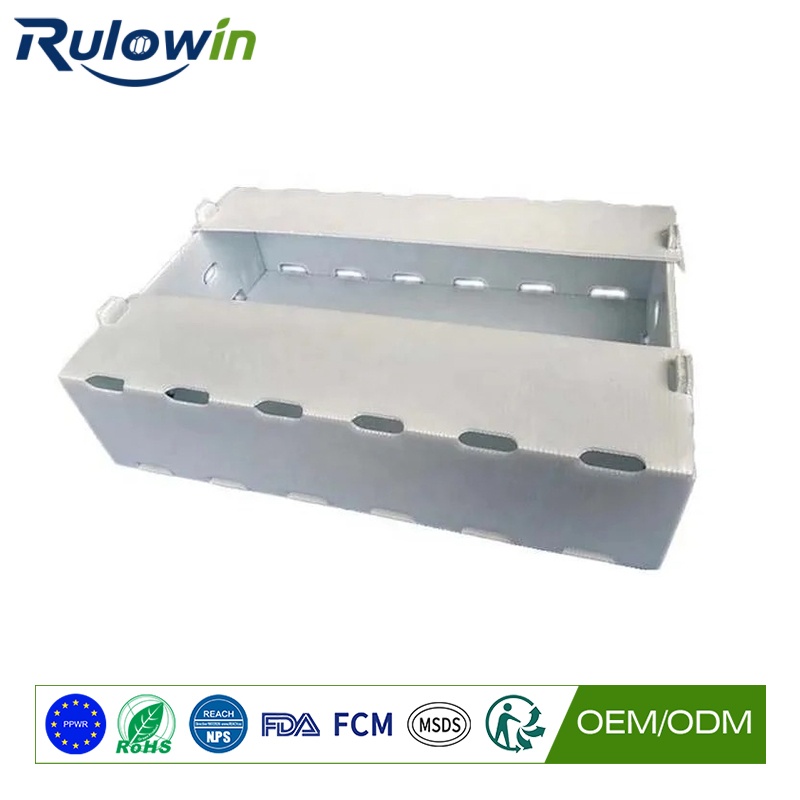
Reusable produce boxes are designed around the product, and for a lot of products that means a liner or a pad as well. These are cheap, easily overlooked, and frequently the reason a crate that should work does not.
What a liner or pad is for
- Cushioning. Board against board transfers impact; a pad absorbs some of it. Relevant for soft fruit and for anything bruising-sensitive.
- Moisture management. A pad can absorb or channel away surface moisture rather than letting it sit against the product.
- Separation. Between layers, or between products that would mark each other.
- Small-product containment. A liner lets a crate hold loose small items that would otherwise fall through vents or gaps.
- Hygiene. A removable liner can be replaced or washed more often than the crate, which matters for high-risk products.
The absorbent trap
The instinct for moisture is to use an absorbent material – felt, paper, foam. In a reusable crate this is usually a mistake.
Absorbent material holds water, and a damp liner against produce is worse than a damp crate surface because it stays wet longer and concentrates the moisture exactly where the product is. In a food environment it also becomes a cleaning problem: you cannot wash the inside of a felt pad, and it will not dry reliably between uses.
If moisture is the issue, the better answers are usually drainage in the crate, ventilation, or a non-absorbent drainage mat rather than an absorbent one.
Choosing a liner material
- Board liners. Cheap, rigid, cleanable, and can be replaced cheaply. Good for separation and containment. Not absorbent and not a cushion.
- Closed-cell foam or sheet. Cushioning without absorbing water. More expensive and needs replacing when it degrades.
- Non-woven drainage mat. Channels moisture away rather than holding it. The right choice where surface water is the problem.
- Solid sheet liner. Impermeable, easy to clean, useful where a crate has vents the product should not pass through.
Design points that matter
Fit. A liner that does not stay in place is a liner that ends up at one end of the crate. It should locate positively on the crate’s own geometry.
Cleanability. Whatever the material, it has to be cleanable or replaceable. A liner that cannot be cleaned is a contamination risk that the crate itself was designed to avoid.
Drainage. A liner under the product should not block the crate’s drainage. If it does, water pools on it.
Removal. If the liner is meant to be removed for washing, make sure it can be, by hand, quickly. Liners that are fiddly get left in.
Disposal or return. Decide at the start whether the liner is reusable or consumable, because it changes the choice completely. Consumable liners in a reusable crate are perfectly reasonable – they just need to be counted in the cost per trip.
The cost question
A liner adds cost on every trip if it is consumable, or adds a cleaning step if it is reusable. Both are real and both are usually small – which is why liners get added without much thought and then not revisited.
It is worth checking occasionally whether the liner is still needed. Products change, crate drainage improves, and a liner specified for an earlier requirement can end up as pure cost.
What we can do
We supply produce boxes and can supply board liners, drainage mats and pads sized to the crate. Tell us what the liner is for – cushioning, moisture, separation or containment – and we will recommend the right one. If your issue is moisture, we would rather fix the crate’s drainage than sell you something absorbent to sit in it.