
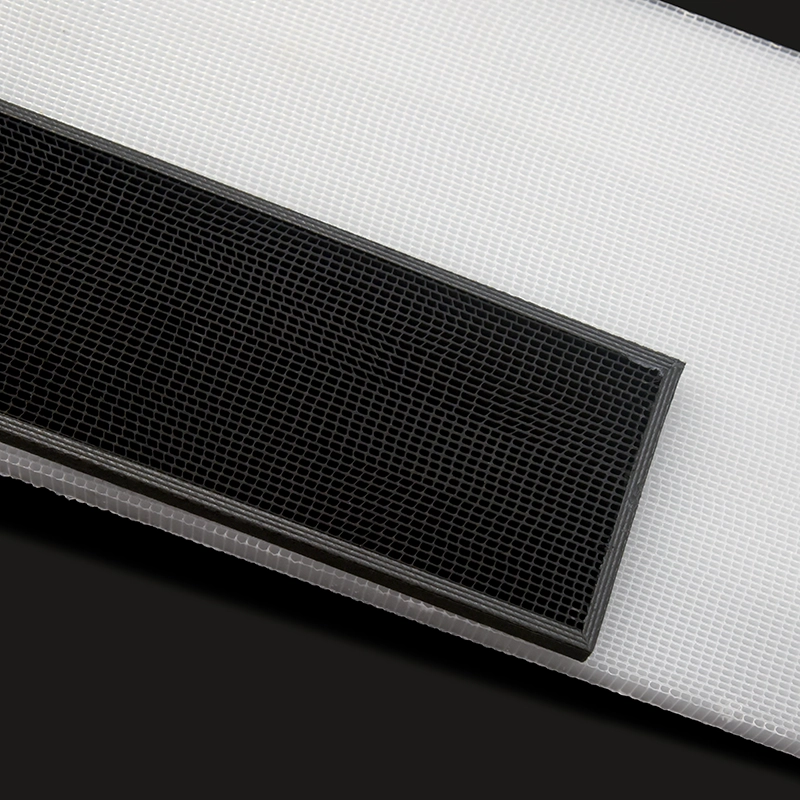
When a filter blinds quickly, the response is usually to question the screen. More often the problem is that one screen is being asked to do two jobs: remove the bulk contamination and provide the fine separation. Those are different duties and they want different stages.
Why staging works
A screen’s life is set by how fast its open area closes. If all the contamination arrives at a fine screen, the coarse fraction – which a much cheaper screen could have caught – immediately occupies a large share of the fine apertures.
Put a coarse stage in front and the fine screen only sees what passes it. Its loading drops sharply, its life extends disproportionately, and the coarse screen is cheap to clean or replace.
The principle is that each stage should remove the fraction that would most rapidly blind the stage behind it.
How to set the stages
- Stage 1 – protective. Coarse, high open area, cheap, designed to be cleaned often and to pass the bulk. Its job is protecting what follows.
- Stage 2 – main. The separation that the process actually needs. This is where the specification matters and where the money should be spent.
- Stage 3 – polishing. Optional. Where the process needs a finer final result, or where a downstream component is sensitive. Usually the smallest and most expensive stage and the one that benefits most from having clean feed.
Two stages solve most problems. Three is worth it where the final requirement is fine and there is a lot of coarse contamination.
What the front stage should be
Usually coarser than people expect – significantly coarser than the main screen, not marginally so. A front stage that is only slightly coarser than the main one does not remove much of the blinding fraction and simply adds a pressure drop.
It should also have a much higher open area, so it can hold a lot before it restricts flow, and be cheap enough that cleaning or replacing it is not a decision.
The costs and the trade-offs
- Added pressure drop across the extra stage, which is a permanent energy cost.
- More housings, more seals, more spares to hold.
- More maintenance events, though each one is easier and cheaper.
- More failure points, since every housing is a potential bypass path.
The trade is worth making when the fine screen is being changed frequently or when a screen failure stops production. It is not worth making when the fine screen already runs a comfortable interval, because then the extra stage is pure cost.
How to tell whether you need it
Look at what comes off the fine screen. If a significant part of the deposit is material that a much coarser screen would have caught, staging will help. If the deposit is genuinely near the aperture size of the screen, a front stage will not help at all and the answer lies elsewhere – upstream process change, or accepting a shorter interval.
That distinction is worth ten minutes with a sample before spending money on housings.
Where the screen sits in the system
Position matters as much as staging. A screen placed immediately upstream of the equipment it protects will catch everything the pipework delivers; the same screen placed at the pump discharge may already be protected by the pump’s own strainer. Mapping what is already in the system usually reveals a stage nobody counted.
What we can do
We supply PP filter screens across a range of apertures and open areas, so a staged arrangement can be built from standard products rather than specials. Send us what you are currently removing and how often you change it, and we will tell you whether staging would help – and what the front stage should be.