
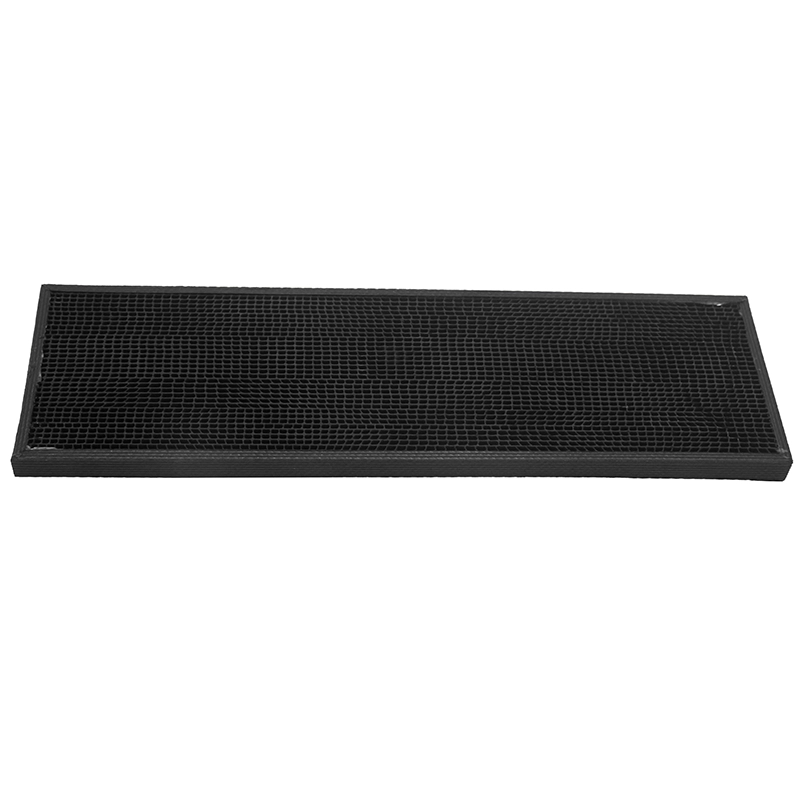
A screen that fails in its first week is usually not a defective screen. It is a screen that was fitted with a fold in the seal, over-tightened, or put in backwards. These are installation issues and they are the cheapest failures to prevent.
Seating
The seal has to sit fully and evenly in its groove or on its seat. Partially seated, it works for a while and then bypasses – and bypass is the failure mode that does not look like a failure, because flow stays good and the screen simply stops filtering.
Two practical checks. Look at the seal before closing the housing: no twists, no folds, no debris trapped under it. And after closing, check that the housing halves or the retaining ring have gone together evenly – if there is a gap on one side, the seal is not seated.
Clean the seat before fitting. A particle under the seal holds it off the seat, and that is enough to create a path.
Torque
Over-tightening is more common than under-tightening and does more damage. It crushes the seal, which deforms it permanently and reduces its ability to seal the next time. It also distorts the frame, which can change the geometry of the screen and put the mesh into uneven tension.
The right torque is the one the housing and seal are designed for. Where it is not documented, tighten evenly and progressively – the same pattern you would use for a cylinder head, working around the fastener sequence rather than tightening each one fully in turn. Uneven tightening is what bends a frame.
Where the seal is a compression type, it needs to be compressed by a defined amount rather than tightened until it stops. A feel for this varies between people, which is why a torque figure is worth having.
Direction
Most screens have a flow direction and some have a defined upstream face. Getting it wrong means the screen is loaded in a way it was not designed for, and it deforms or fails earlier than it should.
Where the screen is supported on one side only, the support must be on the downstream side – the screen should be pressed onto its support by the flow, not lifted off it. Fitting it the other way means the differential pressure is trying to push the screen away from its structure.
If the screen can be backwashed, both directions have to be considered and the frame should be specified for reverse load. If it was not, backwashing will eventually deform it.
Before the housing is closed
- Seal clean and correctly seated, no twists or trapped debris.
- Screen the right way round relative to flow and support.
- Housing seat clean – a scored or corroded seat will not seal whatever you do.
- Fasteners lubricated if the housing sees heat or a corrosive environment.
- Record the clean differential pressure at start-up. Without a baseline, you cannot tell later whether the screen is fouling.
The baseline is the important part
Record the differential across the screen when it is new and clean, at a known flow and temperature. That reading is the reference for everything afterwards – it tells you when to change the screen, and it tells you if a replacement batch is different from the last one.
Operations that skip this end up changing screens on a calendar, which is the least efficient way to do it.
A correctly orientated screen still leaks past itself if the housing seal is wrong, which is the subject of our article on seals and bypass paths.
What we can do
We supply PP filter screens with the flow direction marked and, where relevant, the support side identified. Tell us the housing and the flow and we will confirm the correct orientation – and if your screens are failing early, send us one and a photograph of the housing. Where it failed usually tells us whether it was the screen or the fitting.