
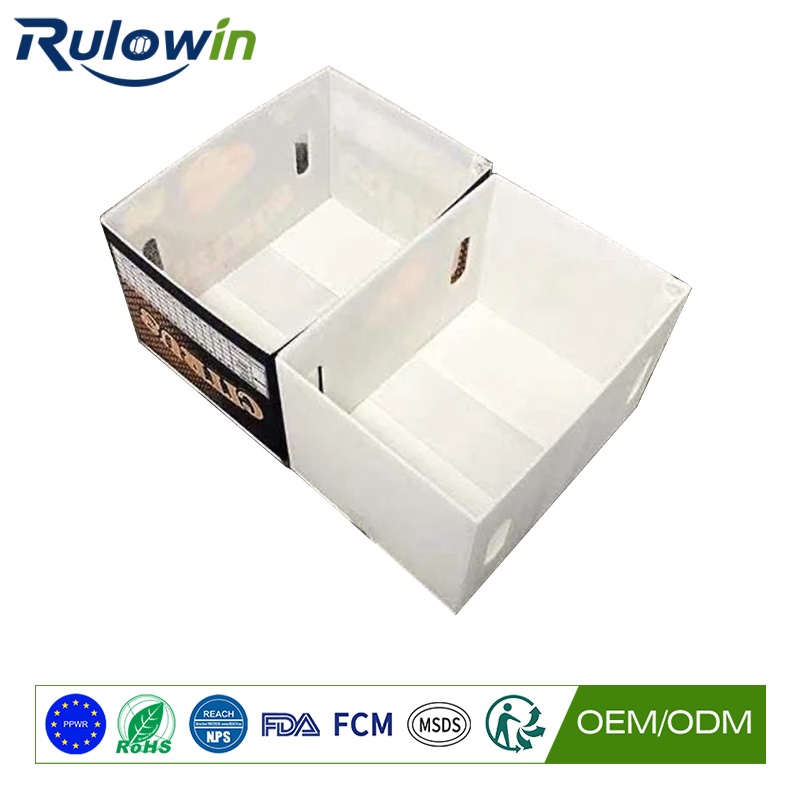
Reusable crates get damaged, and the response is usually either “fix it” or “scrap it” applied inconsistently. A written rule sorts the two, saves the repairs worth doing, and – more importantly – keeps the repairs that create risk out of circulation.
What can be repaired soundly
- Cracked or split walls, where the material is all present, can be welded.
- A lifted edge seal can be re-welded if the substrate is sound.
- Worn identification can be re-marked, if the method allows it.
- A bent or distorted hinge on a folding crate can sometimes be re-formed if it has not cracked.
What should not be repaired
- A split base. Load-bearing, hard to weld properly, and failure drops the contents. Retire it.
- Anything repaired with tape, wire or a non-compatible adhesive. These are foreign body risks and they fail unpredictably.
- Cracks that have whitened or propagated – the material is already embrittled and the repair will be short-lived.
- Anything with damage in more than a small area. The repair will cost more than the remaining life justifies.
- Anything in direct food contact with a repair that could trap soil. A weld is fine; a patch with a crevice is not.
The economics
A repair is worth doing when the repaired crate has enough remaining life to justify the labour. That comparison needs an estimate of remaining life, which comes from the fleet’s age profile and its observed failure rate.
The calculation changes with the type of damage. Welding a cracked wall is quick and extends life substantially, so it is usually worth doing. Rebuilding a crate with several repairs attempts is slow, produces an uncertain result, and is usually not.
Repair quality matters more than repair rate
A badly welded crate is worse than a scrapped one, because it goes back into circulation carrying the appearance of being sound. Every repair should be inspected against the same criteria as a new crate before it returns to service.
The repair method matters too. A weld makes the joint the same material as the crate. A patch or a tape does not, and in a wash environment it will fail within a few cycles.
Making the rule work
- One page, with photographs. Repair or retire, decided by damage type. Photographs remove the judgement calls.
- A physical location. Damaged crates go to a defined place. Otherwise they stay in circulation.
- One person accountable. Not a committee, and not everyone.
- A log, briefly. How many repaired, how many retired, and the reasons. That data tells you whether the rule is right and whether the fleet is ageing.
When repair stops being the answer
If the repair rate is climbing, the fleet is old and the right response is a replacement programme rather than more repair capacity. Rising repair volume is an early signal, and it is much cheaper to act on than to discover when the fleet fails in the middle of a harvest.
The costs that do not appear on the repair invoice
Comparing a repair quote with the price of a new box is the easy part, and it is rarely where the decision should stop. Four costs sit outside that comparison.
In and out. Collecting damaged boxes, holding them, moving them to whoever repairs them, and returning them to service occupies space and handling time. On a large site this exceeds the repair cost itself more often than people expect.
Queue time. A repair turnaround of a week means the stock is not available, which means you need more boxes in the pool to cover it. That is a real cost and it belongs in the comparison.
Repair failure. A welded corner that was originally fused in a fixture by machine rarely comes back to full strength from a hand repair. Assume a repaired box has less remaining life than its share of the original, and if it fails again in the same place you have paid twice.
Administration. Each repair is an inspection, a decision and a record. Multiplied across thousands of boxes, the paperwork has its own labour cost.
A working rule: repair when the cost is under about a third of new, the damage is a single clean failure rather than general fatigue, and the box has more than a third of its expected life left. Beyond that, replacement is usually cheaper once the handling is counted – even though it looks worse on a per-item basis.
What we can do
We supply produce boxes with welded construction that can be properly repaired, and we are happy to help write a repair-or-retire rule for your fleet – including photographs of the damage types we see most often. Tell us the age profile and we will tell you whether you are in repair territory or replacement territory.