
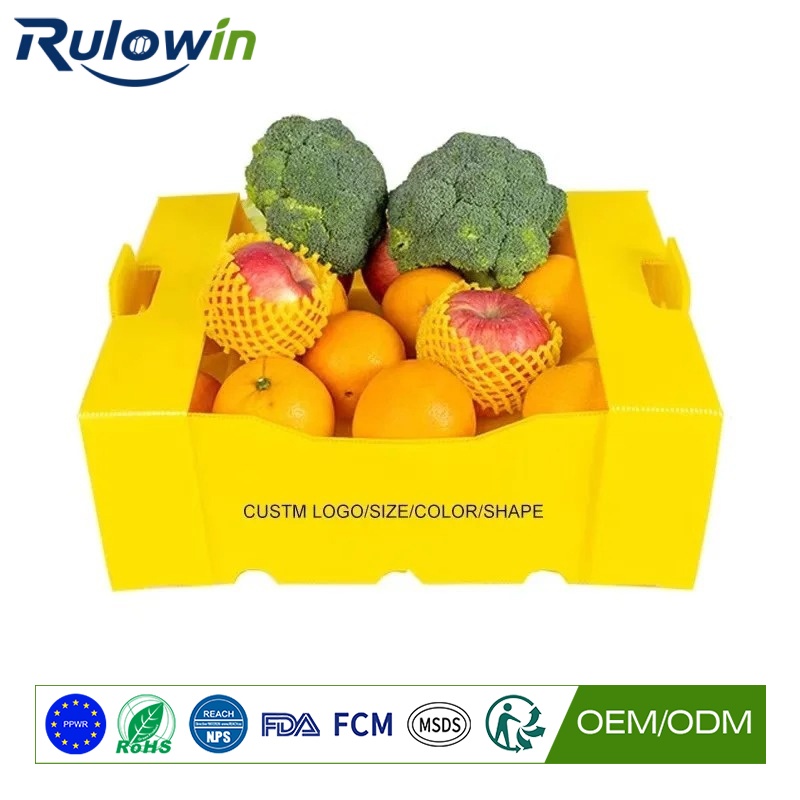
Reusable produce packaging comes in two commercial shapes. You can own a fleet and manage it, or you can rent capacity from a pool and pay per trip. The packaging is often similar; the business is completely different.
What owning involves
You buy the fleet, and then you own every problem that comes with it:
- Capital tied up in crates, plus the cost of the peak fleet you need for the busiest week
- Storage for the units not in use, which is floor space and it is not free
- Washing, either in-house or contracted
- Losses, which you absorb directly
- Repair and retirement, and the management of both
- Seasonal imbalance, because a fleet sized for the peak is idle the rest of the year
In return you get the lowest cost per trip if the loop runs well, control over specifications, and no dependence on a third party’s availability.
What pooling involves
You take crates from a pool, use them, and hand them back. You pay per trip or per period. The pool operator owns the fleet, manages the washing, absorbs the losses and rebalances supply between participants.
In return you pay more per trip, you take the specification the pool offers rather than your own, and you depend on their network being where your product needs to go. Where a pool has thin coverage in a region, the practical cost of using it rises sharply.
Where pooling wins
- You cannot run a return loop. If your crates leave your control and do not reliably come back, a pool’s ability to rebalance is the whole value.
- Strong seasonality. Paying per trip means you do not own a fleet that sits idle for seven months.
- Multi-party routes. Product that passes through several businesses, where no single party owns the return leg.
- You want the activity off your balance sheet. A legitimate consideration, and one that makes the decision sometimes go against the lower nominal cost.
Where owning wins
- A tight, closed route. Your vehicle delivers and returns anyway. The marginal return cost is close to zero and no pool can beat that.
- Specific requirements. A crate dimension, a ventilation pattern, a wash standard that the pool does not offer.
- High utilisation. A fleet in near-continuous use pays back quickly and the per-trip cost falls well below a pool fee.
- Washing already exists. If you already run a wash line, the marginal cost of putting crates through it is small.
The hybrid that many operations settle on
Own a core fleet for the base load and supplement with pool capacity at peak. It costs slightly more per trip on the peak volume and it avoids owning a fleet that is idle most of the year. It also removes the single biggest risk of owning – being short of crates at the worst possible moment – without buying capacity you will not use.
What to compare
Compare cost per trip, not cost per crate. Include washing, the return leg, storage of empties, losses and administration. Then compare that against the pool fee including any delivery and collection charges.
If the two come out close, choose on risk. Owning concentrates the risk in your operation; pooling spreads it and charges you for the service. Where your return loop is unproven, the pool is usually the better place to be while you find out.
What we can do
We supply produce boxes for operations that own their fleet, and we will tell you honestly when a pool is likely to serve you better – usually when the return loop is weak or the season is short. If you are sizing a first fleet, tell us the route and the volume and we can help with the arithmetic.