
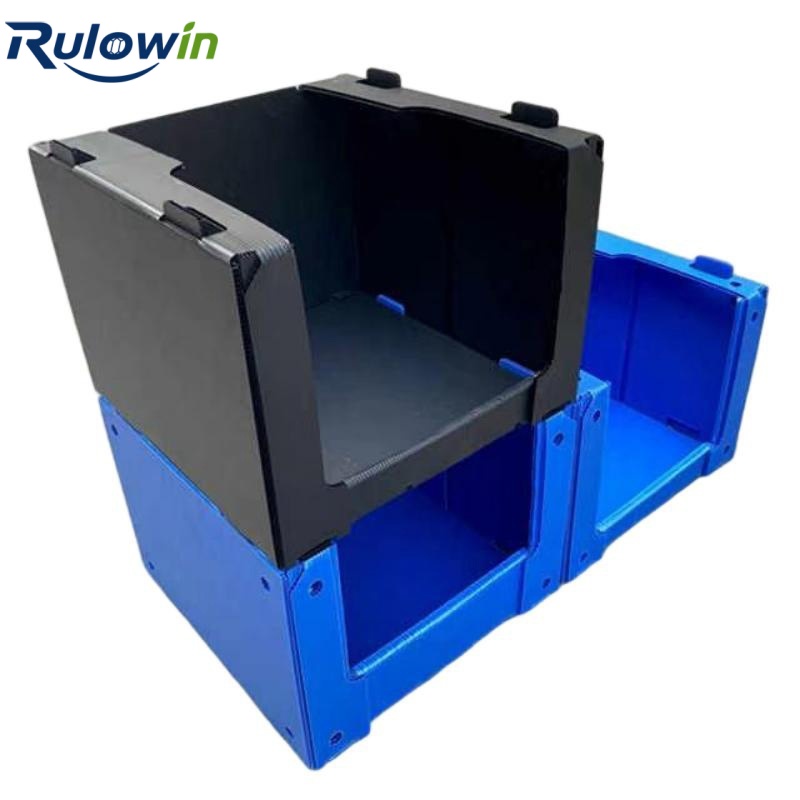
Handles look like a detail on a drawing and are the first thing anyone carrying the box will have an opinion about. A badly placed or badly shaped grip is noticed on the first shift and complained about for years.
What makes a grip bad
- Too small. A hand hole that takes two fingers rather than four transfers the load into the fingers, which is tiring and eventually injurious.
- Sharp edges. A cut edge in PP sheet is sharp enough to abrade skin over a shift. This is the single most common complaint and the easiest to fix.
- Too high or too low. The grip should be near the centre of mass so the box hangs level. Too high and it tips; too low and it swings into the picker’s legs.
- On the wrong face. If boxes are lifted from the front on a shelf, a grip on the sides is useless.
- Weak. A cut-out removes material from the wall, and if it is near a fold or a corner it becomes the failure point.
What makes a grip good
A rounded or rolled edge that does not cut. Enough depth for four fingers – typically 25 to 30 mm of clear opening, more for a gloved hand. Positioned so the box balances. Reinforced if it is in a load path. And placed where the box is actually picked up from, which means watching someone do the job before deciding.
Gloves change the dimension
If the operation uses gloves, size the opening for a gloved hand. This is routinely forgotten, and a grip that fits a bare hand is unusable in a winter glove or a cut-resistant one.
Weight matters more than people think
Manual handling guidance sets limits that drop sharply as the load moves away from the body and as lifting frequency rises. A box that is comfortable to lift once at waist height is a different proposition lifted two hundred times an hour from a low shelf. If your pick rates are high, that argues for a smaller box rather than a better handle.
Where the grip weakens the box
A cut-out in a corrugated PP wall interrupts the flutes, and the flutes are what carry the load. Two mitigations: keep grips away from corners and folds, and reinforce the area around the opening – a second layer of sheet, or a moulded insert, or a welded surround.
On a box that gets stacked when full, the grip is also a place where the wall can be pushed in by the box above or by the contents. A reinforced grip is worth specifying for anything with real weight in it.
Other things operators notice
Whether boxes nest when empty without jamming. Whether they separate easily – a tight nest costs time on every pick. Whether the label area is where they look for it. Whether the box slides on the shelf or grips. None of these appear on a specification sheet and all of them affect the work.
How to get it right
Make a sample, put it in front of the people who will use it, and watch. It is not a laboratory exercise. If you can get two or three variants made and let the team pick, do that – it costs very little and it settles the argument permanently.
What we supply
Our picking boxes come with rounded, reinforced grips sized for gloved use, and we can position them to suit how you pick. Tell us the weight, whether gloves are worn, and where the box is lifted from, and we will get the shape right first time.