
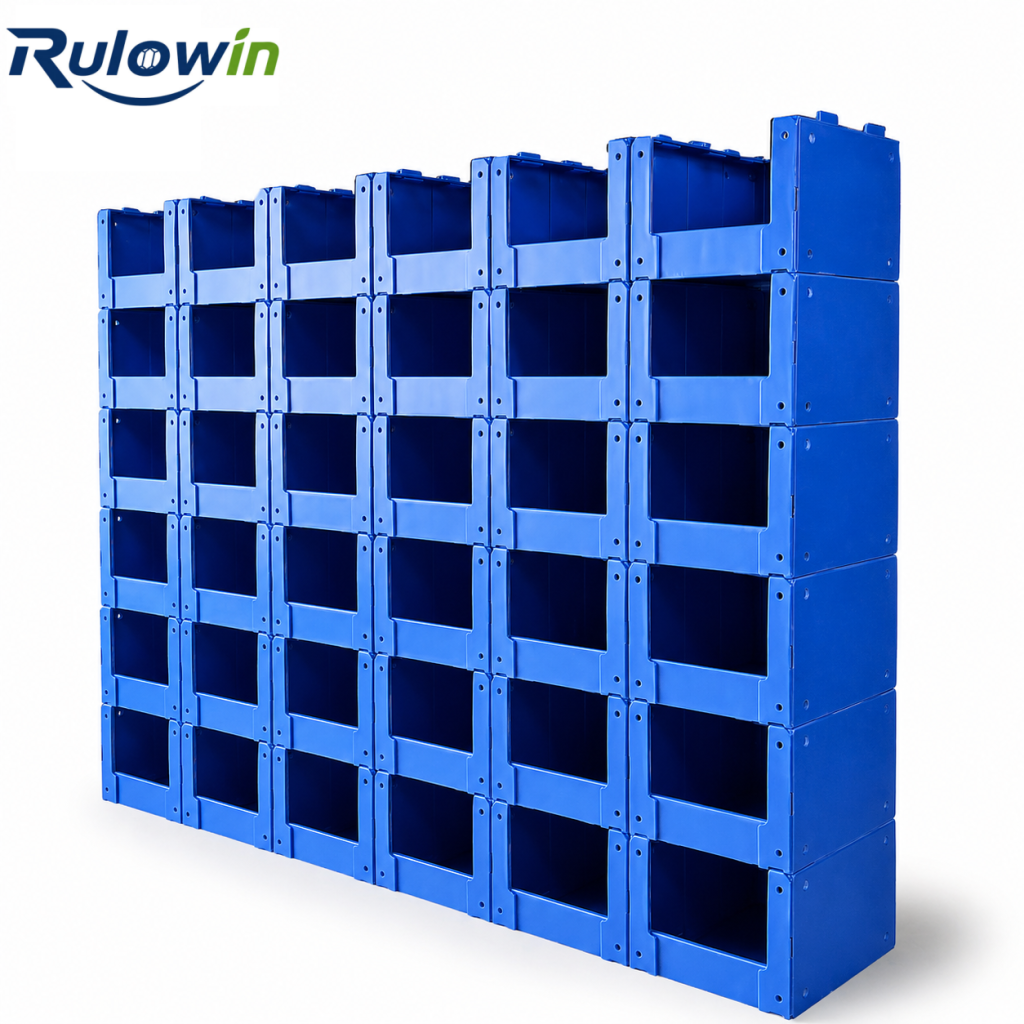
Picking boxes are usually sized around what goes in them. That is the right starting point and the wrong finishing point, because a picking box also has to sit on a shelf, in a carton, and on a cart – and all three have their own dimensions.
The shelf is the binding constraint
Shelving comes in standard depths and the pick face is what you are selling. A box that is 50 mm deeper than it needs puts every box in the run 50 mm further from the picker and wastes the depth of every shelf above and below it.
Measure the shelf depth, then subtract the reach you want to leave. That is your maximum box depth, and it is usually the number that should drive the design rather than the product.
Width and the grid
Shelves are also divided, and box width should relate to the division spacing. A box width that is slightly too wide for two-per-bay wastes half a bay. Slightly narrow enough for two-per-bay with a little spare is usually the better answer, because it leaves finger access between boxes – which matters more than the lost centimetres.
Height and wasted air
Picking boxes are often taller than the product needs, because the same box gets used for several items. That is reasonable, but it wastes vertical space on every shelf. One option worth considering is two box heights – a shallow one for the majority of lines and a deep one for the exceptions – rather than one height that suits nothing well.
The outbound carton
If picked boxes go straight into a shipping carton, the box footprint should relate to the carton dimensions. Boxes that tessellate into the carton save void fill and reduce damage in transit. Boxes that do not leave awkward gaps that get filled with paper.
This is worth five minutes with a tape measure and the carton sizes you actually use. It is one of the few packaging decisions that saves money in two places at once.
Standard footprints
There are established modular box footprints used in retail distribution, and they exist because they fit standard shelving and standard carts. Unless you have a specific reason not to, starting from a standard module is usually better than designing from scratch – and it makes replacement easier when you need more boxes in a hurry.
What else to get right
- A consistent footprint across the range so boxes can be swapped between locations
- A stable stacking geometry when boxes are nested or stacked on a cart
- A front lip or a cut-away so the picker can see and reach the contents
- Handles positioned where the box is actually lifted from – usually the front, not the sides
- A label area facing the aisle
Test it before committing
Put samples on the actual shelf, loaded with the actual product, and have someone pick from them for a day. Most dimensional problems show up immediately in use and are invisible on a drawing.
What we supply
We make corrugated PP picking boxes in standard modules and to custom sizes. Send us your shelf depth and division spacing along with the product range and we will tell you what fits – and if your shelves are the real problem, we will say that too.