
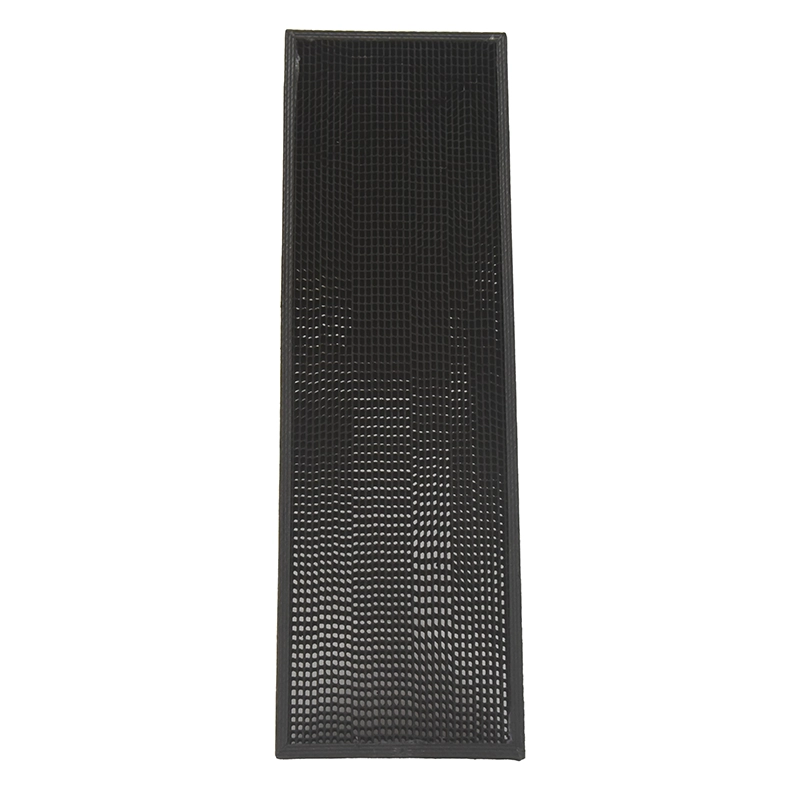
Replacing a screen usually means fitting something into a housing that was designed around a different product, often years ago and sometimes for a material that is no longer available. It is very doable, and the failures are predictable enough to avoid.
Measure the housing, not the old screen
The old screen has been in service, which means it has been deformed, cleaned, and possibly damaged. Copying it copies its defects. Measure the housing bore, the seat, the available depth and the seal geometry, and work from those.
Things worth recording:
- Seat diameter and condition – a scored or corroded seat will not seal regardless of the new screen
- Available depth, including any clearance the housing needs for flow
- How the screen is retained – clamp, bolt, snap ring, gravity
- Flow direction and whether reverse flow ever occurs
- Seal type and groove dimensions
The two failures that account for most retrofits
Bypass at the edge. The screen fits the bore but the seal does not, so fluid goes around rather than through. It is invisible until product quality drops. Always check the seal path, not just the diameter.
Deformation under load. The new screen has a different open area or a finer mesh, so the differential pressure is higher than the housing was designed for, and the screen dishes or tears. Check what differential the original was working at and what the replacement will see.
Material compatibility with the housing
A PP screen in a metal housing is common and usually fine, but the differential expansion is real. If the housing runs hot, the PP frame will expand more than the metal bore, and a tight fit becomes a very tight fit. Allow clearance, or use a compliant seal that absorbs it.
When not to retrofit
If the seat is damaged, if the housing has a bypass path that cannot be sealed, or if the required open area simply does not fit in the available face area, the housing is the problem. Adding a screen that cannot work is worse than replacing the housing, and sometimes the honest answer is a different housing.
The open area point is worth checking properly. If you need more flow than the existing face area can pass at an acceptable differential, no screen will fix it. The answer is more face area, which means a different geometry.
What to send a supplier
A photograph of the housing open, the measurements above, a photograph of the old screen including any damage, and the process conditions. A sample of the old screen is better still, even if it is damaged – it tells us the seat geometry and the original design intent.
Allowing for what you cannot measure
Two things resist measurement and cause retrofit failures. The first is the condition of the sealing face – a seat that looks fine can be scored or out of round, and it will not seal regardless of the new screen. The second is how much the housing distorts under pressure, which changes the geometry of the seat when the line is running.
Where either is in doubt, a compliant seal is more forgiving than a rigid one, and it is usually the right choice for a retrofit into an older housing. Design the seal to accommodate uncertainty rather than assuming the housing is to drawing.
It is also worth fitting the first one dry and checking the fit before it goes into service. A retrofit discovered to be wrong on the bench costs nothing.
What we do
We make PP filter screens to fit existing housings, including one-off replacements for obsolete designs. Send us the housing dimensions rather than the old screen where you can, and tell us the differential the screen will actually see – that is the number that decides whether the retrofit will hold up.