
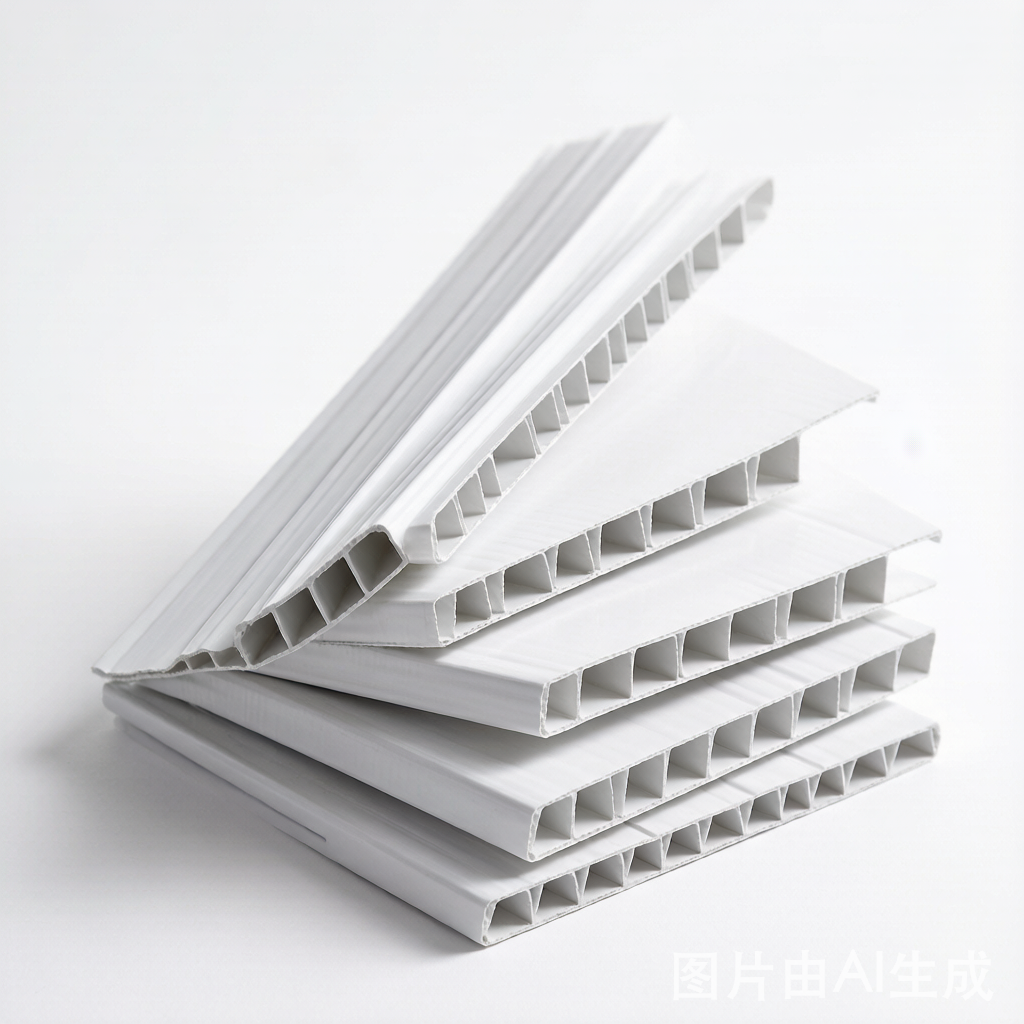
A PP corrugated sheet comes with two headline figures – thickness in millimetres and gram weight in grams per square metre – and buyers tend to use whichever their supplier quotes. They measure different things, and in some applications they point in opposite directions.
What each one measures
Thickness is the overall depth of the sheet, flutes included. It determines how the sheet fits into slots, how it folds, and how much space it takes in a stack.
Gram weight is mass per unit area. It tells you how much polypropylene is actually in the sheet, which is what you are paying for and what determines strength.
Why two sheets of the same thickness differ
A sheet with thin skins and widely spaced flutes and a sheet with thick skins and tight flutes can both be 4 mm. One will be noticeably heavier, stiffer and more expensive. The thickness number does not distinguish them; the gram weight does.
This is the source of most “the new sheet is not as good as the old one” complaints. The thickness matched and the gram weight did not.
Which one to specify
- If the sheet fits into a slot, a frame or a machine – thickness is the governing dimension, and it needs a tolerance.
- If the sheet carries load – gram weight is the better proxy for strength, but ask for a bending or compression figure as well.
- If you are buying by weight or shipping by weight – gram weight, obviously, and it is worth checking that the quoted figure is achieved.
- If you are comparing quotes – specify both. A quote that only gives one of them is not comparable.
Tolerance is where the trouble is
Extruded sheet varies. Thickness tolerance of a few tenths of a millimetre is normal, and gram weight varies with it. If your application has a hard fit, design to the tolerance range rather than the nominal figure, and state the acceptable range on the order.
The other thing worth knowing is that gram weight tends to sit at the low end of a stated range, because material is the cost. A supplier quoting “400 gsm” may deliver 380. Ask for a range and check delivered material occasionally with a scale and a known area – it takes a minute.
How strength actually scales
For a given flute geometry, stiffness in the flute direction rises steeply with thickness and roughly in line with gram weight. Across the flutes it is much lower, which is the subject of our article on flute direction. The practical point is that doubling gram weight does not double performance in every direction, and the sheet has a strong directional bias that dominates everything else.
What else belongs on the specification
- Flute direction relative to the sheet dimensions – this is the most commonly omitted and most consequential item
- Colour and whether UV stabilised
- Surface treatment if it will be printed or bonded
- Any flame retardant or antistatic requirement
- Whether edges are sealed for wash-down or wet use
What we supply
We produce corrugated PP sheet across a range of thicknesses and gram weights, and we quote both because specifying one alone leads to the comparison problems above. Tell us what the sheet has to do and we will tell you which number matters for your case.