
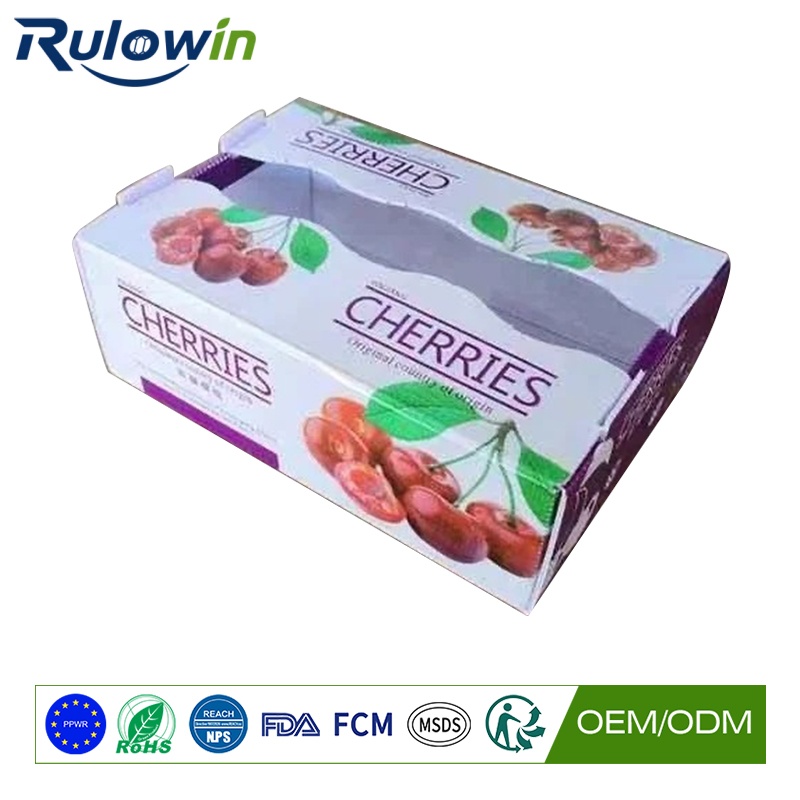
Boxes are usually tested in a laboratory, stacked squarely, at a stable temperature, after a few minutes. Field packing is none of those things, and the gap between the two explains a lot of the damage that shows up further down the chain.
What field stacking does differently
The stack is not square. Boxes go onto a trailer on uneven ground, often filled to different levels, and the load path through the stack wanders. A box designed assuming perfectly aligned corner support gets point loads instead.
It is warm. PP is noticeably less stiff at 35 C than at 20 C. A box that passes a stacking test in an air-conditioned lab is a different box in an orchard in midsummer.
It sits there. Laboratory compression tests are short. Real stacks stand for hours, and PP creeps – it continues to deform slowly under constant load. The box that was fine at loading can be visibly compressed by the time it is unloaded.
There is vibration. A trailer over rough ground adds dynamic load on top of the static stack, and loose stacks shift.
What this means for the box
- Corner strength matters more than wall strength. In a stack, the corners carry the load. Reinforcing them does more than thickening the walls.
- The rim has to survive point loading from the box above sitting slightly out of alignment.
- Creep resistance is a material and thickness question, and it is why we will ask how long a stack stands before we quote.
- Interlocking features help by keeping the stack aligned, which is the cheapest way to protect the corners.
Pallet pattern is part of the answer
A good box in a bad pattern will fail. Columns of boxes stacked directly on top of each other load the corners properly; interlocked brick patterns spread the load but can put box walls over gaps. If you use an interlocked pattern for stability, the box needs to tolerate it.
Overhang is a quiet killer
A box hanging a few centimetres off the edge of a pallet has no support under one corner and will deform, and the whole column above it leans. It is one of the most common causes of stack collapse and it costs nothing to prevent.
How to test honestly
Fill the boxes with actual product or an equivalent weight, stack them to the height you will really use, leave them in the sun for the duration of a normal working day, then look. It is not a laboratory test but it will tell you more than one. If you can put a trailer load over a rough track, do that instead.
Overfilling is worse than overloading
A box filled above its designed level does two damaging things. It puts product above the point where the walls are supported, so the top of the box spreads; and it means the box above rests on the contents rather than on the rim, which transfers the entire stack load through the produce.
This is a field supervision issue rather than a box design one, but it is worth designing for. A fill line moulded into the box wall costs nothing and makes overfilling visible, which is most of the battle. A box that has no visual cue will be filled until it looks full, and “looks full” is usually above the design level.
If you are seeing crushed product at the bottom of a stack, check fill height before you check box strength. It is the more common cause.
What we do
We build produce boxes with corner reinforcement and rim designs intended for field conditions, and we would rather know your stack height and dwell time than guess. Tell us the worst case – hottest day, tallest stack, longest wait – and we will build for that rather than for the average.