
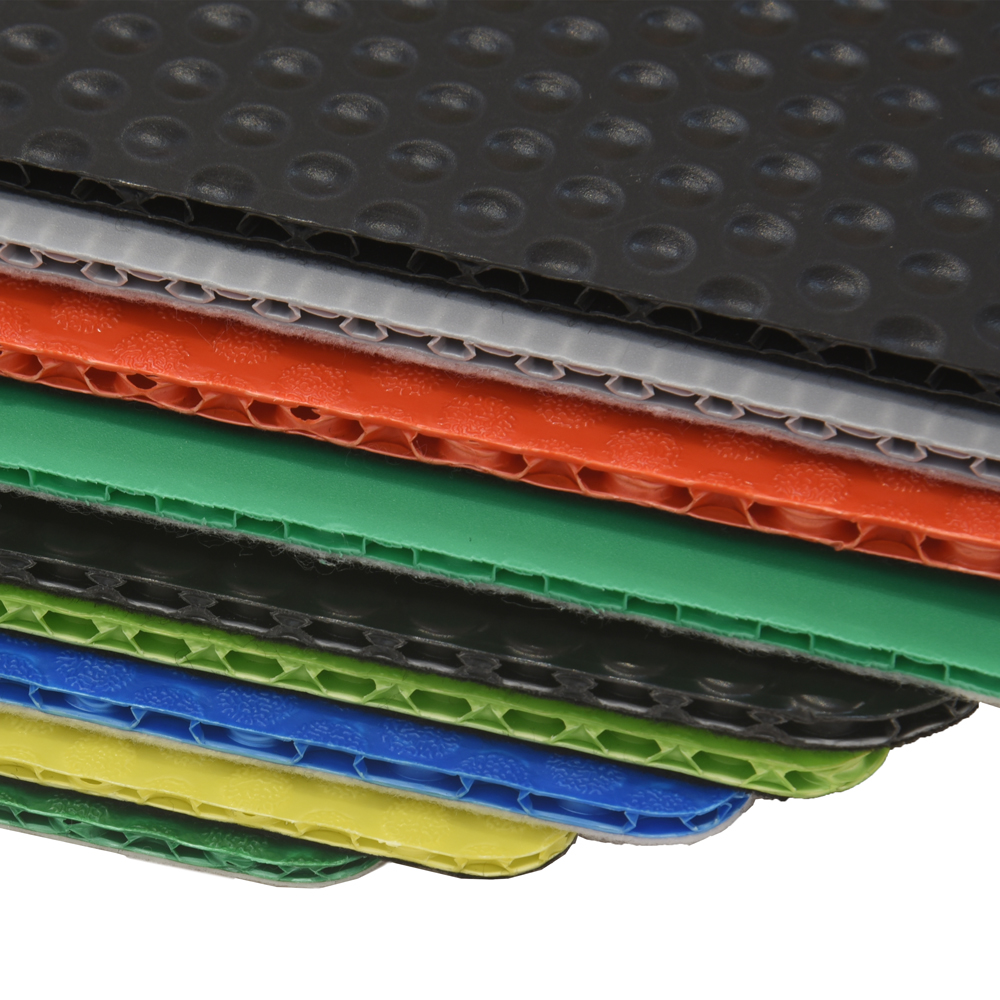
Cell size is the most misunderstood specification on a honeycomb panel. The instinct is that smaller is stronger, and for some loads that is right. For others it is exactly backwards, and picking on the wrong basis leaves you paying for weight you did not need.
What the core is actually doing
The core has one main job: holding the two skins a fixed distance apart so they can act together in bending. Everything else it does is secondary. A core that is stiff enough to stop the skins moving toward each other is doing its job, and past that point more core material is largely dead weight.
Where large cells win
In pure bending, a large-cell core at the same thickness and same skin gauge is usually stiffer per kilogram than a small-cell one. The core is further from the neutral axis in relative terms, the density is lower, and for the same panel weight you can afford a slightly thicker build, which is where the real stiffness comes from.
Weight matters more often than people admit. A dunnage tray that is 15 percent lighter does not just save freight; it is easier for an operator to lift all shift, and it puts less load on the rack it sits in.
Where large cells lose
Point loads. A small cell core has more walls under any given spot, so a concentrated load spreads into more material. Press a corner or a small foot into a large-cell panel and you are loading one cell wall.
Telegraphing. Through a thin skin, a large cell pattern can be visible on the face. Cosmetically it reads as cheap, and on a display panel or a visible interior trim part it matters.
Fastening. Screws and rivets need something to bite. Small cells give more material around a fixing, and blind fixings in a large-cell panel can pull through under vibration.
Edge crush. An exposed cut edge on a large-cell core has fewer walls resisting a strap or a clamp.
A quick way to choose
- Distributed loads and long spans – bending governs, so larger cells are usually the efficient answer.
- Point loads, feet, castors, small contact areas – go smaller, or add a local reinforcement pad.
- Fixings into the face – smaller cells, or design a through-fix that clamps both skins.
- Visible surfaces – smaller cells under a skin thick enough not to show them.
The honest complication
Cell size does not vary independently. Change it and you change density, which changes crush strength, which changes what the skin has to resist. Suppliers who quote cell size as a standalone option are usually quoting from a fixed catalogue rather than designing anything.
This is also why two samples that look identical on a drawing can behave differently in your fixture. The cell geometry is the part you never see.
The bond is the part you never see
Cell size and skin gauge only matter if the two stay joined. A honeycomb panel fails as an assembly far more often than it fails as a material, and the failure is at the bond between skin and core.
A poorly bonded panel looks fine and behaves badly: the skin buckles away from the core under compression, and the panel loses most of its stiffness in one step. You can sometimes detect it by tapping – a well-bonded panel rings, a delaminated one thuds – but the reliable test is to cut a strip and try to peel the skin off.
It is worth asking how the panel is bonded and whether the process is continuous or batch. It is not a specification line that appears on most quotes, and it should be.
What we suggest
Send us the load case, not the specification. Tell us what touches the panel, over what area, how often, and whether the panel will be washed or left outdoors. We will tell you whether cell size is even the variable worth spending money on – quite often it is not, and the skin is the thing to upgrade. Our honeycomb panel range covers several cell geometries for exactly this reason.