
Ask who owns the dunnage in a two-tier automotive loop and you will usually get a pause. The Tier 1 thinks they own it because they specified it. The Tier 2 thinks they own it because it sits in their plant. Nobody has it in writing, and three years later the loop has quietly lost a third of its containers and nobody can say where they went.
This is an organisational problem wearing a packaging costume, and it is worth solving before the first tray is tooled.
The three ownership models
Supplier-owned
The Tier 2 buys the dunnage and ships parts in it; the Tier 1 returns empties on the backhaul. Simple, and it puts the incentive for durability with the party who chose the material. The weakness is that the Tier 2 carries the capital and the risk of loss, so they will buy the cheapest thing that passes specification — which is rarely the thing that survives four hundred trips.
If you use this model, the specification has to be enforced at incoming inspection, not just at sourcing. Otherwise the second purchase order quietly downgrades the material.
Customer-owned, supplier-managed
The Tier 1 owns a pool and lends containers to suppliers. This aligns durability with the party who benefits from it, and it standardises handling across suppliers. It also creates a management job: tracking the pool, chasing losses, repairing damage, and deciding who pays when a tray comes back wrecked.
The fix for the last part is a condition-on-return standard — a short, photographic document defining what counts as normal wear and what counts as damage. Without it, every damaged tray becomes an argument, and arguments get settled by whoever is more persistent.
Third-party pool
A pooling provider owns the assets and rents them per trip. This removes capital and administration from both parties and makes loss someone else’s problem. The costs are the rental and the reduced customisation — pooled containers are standard sizes, and your part has to fit them or take an insert.
For high-volume, standard-sized parts this is often the cleanest answer. For anything with an awkward geometry, custom dunnage inside a pooled outer container is the usual compromise.
What kills loops in practice
Having watched a few of these, the failure list is consistent:
- No return trigger. Empties pile up at the Tier 1 until somebody ships them back in a hurry, damaged, in a truck that was not meant for them.
- Loss at the boundary. Containers that go to a sub-supplier of the Tier 2 and never come back. Boundary losses are where most shrinkage lives.
- Specification drift. Replacement trays ordered by price rather than by specification.
- No repair loop. A tray with a broken handle goes into a corner, then into a skip, while an identical tray with a repaired handle keeps working.
Four rules that prevent most of it
- Write the ownership and the return obligation into the supply agreement, including who pays for return freight.
- Define condition-on-return with photographs. One page is enough.
- Mark every container with an owner code and a serial. Unmarked containers are free goods in everybody’s mind.
- Audit the pool count quarterly. Small, regular counts catch leakage early; a big annual count just documents the loss.
Why the material choice follows the structure
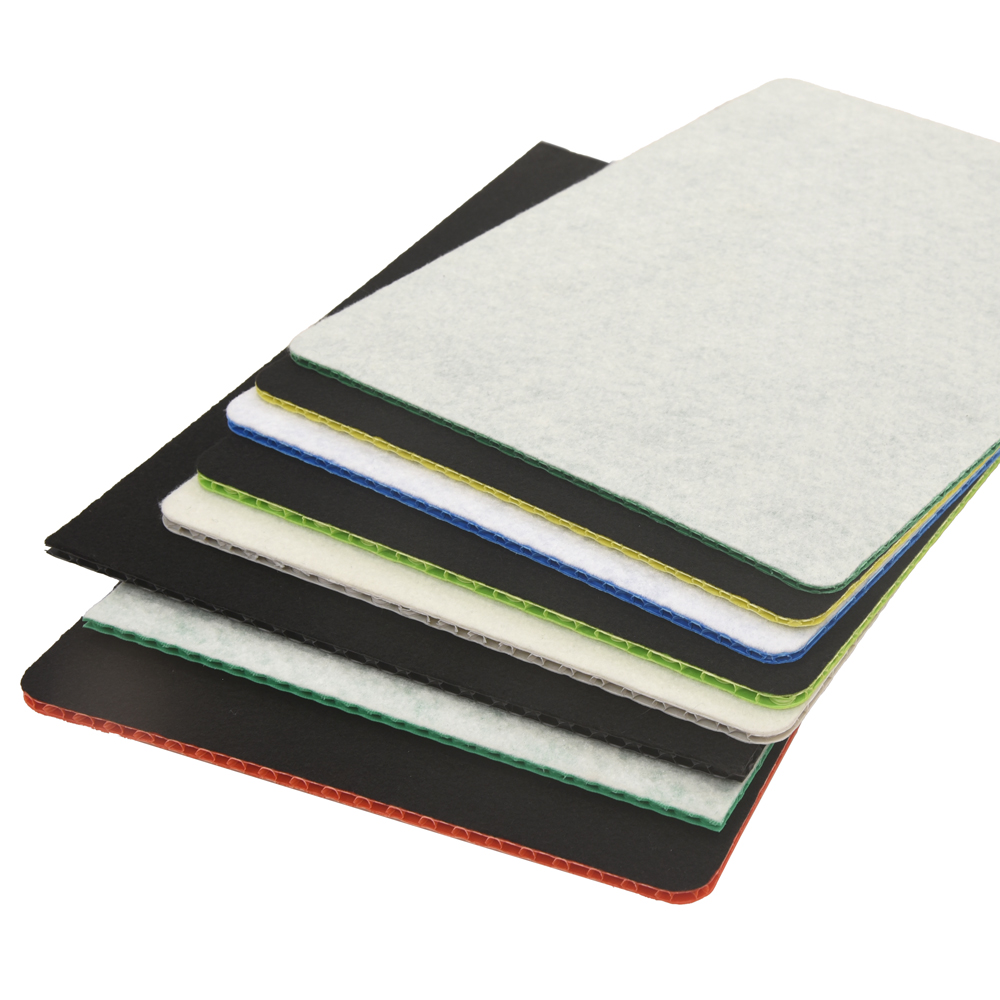
Once ownership is settled, the packaging decision becomes much easier. A customer-owned pool justifies durable, repairable dunnage — honeycomb panel construction with replaceable facings — because the party paying for it captures the whole life. A supplier-owned model with a weak specification justifies the cheapest compliant tray, which is exactly why those loops degrade.
If you are setting up a loop and want a view on what the container specification should be given your ownership model and trip volumes, send over the flow diagram. It is a conversation worth having before tooling, not after the first quarter’s shrinkage report.