
Why Sites Skip Wall Protection at Their Peril
Interior walls are vulnerable the moment work starts. Scuffs, dents, and paint overspray accumulate fast, and patching plus repainting eats both time and budget.
What Sets Protective-Backed PP Honeycomb Apart
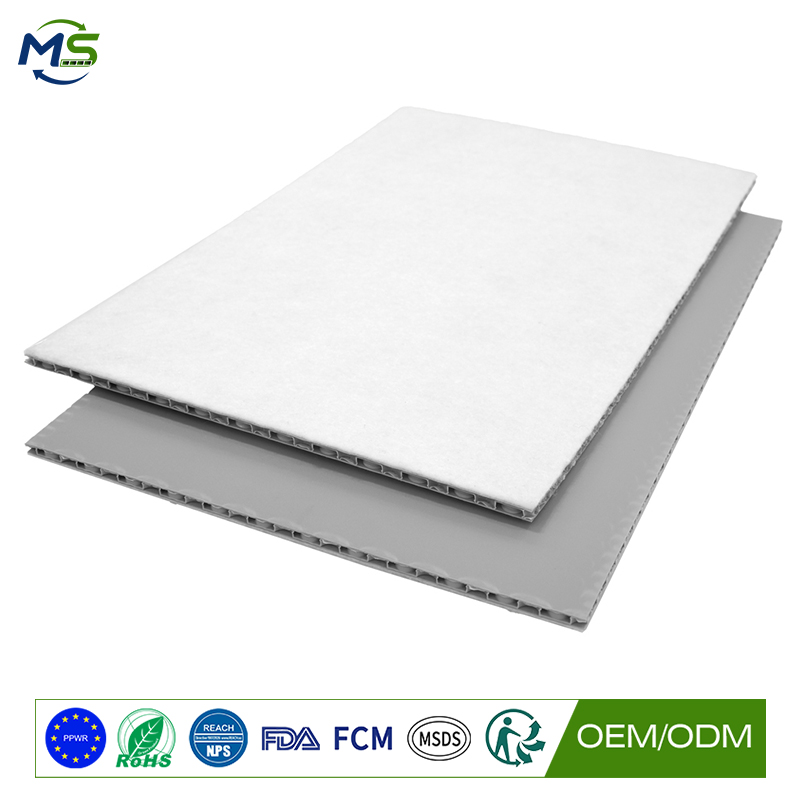
For walls, a PP honeycomb panel with a protective backing acts as a lightweight, reusable bumper. It hangs or leans against the substrate, soaking up impacts that would otherwise dent plaster or scuff paint.
- Fire-Retardant Variants — Sites with strict fire codes can specify retarded boards without giving up the reusable honeycomb advantage.
- Absorbs Impacts — Drops, ladders, and tool carts are the usual culprits behind chipped tiles and dented timber. The honeycomb structure spreads the load so the surface below stays intact.
- Non-Slip Protective Backing — The protective layer grips the substrate and stays put under foot traffic, so crews are not constantly re-laying shifted sheets.
- Shields Finish & Substrate — It forms a shock layer between the floor, stair, or wall and the work happening above, protecting both the visible finish and the structure beneath.
- Lower Total Cost — Reuse beats repaint. A small fleet of boards replaces repeated purchases of disposable film and the labour of fixing avoidable damage.
- Water, Paint & Dust Resistant — Spills bead on the surface and paint splatter wipes away, keeping the protected area clean through messy stages of the build.
Best Uses for Protective PP Honeycomb Wall Board
On real sites, the board proves its value wherever finished surfaces meet ongoing work:
- Hallway and corridor traffic
- Moving large furniture and panels
- Interior painting and plastering
- Protection during demolition
- Elevator lobbies and entrances
A Practical Buying Guide
Match thickness to traffic. Light foot traffic is fine with 3-5 mm; cart and scaffolding zones need 8-10 mm. Choose protective backing where grip matters, and size sheets to cover the run with a small overlap. For sites that need it, ask about our temporary variant.
What Crews Ask Us Most
How is it fixed to the wall?
Most sites lean or hang the panel and secure the top edge, avoiding adhesive that could mark the finish.
Can it be reused between rooms?
Absolutely. Lift, move, and re-stand the same panel across multiple spaces on one project.
Protect More, Waste Less
Specify Rulowin on your next project and standardise protection across floors, stairs, and walls with one recyclable system.