
Why Sites Skip Wall Protection at Their Peril
Corridors and lobbies see constant cart traffic during fit-out. A leaned panel prevents the long-line scuffs that are painful to repair.
What Sets Felt-Backed PP Honeycomb Apart
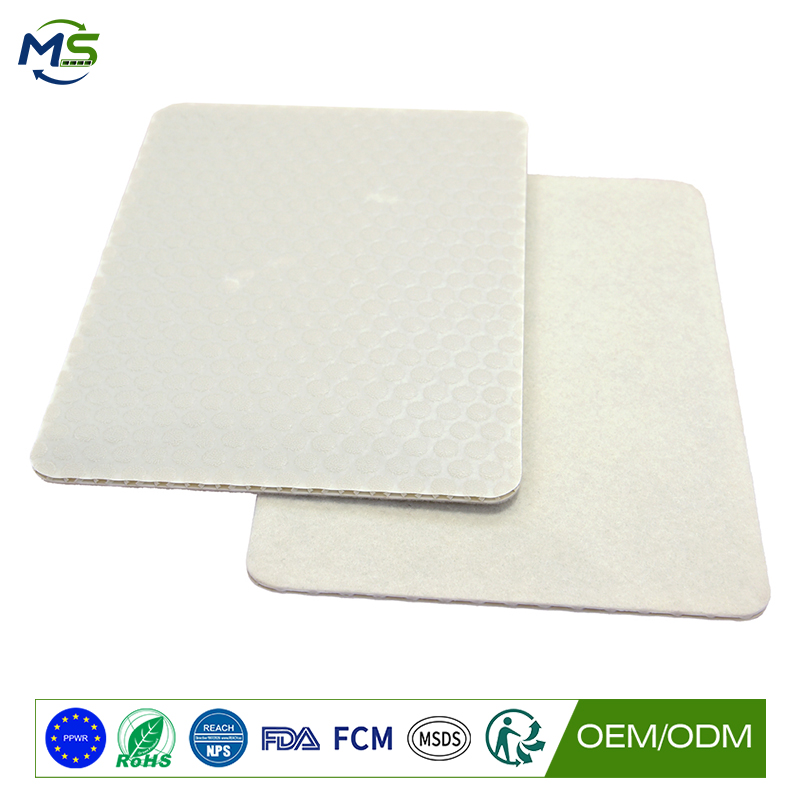
A felt-faced honeycomb panel leans against the wall and takes the abuse of passing crews and kit.
- Shields Finish & Substrate — It forms a shock layer between the floor, stair, or wall and the work happening above, protecting both the visible finish and the structure beneath.
- Water, Paint & Dust Resistant — Spills bead on the surface and paint splatter wipes away, keeping the protected area clean through messy stages of the build.
- Absorbs Impacts — Drops, ladders, and tool carts are the usual culprits behind chipped tiles and dented timber. The honeycomb structure spreads the load so the surface below stays intact.
- Non-Slip Felt Backing — The felt layer grips the substrate and stays put under foot traffic, so crews are not constantly re-laying shifted sheets.
- Fast to Lay and Remove — Overlap the sheets and you are done. No tapes, clips, or curing time, which keeps the programme moving.
- Reusable for Dozens of Cycles — The PP honeycomb core springs back after impact and stays flat, so one board protects job after job instead of being discarded after a single use.
Application Scenarios
On real sites, the board proves its value wherever finished surfaces meet ongoing work:
- Interior painting and plastering
- Moving large furniture and panels
- Elevator lobbies and entrances
- Hallway and corridor traffic
- Protection during demolition
How to Specify the Right Board
Match thickness to traffic. Light foot traffic is fine with 3-5 mm; cart and scaffolding zones need 8-10 mm. Choose felt backing where grip matters, and size sheets to cover the run with a small overlap. For sites that need it, ask about our reusable variant.
What Crews Ask Us Most
Will it protect against cart impacts?
Yes. The rigid honeycomb core takes the hit that would otherwise dent plasterboard or scuff paint.
Can it be reused between rooms?
Absolutely. Lift, move, and re-stand the same panel across multiple spaces on one project.
How is it fixed to the wall?
Most sites lean or hang the panel and secure the top edge, avoiding adhesive that could mark the finish.
Get a Sample or a Quote
Talk to our team for samples and a layout plan. We help contractors standardise on one circular, recyclable protection system across every project.