
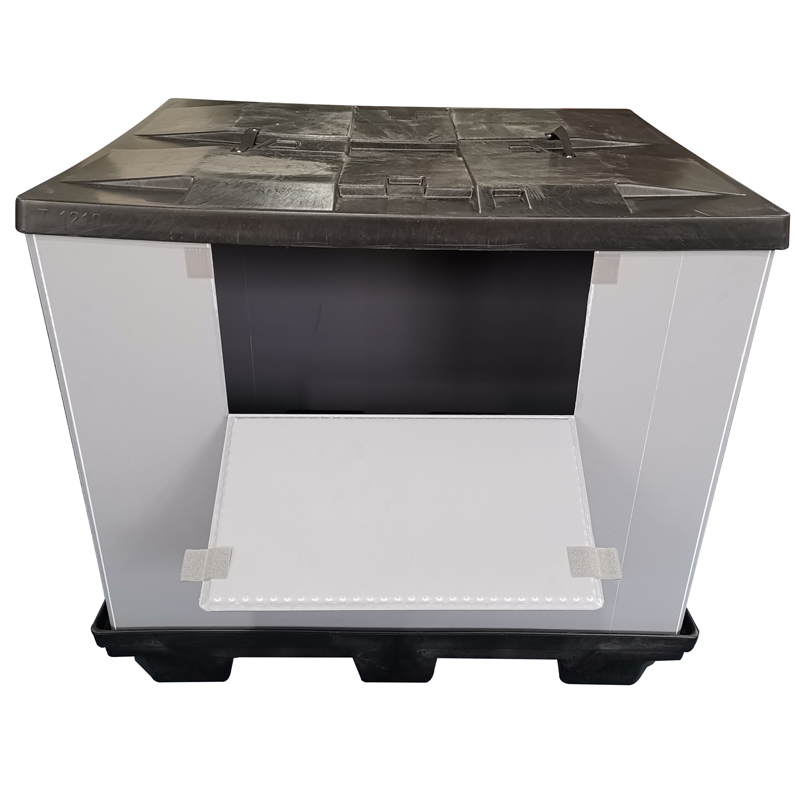
Ordering a full container rather than a part load is the single biggest freight saving available on bulky packaging, and it is routinely left on the table because the order quantity was set by immediate need rather than by freight economics.
Why container quantity is different
Less-than-container-load freight is priced at a rate that reflects handling, consolidation and the carrier’s space risk. A full container is priced on the lane. The difference per cubic metre can be large – on some lanes it is the largest single component of landed cost.
So the unit cost of an item shipped as part of a shared container and the same item shipped in a dedicated one can differ by much more than the supplier’s volume discount ever will.
The storage question, which is easier than it looks
The objection to container quantity is holding stock. For packaging that objection is weaker than for most things: polypropylene does not degrade indoors, does not have a shelf life, and is not subject to obsolescence unless the specification changes.
What you need is floor space and a reason to believe you will use it. If consumption is steady and the specification is stable, a container is usually several months of stock and a lower landed cost per unit. That is a straightforward trade.
Where it does not work
If the specification is still moving. Buying a container of something you may change is a way to create obsolete stock, and during a pilot or a specification change you should buy small regardless of freight.
If the item is dense rather than bulky. A container of something heavy fills on weight before volume, and the freight advantage largely disappears.
And if cash is genuinely constrained. The discount is real and so is the cash tied up.
How to work it out
Ask the supplier for panels per pallet and pallets per container – they have these numbers from their own packing. Divide the container freight rate by the unit count and compare with the part-load rate per unit. Add a carrying cost for however long the stock will sit.
It is a ten-minute calculation and it usually points one way clearly.
A practical middle route
Share a container with another line, or ask the supplier to hold stock and release against call-off. Both capture much of the freight saving without the storage commitment, and both are worth asking for – suppliers do not always offer them.
What to check before committing
Whether the specification is genuinely frozen. A container of an item you are still iterating is obsolete stock with freight paid on it, and the saving will not compensate.
Whether consumption is steady enough to draw it down. A container that takes two years to use is not a freight saving, it is a purchase of storage.
And whether you have somewhere dry to put it. PP is not fussy, but it is bulky, and a container’s worth of packaging occupies real floor area. Measure before you order rather than after it arrives.
A note on mixed containers
If one line does not fill a container, ask whether it can share with another. Two or three lines in one container capture most of the freight advantage without committing you to months of stock in any single item, and it is the arrangement most suited to a buyer with several moderate-volume lines.
The constraint is that the lines have to be ready at the same time. Worth planning the order cycle around rather than expecting the supplier to hold part of a container indefinitely.
What we can do
We supply factory-direct pallet sleeve boxes and quote packing counts and container quantity pricing as standard. Tell us your monthly usage and we will tell you whether a container is worth holding – including when it is not.