
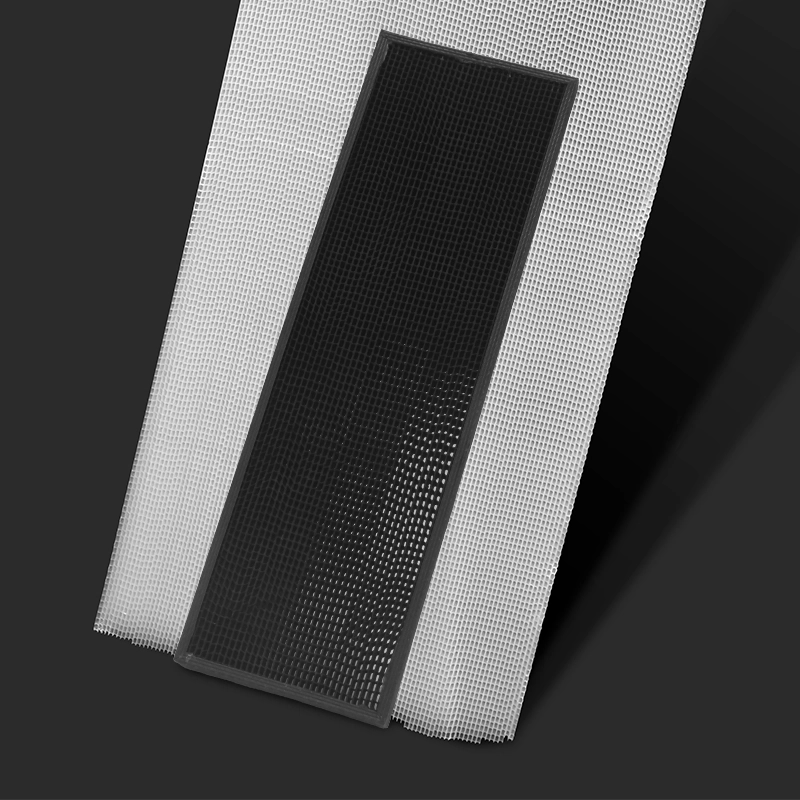
Washable air filter media is a good answer to a specific set of problems and a poor answer to others. The cases where it fails are consistent and predictable, and none of them are obvious from a product description. Three situations account for most of the disappointments.
Where the loading will not wash out
The first is oily or greasy aerosol. Mineral oil mist, cooking aerosol, certain metalworking fluids: these wet the surface and work into the structure rather than sitting on it. Water moves the loose fraction and leaves the rest. Once the loading has penetrated, the screen is finished, and the washing regime that was supposed to save money becomes a wasted task.
The test is simple and worth doing before committing: take a small sample, load it in the actual environment for a week, and try to wash it. If it does not come clean, a washable screen is the wrong specification. This is not a defect in the media; it is a mismatch with the application.
Where nobody will wash it
The second failure is organisational rather than technical. A washable screen needs someone to remove it, wash it, dry it, inspect it and refit it. If that task is not on a maintenance list with a named owner, it will not happen, and a washable screen that is never washed is worse than a disposable that is changed late – because it looks permanent and nobody schedules it.
Plants with a planned maintenance regime do this well. Sites where filtration is remembered when something smells bad do not. Being honest about which you have matters more than the material.
Where the requirement is fine capture
The third is a mismatch of expectations. A washable coarse screen does not deliver fine filtration, and specifying one where the requirement is a fine efficiency rating will fail regardless of how well it is made. It catches lint, hair, coarse dust and debris. Below that, air passes through.
If the specification calls for a fine efficiency, the answer is the right fine stage, with a washable coarse stage in front of it to extend its life. Both together is usually the answer; either alone is usually a mistake.
Where it does earn its place
High coarse loading, accessible location, someone responsible for the task, and no oily aerosol. In that combination a washable screen removes a recurring purchase, keeps resistance lower than a loading disposable, and lasts for years. Most industrial and commercial coarse stages fit; many domestic ones do not.
For the full comparison behind that decision, see washable versus disposable air filters.
A test worth doing first
Before committing to washable media in an unfamiliar environment, put a small sample in the air path for a week and then try to wash it. Lukewarm water, mild detergent, a soft brush. If it comes clean, washable media will work. If it does not, you have learned something important for the cost of a sample.
This is particularly worth doing where there is any cooking aerosol, oil mist, or solvent vapour in the air. Those are the contaminants that end washable screens, and they are not always obvious from a description of the process. A kitchen that only fries occasionally can load a screen more than a workshop that runs all day.
What we can do
We supply washable reusable PP honeycomb filter screens in custom sizes and thicknesses, and we will ask what the air actually carries before recommending one. Describe the environment and the loading – if it is oily, we will tell you a washable screen is the wrong answer rather than sell you one.