
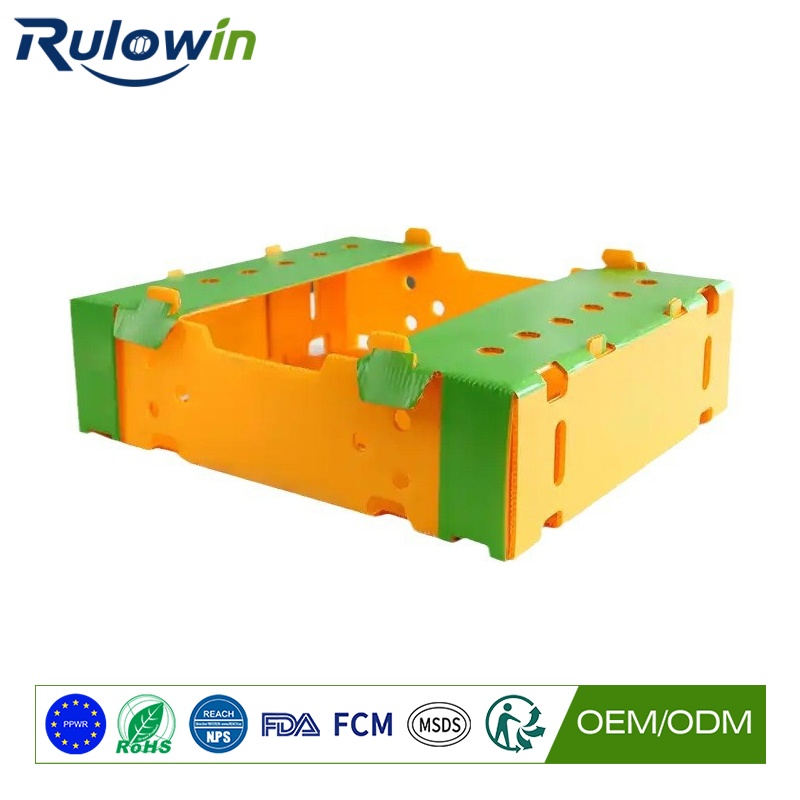
When a crate fleet will not come clean, the first assumption is that the wash is inadequate. Sometimes it is. More often the crate design makes parts of it unreachable, and no amount of detergent or temperature fixes that. The four features that cause it are all visible on a sample crate before an order goes in.
Sharp internal corners
The most common problem. A tight internal radius holds residue and is in shadow from fixed wash nozzles. The fix at design stage is a generous radius on every internal angle. The fix in service is manual cleaning, which is expensive and never complete. Look at the base-to-wall junction first – it is usually the tightest corner in the crate and the one holding the most residue.
Closed drain channels
A channel that runs into a dead end traps whatever goes into it. Channels should be open at both ends so water and debris pass through. This is easy to check: hold the crate up and look along the channel. If you cannot see daylight through it, it will not wash out.
Unnecessary ribs and recesses
Ribs add stiffness, which is useful, and they add surfaces that are hard to reach, which is not. A heavily ribbed interior is stiffer and dirtier than a smooth one. For high-care crops, a smooth interior with stiffness provided by external geometry is usually the better compromise – and it is worth asking the supplier which the crate was designed for.
Hollow sections
A hollow rim or a boxed section looks strong and traps water if it is not sealed, and it can trap wash water that then drains out slowly onto the floor or onto the produce below. Where a crate has hollow sections they should be sealed, and if they are not, that is a reason to choose a different crate for a washed application.
What to do with a sample
Soak it in something that leaves a visible residue, run it through the actual wash, and then look at the corners and the channel ends. That test takes an hour and it tells you more than any datasheet. Where a wash tunnel is used, ask the supplier for a crate that has been through that specific tunnel type – or send samples and test them.
When the wash is the problem
Sometimes it is. Nozzles wear and lose pressure, filters block, and a tunnel that was commissioned for one crate design may not cover a different one. Before blaming the crate, check the nozzle pattern against the crate geometry – a crate with taller walls may simply be out of the spray envelope. The wash regime question is covered in washing and sanitising reusable produce boxes, and the residue that survives a poor wash is described in produce residue in crate corners.
The cost of a crate that will not clean
It is not the crate. It is the labour of manual cleaning, the cost of the detergent and water needed to compensate, and the risk of a failed swab at the worst possible moment. On a fleet of a few thousand crates, a design that needs occasional manual attention is a recurring cost for a decade, and it is invisible in the purchase price.
Where a fleet is already bought, the cheapest mitigation is usually a pre-rinse stage that removes the bulk of the debris before the main wash – it does more for cleanliness than increasing the detergent concentration, and it reduces the load on the wash water so the water stays effective for longer.
What we can do
We supply produce crates with radiused corners, through-channels and smooth interiors for wash-critical applications, and we will send samples to put through your own wash. Tell us the tunnel type and the crop.