
Air purifiers are sold on the stages inside: HEPA, activated carbon, sometimes a catalyst. The stage that decides how long those last sits in front of them, costs a fraction as much, and is almost never specified. Fitting or upgrading a washable pre-filter is usually the cheapest change you can make to a purifier’s running cost.
What the first stage catches
A pre-filter is not there to clean the air you breathe. It is there to take the coarse loading that would otherwise reach the fine stage: lint and fibre from textiles, hair, the large agglomerates of dust that form on a floor and get kicked up, pet dander in clumps, insect debris in warm climates. These are big particles. They are also the bulk of the mass.
That distinction matters. A HEPA medium is very good at fine particles and structurally poor at holding mass. It is a dense mat with a huge surface area and very little depth. Fill that surface with lint and you have blocked the fine stage with material it was never meant to hold.
What happens when there is no pre-filter
The pattern is familiar. A new purifier moves plenty of air and runs quietly. Over weeks the airflow falls, the fan speeds up to compensate or the unit simply delivers less clean air per hour, and the noise rises. Nothing is broken; the fine stage is loaded.
Then the cartridge is replaced. That is the cost people notice, and it is the wrong place to solve the problem. Replacing a fine cartridge to deal with lint is using the expensive consumable to do the cheap consumable’s job.
The honest limitation
A washable pre-filter does not, by itself, improve the air in the room. It captures coarse material and nothing like the fine fraction that matters most for health. If you fit one and expect the room’s fine particle count to fall, you will be disappointed – that is the HEPA stage’s work and always will be.
What it does is protect the stage doing that work, and it converts a recurring purchase into a wash. Whether that is worth it depends on how dusty your environment is. In a clean office it may not pay back quickly. In a home with pets, a workshop, or anywhere with textile fibre in the air, the difference in cartridge life is large.
Choosing one
Two properties decide whether a pre-filter helps or hurts. Open area – the fraction of the face that is open to air – determines how much resistance it adds. Washability determines whether it is a consumable or a fixture.
A pre-filter that is too dense becomes the restriction it was meant to prevent, and the purifier’s fan pays for it continuously. A pre-filter that cannot be washed is just another disposable with a different name.
Where the stage should sit in the stack
Order matters, and several purifiers get it wrong. The coarse stage has to be first in the air path. If a carbon stage sits ahead of it, the carbon loads with dust and lint before it has done much adsorbing, and the unit’s odour performance drops while the carbon is still far from saturated.
The usual correct order is coarse, then carbon, then fine. Some units combine carbon and fine into one cartridge, which is fine as long as something coarse sits in front of both.
If the unit has no pre-filter slot at all, the panel does not have to live inside it. A washable screen stood off behind the intake grille or over the intake face – outside the unit, held by the grille or a simple frame – does the same job and is often easier to reach for washing. It looks less tidy and it works, which is usually the right trade.
What we can do
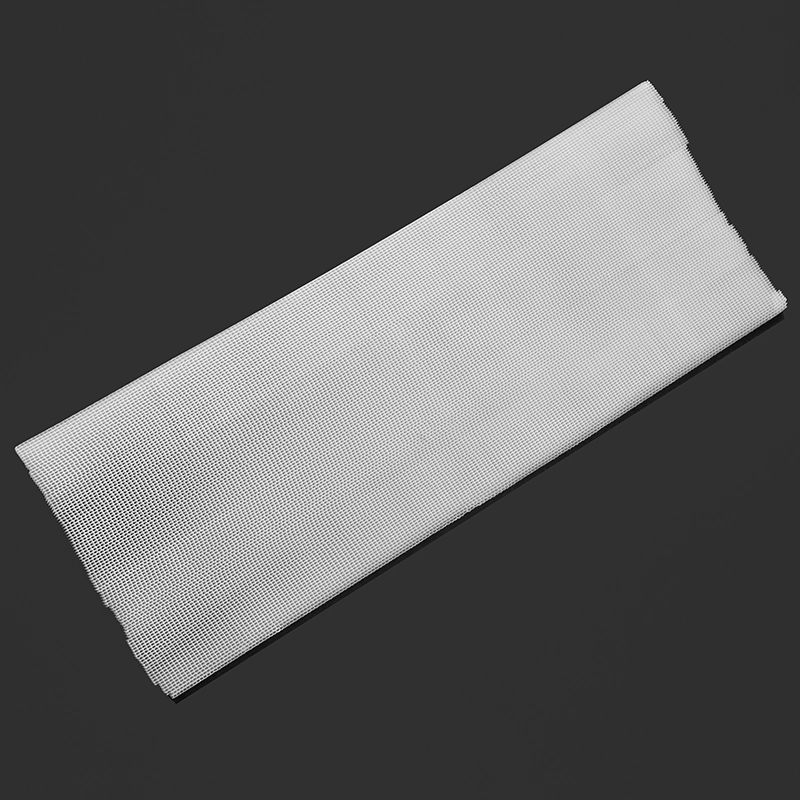
We supply reusable PP honeycomb pre-filter media for air purifiers, cut to the intake dimensions of the unit rather than sold as a fixed panel. Tell us the intake size and the airflow and we will tell you what open area suits it – and if your unit is clean-running enough that a pre-filter earns little, we would rather say so.