
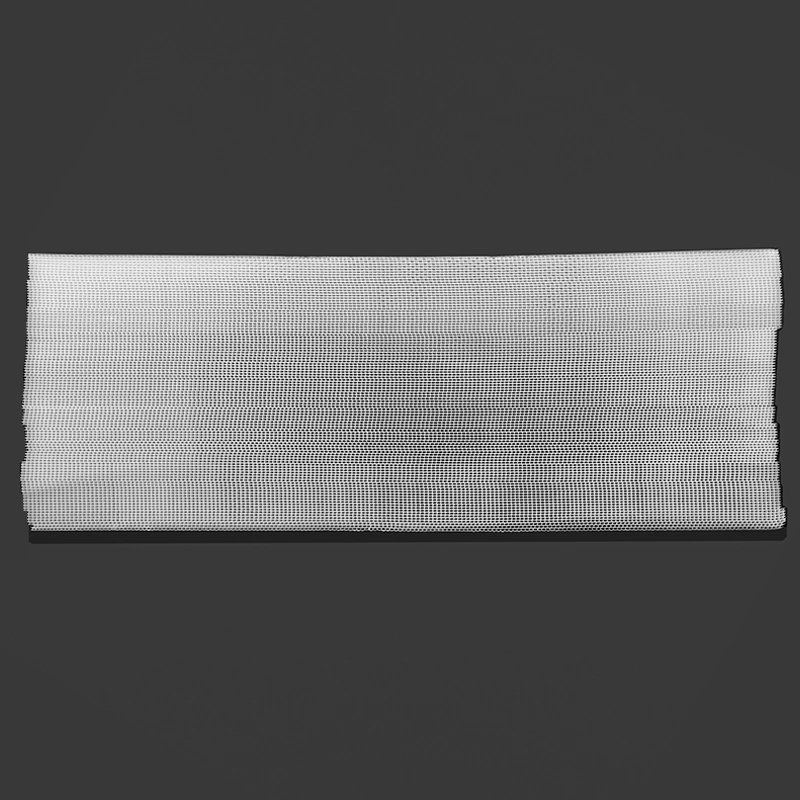
Both of these sit in front of a fine filter stage and capture coarse material. One is a consumable you replace, the other is a fixture you wash. The comparison is not really about which filters better – at the coarse end they are comparable – it is about labour, logistics and whether your dust load is the kind that washes out.
What a washable screen is good for
Dry particulate. Household dust, textile lint, pollen, wood dust, paper dust – all of it sits on the surface and in the open cells and rinses out. In these applications a polypropylene honeycomb screen will run for years, and the only cost is the wash.
It also holds its shape. A disposable pad that has loaded up and got damp will sag; a rigid screen does not, which matters if it is somewhere the airflow will deform it.
What it is not good for
Greasy or oily aerosol. Once oil has worked into the structure it does not rinse out, and the screen is finished. Commercial kitchens, machining with oil mist, anywhere with a sticky aerosol – a washable screen is the wrong product there, and it is better to know that before buying than after.
And labour. “Washable” assumes somebody washes it. In sites where filter maintenance is nobody’s named job, washable screens get fitted, forgotten and left loaded for a year, at which point they are worse than a pad that somebody would have changed. This is the most common failure of washable filters and it is not a product failure.
Where a disposable pad wins
Low dust load with no maintenance resource. If the intake is clean and nobody is going to wash anything, a cheap pad changed twice a year is the right answer and there is nothing wrong with it. Also where the contamination is hazardous – washing a screen loaded with something you do not want on your hands, or in your drain, is a bad idea whatever the screen costs.
Pressure drop, and why geometry matters more than the material
Both types add resistance. The number that determines how much is the open area – the fraction of the face that lets air through. A dense disposable pad can restrict more than an open honeycomb screen, so “washable equals more resistance” is not right; it depends entirely on the specific products compared.
We covered this in how long a washable air filter screen lasts, including what ends its life.
The middle case: a washable frame with disposable media
There is a configuration worth knowing about, because it suits a lot of sites: a rigid reusable frame holding a disposable media pad. The frame gives you the structure and the shape retention of a washable screen; the media gets thrown away when it loads.
This is the right answer where the contamination is awkward – oily enough that washing will not work, but not so valuable that a rigid washable screen is worth trying anyway. It also works where maintenance is unreliable, because replacing a pad is a simpler task to assign than washing a screen.
It costs more than a bare disposable pad and less over time than a washable screen that nobody washes. If you are unsure which way to go, this is usually the safe default.
What we can do
We supply washable PP honeycomb filter screens cut to the intake dimensions, and we will ask what the dust is before quoting. If your aerosol is oily, we will tell you a washable screen is the wrong choice rather than sell you one that will not wash.