
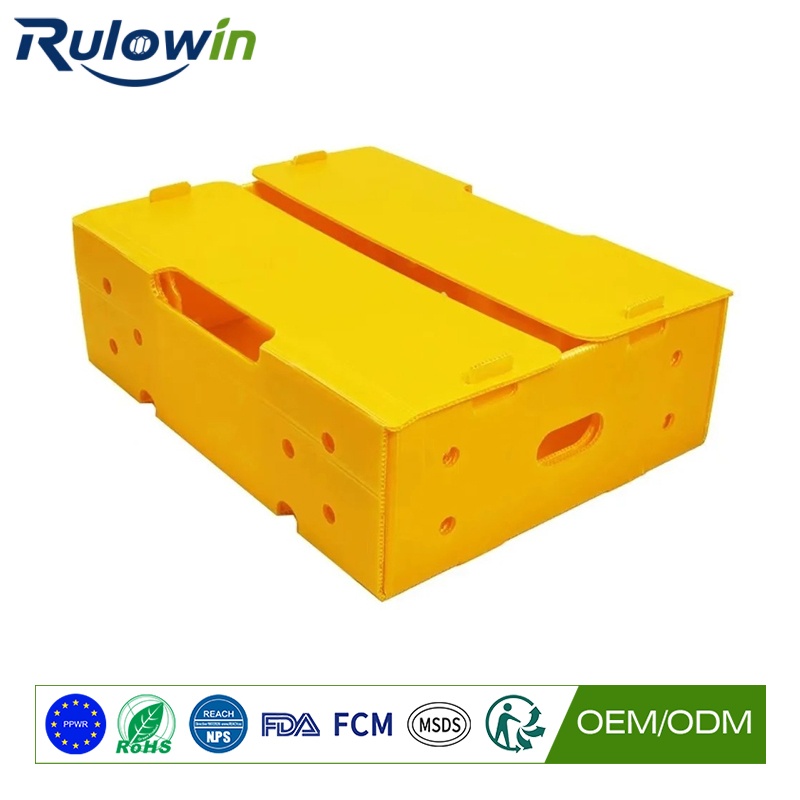
Wash temperature is usually set for hygiene reasons and never revisited, which is reasonable – hygiene comes first. It is worth knowing what the temperature is costing in crate life, because in some operations the wash is the main thing ageing the fleet.
What heat does to polypropylene
PP softens well before it melts, and its resistance to chemicals drops as temperature rises. A wash at 60C or above combined with a chlorinated or alkaline detergent is considerably more aggressive than the same chemistry at 40C. The visible results are surface crazing, loss of gloss and, over time, cracking at stressed points. None of that is dramatic and all of it shortens service life.
Where the line sits
Most produce crate washing is done somewhere between ambient and 60C. Below about 40C the cleaning relies more on chemistry and mechanical action; above it, the heat is doing part of the work. The hygiene requirement should always set the floor, and the question worth asking is whether the temperature is higher than the hygiene requirement actually needs.
Chemistry interacts with temperature
The combination matters more than either variable. A mild detergent at a high temperature and an aggressive one at a moderate temperature can have similar cleaning results and very different effects on the crate. Where a wash regime is producing short crate life, the cheapest experiment is usually to reduce the chemical concentration rather than the temperature – and it is worth trying before concluding the crates are poor quality.
Stress cracking
Some detergents, particularly at high concentration and temperature, cause environmental stress cracking in polypropylene – fine cracks that appear in stressed areas without any applied force. Crates stacked tightly while hot and wet are particularly susceptible. If cracks are appearing in a fleet with no impact history, chemistry is the first thing to investigate, and the regime is discussed further in washing and sanitising reusable produce boxes. The design features that cause it are set out in what makes a crate hard to clean.
What to measure
Record the wash temperature and the chemical concentration, and keep crate failure data – which crates failed, where, and how old they were. Over a season those two records together will show whether the wash is the ageing mechanism. Without them, every crate failure is blamed on the crate.
Where heat is genuinely needed
Some crops and some customers require a defined wash temperature, and that requirement is not negotiable. Where it applies, the response is to buy a crate specified for that regime rather than to argue about the temperature. Telling the supplier the wash temperature and chemistry is part of the specification, and it is the sort of detail that gets omitted from enquiries and discovered later.
What the extra heat costs in crates
The relationship is not linear. Moving a wash from 40C to 60C typically shortens crate life measurably while improving cleaning marginally, and the improvement in cleaning can usually be bought more cheaply with mechanical action or a longer contact time. Where a wash is running hot by default rather than by requirement, dropping the temperature is often the cheapest experiment available.
The exception is a wash where the temperature is doing microbial work that chemistry cannot. In that case the temperature stays and the crate specification changes instead – thicker base sections, a grade rated for hot wash, and a shorter expected service life priced into the business case. Both are legitimate; only one of them is usually examined.
What we can do
We supply produce crates for both ambient and hot wash regimes and will say which is which. Tell us the wash temperature and the detergent, and we will specify a crate that survives it rather than one that merely looks the same.