
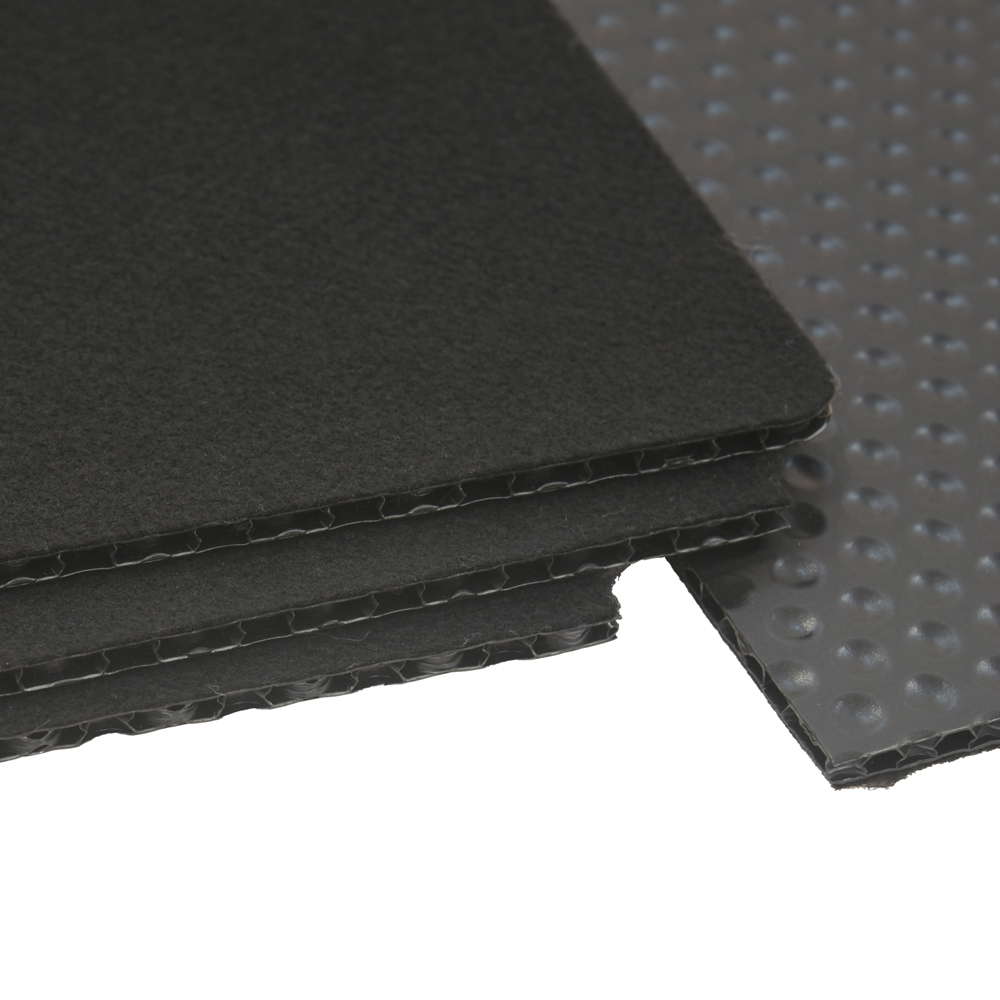
Working inside a pharmaceutical facility imposes requirements that have nothing to do with impact resistance. Whatever goes on the wall has to survive the cleaning regime, must not shed particles into a controlled environment, and has to be removable without contaminating the area. Products that are perfectly adequate on a commercial fit-out get rejected here routinely.
Cleanability dominates everything
The area will be cleaned with validated agents on a set frequency, and every surface in it is part of the cleaning validation. A protection material that degrades under those agents, holds residue or cannot be wiped clean becomes a contamination risk rather than a benefit. Ask what agents are validated for the area and check compatibility before specifying anything.
Particulates and shed
Cut edges, friable surfaces and materials that powder under abrasion all shed particles, which is unacceptable in classified areas. Any protection going into such a space needs clean sealed edges and a surface that wears without generating dust. This usually rules out site-cut panels with open edges and anything with a fibrous core.
Clean-in-place adjacency
In processing areas, cleaning may involve high-pressure or foam application to equipment nearby. Protection has to tolerate being splashed with whatever is used, which again means checking compatibility against the actual cleaning agents rather than the generic term “cleaning chemicals”.
Joints must not collect anything
A crevice that holds liquid or powder is a contamination reservoir and will be written up. Overlapping joints which shed downwards, sealed perimeter details, and avoidance of horizontal ledges all matter here. In practice the detail drawing is scrutinised harder than the material datasheet.
Method of removal
Strip-out in a controlled area has its own protocol: what comes off, when, how waste leaves the building, and whether the area requires re-cleaning and re-qualification afterwards. Plan the removal method and the waste route at the same time as the installation, because improvising at strip-out tends to trigger re-validation.
Documentation expectations
Pharmaceutical clients routinely ask for material composition, certificates of conformity and sometimes extractables information. Getting that at enquiry rather than at delivery avoids a situation where compliant material sits in a store because nobody can release it. We have written about this documentary expectation generally in audit documentation for suppliers.
Where we step aside
Some requirements in this sector – specific validation data, particular listed materials – we cannot meet, and we say so rather than supplying something close. If your spec calls for a listed hygienic cladding system, buy the cladding system; temporary protection over it is a separate decision.
Working alongside quality assurance
Quality teams will want to see what is going into a classified area before it goes in, and rightly so. Presented early – material proposed, cleaning compatibility, edge detail, removal plan – the review is quick. Presented late, it becomes a hold point.
Expect them to ask about extractables and about removal generating particles. Having sealed edges, a wipe-downable surface and a written removal sequence answers most of it. Where they ask for something we cannot evidence, saying so early is better than having it discovered during qualification.
What we can do
We supply PP honeycomb panels with sealed edges suitable for wipe-down regimes, and can provide composition statements for what we ship. Send the cleaning agents and the area classification and we will tell you honestly whether our material is appropriate.