
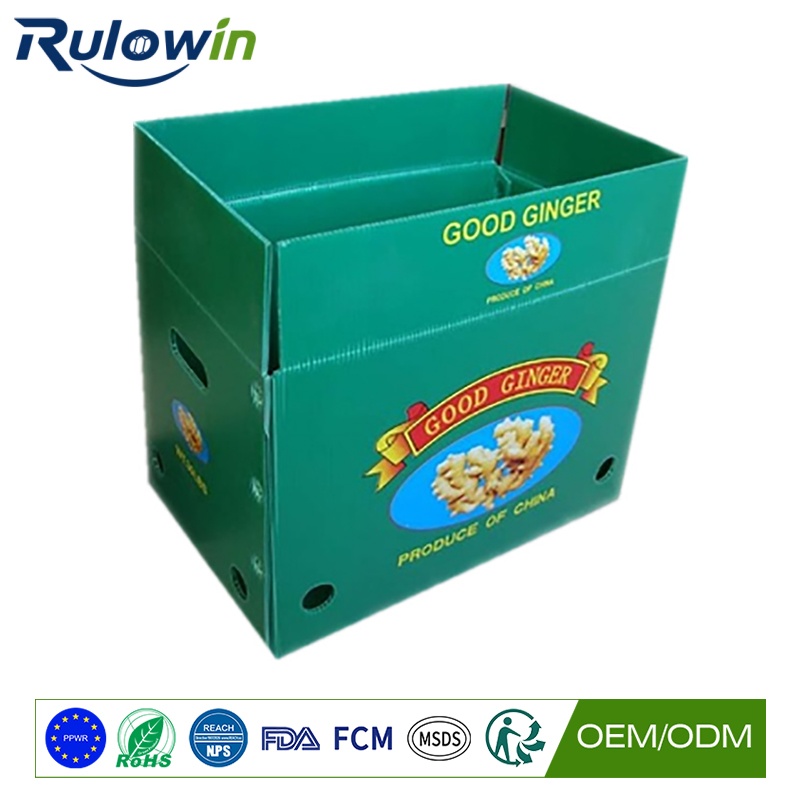
An orchard crate spends its working life in direct sun. It sits in rows waiting to be filled, it rides on a trailer in the open, and every evening it is stacked in the yard. Over a season that is hundreds of hours of ultraviolet exposure, and what happens next depends entirely on whether the polymer was stabilised when it was compounded.
What ultraviolet actually does
UV photons carry enough energy to break carbon-carbon bonds in the polymer chain. At the surface, where the light reaches, chains shorten and the material loses the entanglement that gives it toughness. The visible stages are predictable: a chalky surface first, then colour fade, then fine surface crazing, then cracking and brittleness. By the time you can see cracking, the mechanical damage has been done.
Why it is a surface problem that becomes structural
Damage is concentrated in the top fraction of a millimetre, but a crate wall is thin and a crack that starts at the surface propagates. The places that go first are the thin, highly stressed ones – hand hole edges, base corners, the rim. Those are also the places that carry load, which is why UV damage and impact failure usually appear together rather than separately.
How stabilisation works
Two families of additive are used. Absorbers take the UV energy and dissipate it as heat; hindered amine light stabilisers interrupt the chain reaction that propagates after a bond breaks. They are compounded into the polymer before moulding, which is the key point – a coating or a surface treatment does not do the same job, because it wears off exactly where the crate is handled most.
What to ask for
Ask how much stabiliser and for what exposure. A crate intended for indoor cold storage does not need the same package as one that lives in an orchard, and paying for orchard-grade stabilisation on an indoor fleet is wasted money. Where the supplier cannot say what is in the compound, that is the answer. It is also worth asking whether the stated figure is for continuous exposure or intermittent, because the two are quoted differently.
Colour is not cosmetic
Darker pigments, particularly carbon black, absorb UV and protect the polymer, which is why black crates typically outlast pale ones in the same conditions. That is a functional difference rather than an aesthetic one, and it is worth knowing before specifying a colour scheme on appearance grounds. Where a light colour is needed for grade coding, the stabiliser package has to work harder to compensate.
Where the stabiliser does not help
UV does not stop at the surface if the crate is scratched, and it does nothing about impact damage at low temperature. A well-stabilised crate dropped onto frozen ground still cracks. Stabilisation buys years of outdoor life, not immunity, and the honest expectation for a full-outdoor orchard crate is a service life measured in seasons rather than decades. What shortens it further is worth knowing too, and the interaction with cold is set out in why PP crates crack in cold storage.
What we can do
We supply UV-stabilised produce crates for full-outdoor orchard work and will state the stabiliser package rather than saying “UV resistant”. Tell us how many months a year the crates live outside and whether they are stacked in the open, and we will specify accordingly.