
The Hidden Price of Damage
A damaged shipment triggers more than a replacement unit. There is the claim administration cost, the freight for the return, the lost sales window, and the erosion of customer trust. Industry data puts the fully loaded cost of a damage claim at 3 to 5 times the product value for time-critical industrial parts. Reducing damage frequency therefore protects margin far more than shaving cents off a disposable box.
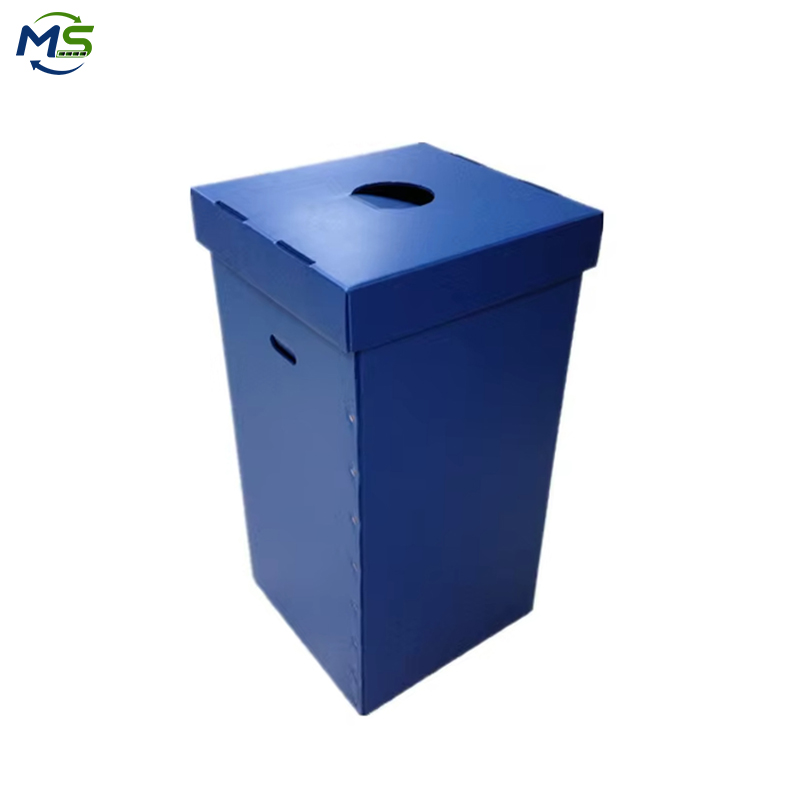
Rulowin reusable PP packaging targets the failure modes that generate most claims.
Where Disposable Packaging Fails
Corrugated cartons lose compression strength once they get damp, and stapled seams split under stack load. A 2023 audit of a components importer found 6.2 percent of cardboard-shipped orders arrived with some defect, driving 410 claims a year. The dominant causes were corner crush, moisture softening, and lid pop on rough handling.
None of these are intrinsic to a moulded PP structure.
How PP Changes the Odds
PP totes keep their geometry under 200 kg stack load and shrug off rain and condensation. Integrated locking lids prevent accidental opening, and ribbed corners absorb impact that would flatten cardboard. After switching 70 percent of lines to Rulowin PP, the same importer recorded a defect rate of 0.9 percent and 58 claims annually, a claim cost reduction near 86 percent.
Because the containers are tracked, a damage event is also traceable to the handling node that caused it.
Quantifying Your Saving
Start from last year’s claim count, average claim cost, and return freight. Multiply the expected defect-rate reduction, typically 4 to 6 points, by those figures to model annual saving. Most operations recover the reusable container investment within 12 to 18 months, after which the saving is pure margin. Rulowin provides a claim-baseline worksheet to make the business case transparent before you commit.
Lower claims also mean steadier production planning, a benefit that rarely appears on the packaging line item.
Do not forget indirect savings such as lower inspection labour, because fewer suspect shipments need opening and rechecking. A German machinery exporter found its quality team reclaimed 6 hours a week once damage-related holds fell, time redirected to genuine process improvement.
Pair the container change with a handling standard: train dock staff to stack within rated height and to report crush events on scan. Packaging alone cuts most damage, but the last few points come from behaviour, and the two together typically reach the 4 to 6 point reduction the business case assumed.
Finance teams should model the avoided cost of expedited replacement freight too, because a damage claim often forces a costly urgent reship. Capturing that line typically adds another 10 to 15 percent to the annual saving and shortens payback by a month or two.