
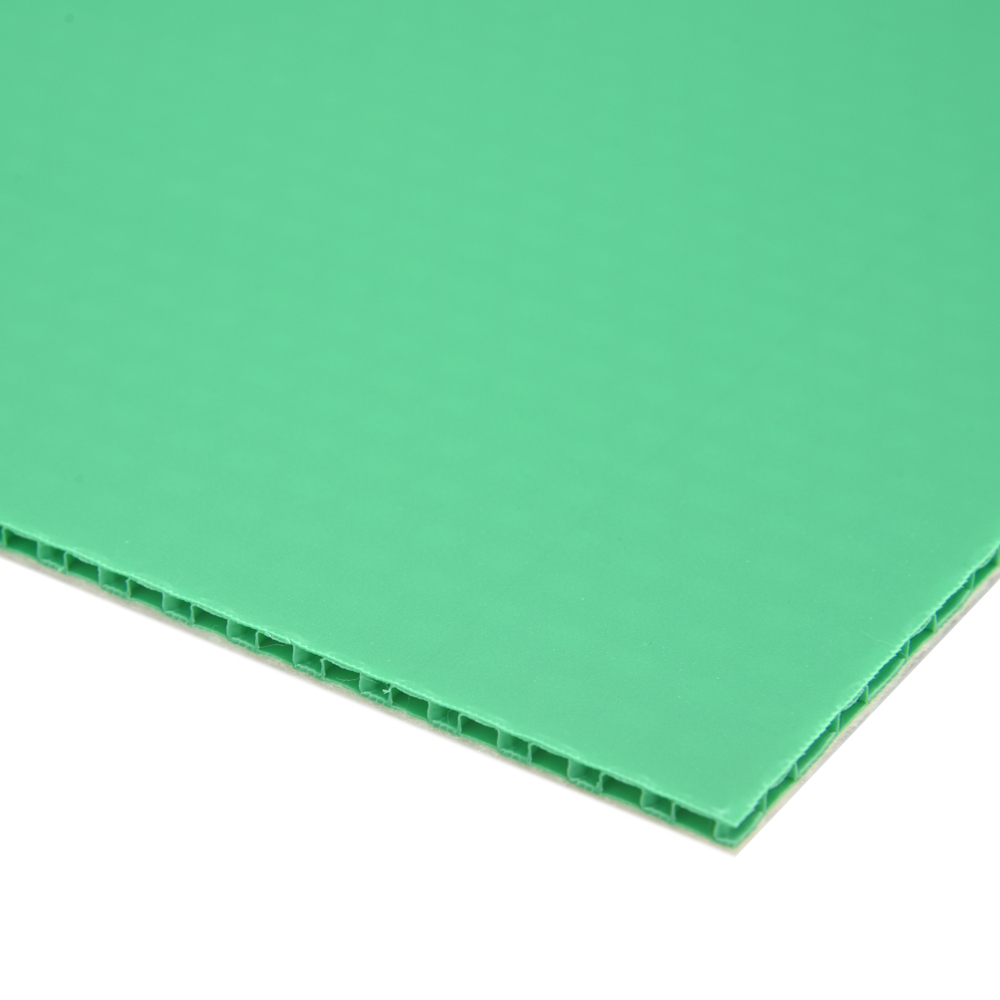
Strip-out week arrives, protection comes off, and somebody decides between taking it to the skip, taking it to the yard, or asking the supplier what happens next. Decided at that point, it almost always goes to the skip – even where reuse or recycling was available and cheaper.
Decide before installation, not at strip-out
The return route influences decisions made weeks earlier: whether panels are cut to reusable sizes, whether adhesive was used, whether they were contaminated by the works, and whether anybody counted them. Agreeing the destination at enquiry stage makes everything downstream easier.
Reuse within your own business
The simplest route is another project. It requires storage, transport and somebody willing to accept used material – which often means specifying several smaller sizes rather than one bespoke cut per project. Where that standardisation is in place, reuse within the business is almost always the cheapest option.
Supplier take-back
Some suppliers operate take-back either for credit or as part of a hire arrangement. Ask what condition they will accept and who pays transport – those two terms decide whether the scheme has any value. Panels that must be cleaned, stacked and palletised to a standard are not free to return.
Recycling routes realistically
Polypropylene is recyclable where a collection stream exists, and a monolithic PP panel is a reasonable feedstock. The practical constraints are contamination, transport cost and minimum quantities. Clean, dry, single-polymer panels are wanted; panels carrying tape, adhesive, sealant and mixed fixings are not.
Clean before the last day
The single most valuable habit is cleaning panels as they come off rather than storing them dirty. Clean material has options; dirty material has one. A wash bay or a pressure washer and half a day of labour generally decides whether a load is recycled, reused, or landfilled. The same argument about condition at return appears in hire deposits and write-off allowances.
Waste reporting benefits
Clients increasingly report construction waste by tonnage and by diversion rate, and protection is a visible, easy-to-quantify stream. Recording how much was reused or recycled – with the destination documented – is worth having at project close-out, and occasionally worth tender points.
Documentation at destination
Whatever route material takes, get the paperwork: a waste transfer note for recycling, a receipt or credit for take-back, or an internal transfer record for reuse on another project. Without those, the material was landfilled for reporting purposes regardless of where it physically went.
Photograph the load before it leaves and, if possible, on arrival. Two images settle disputes about condition and quantity, and they are the difference between a recycling figure that survives audit and one that gets challenged.
The cost nobody budgets
Moving material between projects or to a recycler costs labour, transport and storage space, and it is rarely in the original cost plan. Price the handling explicitly before committing to a reuse or recycling route – a higher recovery rate can still cost more once two additional movements are included.
Who decides on site
Somebody has to be able to say, at strip-out, whether material is worth keeping. Give that decision to one named person with a simple test – clean, flat, uncontaminated – rather than letting it default to whoever has a skip arriving.
What we can do
We manufacture PP honeycomb panels in reusable sizes and can supply replacements matched to previous orders so partial losses can be topped up. Tell us at enquiry if you intend to return or recycle material and we will size and pack accordingly.