
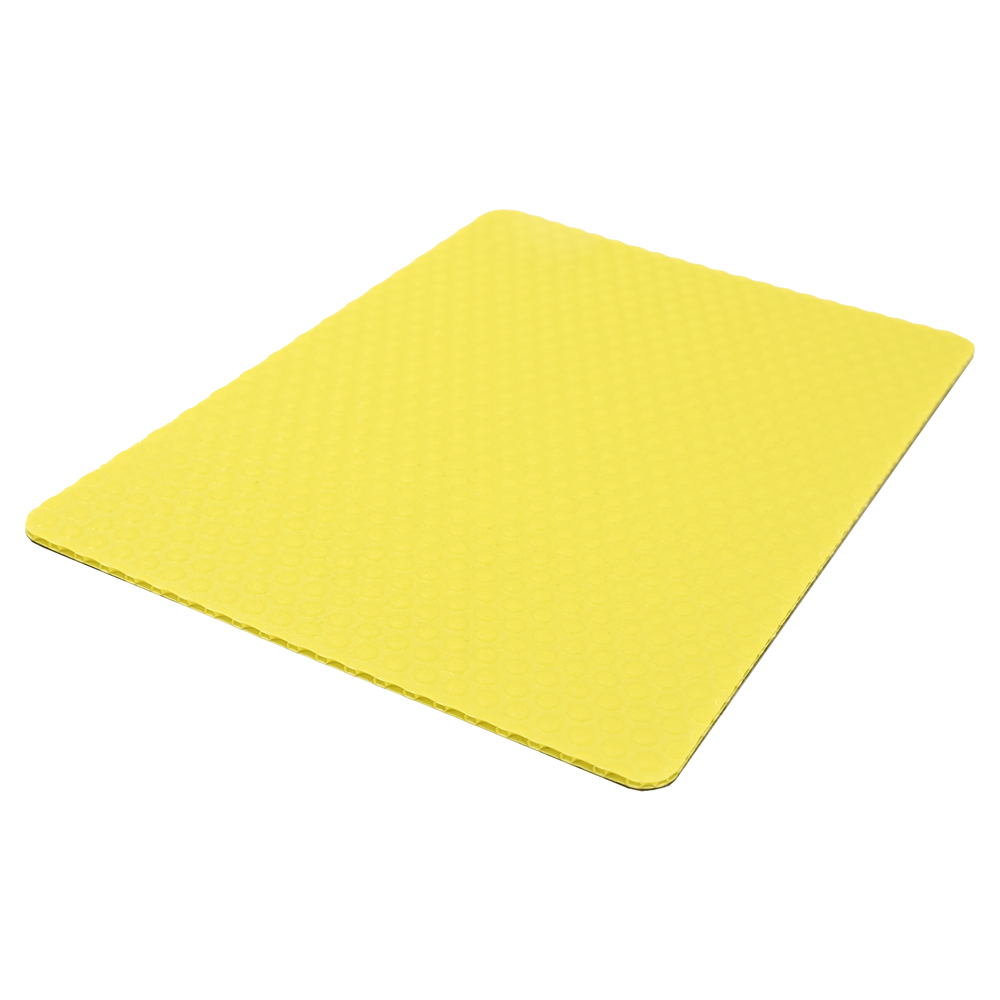
Polypropylene has a low surface energy, which is the property that stops liquids spreading on it. Adhesives are liquids at the moment of application, so they bead rather than wet out, and a joint that has not wet out has almost no strength whatever the datasheet says about the adhesive.
This is why PP bonding projects fail in a pattern: the part looks bonded, survives light handling, and comes apart under load or after a season of thermal cycling.
What has to happen first
The surface energy has to be raised above the level the adhesive needs. Several methods do this, and they differ in how well they work, how long the effect lasts, and what equipment they need.
The treatments
Corona treatment. A high-voltage discharge oxidises the surface. Fast, suited to flat sheet, widely used in printing and laminating lines. The effect decays with time and the treated surface needs to be bonded within its working window.
Flame treatment. A gas flame passes over the surface and oxidises it. Effective and fast on flat sheet, harder to control on complex geometry and on a profiled or honeycomb surface.
Plasma treatment. The most thorough and the most durable result, including on complex shapes. It needs vacuum or atmospheric plasma equipment, which makes it a specialist operation rather than a workshop one.
Abrasion plus a primer. Mechanical abrasion alone does not raise surface energy much, but it increases the area and removes contamination. Combined with a primer designed for low-energy substrates, it can be adequate – and it is the most accessible option in a workshop.
Contamination is the other half
Even a well-treated surface will not bond if it is dirty. And PP is prone to a specific problem: additives in the material migrate to the surface over time, and those additives are deliberately non-stick. A panel that has been in storage for months can have a layer of migrating slip agent on its face.
So cleaning is not optional. Isopropyl alcohol for general contamination, and abrasion followed by a solvent wipe where the surface may have bloomed. Wipe with a clean cloth and change it often, because you are removing a film rather than dissolving a deposit.
Choosing between bonding and welding
It is worth asking whether the joint has to be bonded at all. Welding avoids the surface energy problem completely by joining like to like. Bonding wins where the joint is large and flat, where one part is a different material, or where heat would damage something nearby.
Where the joint is PP to PP and heat is acceptable, welding is more durable and less sensitive to process control. Where it is PP to metal or PP to a foam, bonding is the realistic option and the surface treatment becomes critical.
Testing the joint properly
Do not test a bonded PP joint by pulling a sample apart by hand. Do a peel test on a production sample, and do it after the adhesive has fully cured rather than after an hour. Then repeat it after the part has been through a thermal cycle, because that is what breaks the marginal joints.
If your samples fail at the interface – clean surfaces with no adhesive residue on one side – the surface treatment is the problem. If they fail within the adhesive, the treatment was adequate and the adhesive or the joint design is at fault. That distinction saves a lot of time.
What we can do
We bond and weld PP honeycomb panels and will tell you which method suits your joint rather than defaulting to adhesive. If bonding is right, we will say what surface preparation the process needs and what adhesives are worth trialling.