
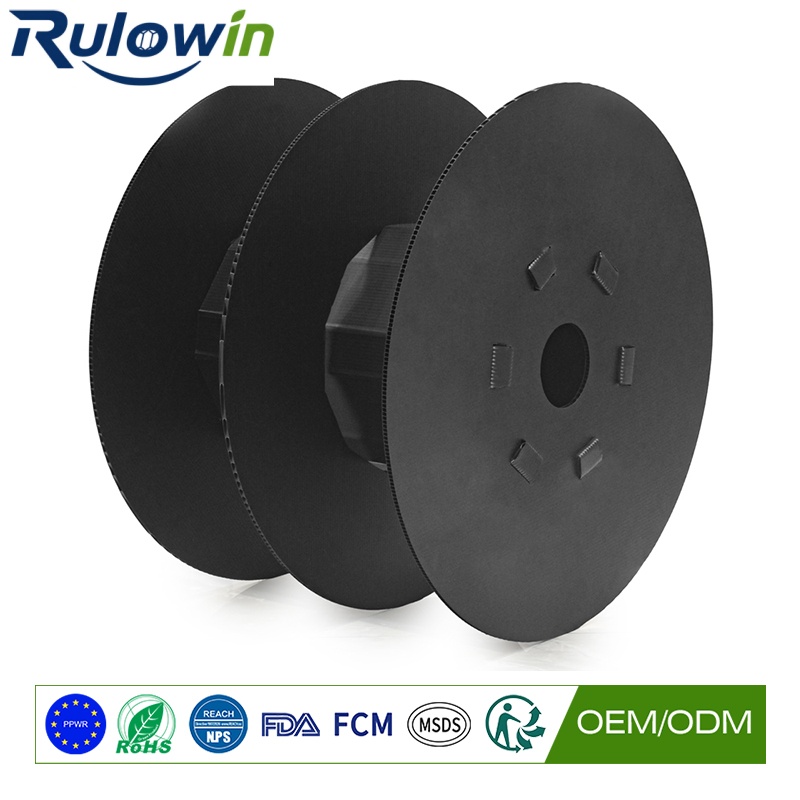
Polypropylene is a hydrocarbon polymer and it burns. This is a fact about the material and it belongs in any storage planning for a site with a meaningful quantity of plastic packaging. It is also a fact that gets either ignored or exaggerated, and the useful position is in between.
What is actually true
- PP burns readily once ignited and continues to burn, with dripping that can spread fire.
- It is not easily ignited compared with, say, packaging film or solvents. It needs a sustained ignition source rather than a spark.
- A stack of empty spools is a substantial fuel load because it is mostly air by volume but entirely polymer by mass where the material is.
- Burning polymer produces dense smoke and unpleasant combustion products, which is often the more serious hazard in a fire.
Fire-retardant grades exist. They add cost and they change other properties, so they are worth considering where there is a specific requirement rather than as a default.
Where the risk actually sits
In practice, the significant contributors are:
- Quantity in one place. A few hundred spools is different from a few thousand, and bulk storage is where this becomes a real planning question.
- Whether storage is indoors. An outdoor yard of plastic spools is a much lower concern than the same quantity in a building.
- What else is stored nearby. What ignites first is usually something else.
- Ignition sources in the area — heating, electrical equipment, hot work, vehicle exhausts.
- Means of escape and firefighting access, which is what determines consequence.
Practical measures
None of this is specific to spools, and that is the point — it is ordinary combustible storage management:
- Separate bulk storage from buildings and from other high-risk materials where the site allows
- Keep clearances from ignition sources, heaters and electrical equipment
- Maintain access for firefighting and keep escape routes clear — the point made about sightlines in our yard housekeeping article, with the same reasoning
- Consider separation between large stacks to limit fire spread
- Do not store near hot work without appropriate controls
- Check what your insurer requires. This is often the binding constraint and it is worth knowing before rather than after an incident or an inspection.
What to check with insurers
Worth doing if you hold significant quantities: many policies have limits or requirements for combustible storage, and plastic packaging in quantity sometimes falls into a category people have not thought to declare. A five-minute call is cheaper than discovering it at claim time.
What we can and cannot tell you
We can tell you what our hollow board spools are made of, their mass, and whether fire-retardant grades are available at your size and quantity.
We are not going to give you a fire rating for a specific installation, because that depends on your quantity, layout, building and local requirements, and it is properly assessed by somebody qualified rather than by a packaging supplier. If your site needs a formal assessment, that is the right route — and we would rather say so than imply otherwise.
The proportionate view
Storing plastic spools is not an unusual hazard. It is ordinary combustible material, and it is managed the way combustible material is managed: keep the quantity sensible, keep it away from ignition sources, keep access clear, and know what your insurer expects.
The failure mode is not fires starting in spool stores. It is large quantities accumulating somewhere nobody has thought about, and that is a housekeeping question more than a materials one.