
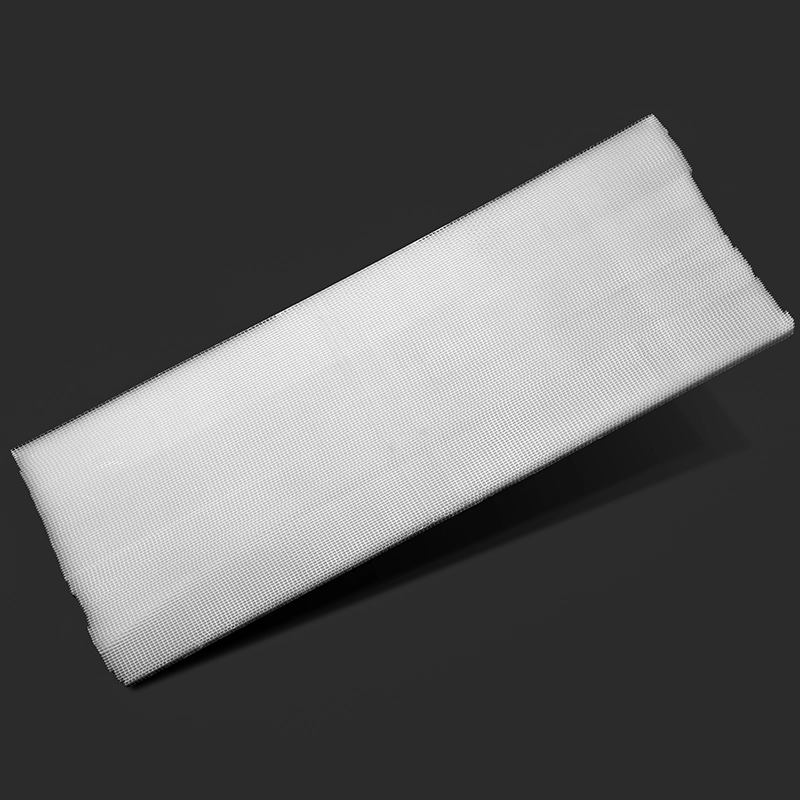
Commercial air handling plant is specified around disposable media, and the filter schedule is a recurring line in the maintenance budget. Changing one stage – the coarse one – to washable panels is the least disruptive version of that change, and it is where the arithmetic works best.
Which stage to change
Change the coarse stage, not the fine one. The coarse stage is replaced often, costs little per unit, and is handling the mass. A washable panel there removes the most purchase orders for the least risk.
The fine stage is a different matter. Bag and cartridge media achieve efficiencies that a washable coarse screen does not approach, and replacing it would reduce the plant’s filtration performance. Staging keeps the fine stage doing its job and stops it carrying the coarse load as well.
What to specify
Five things, and all five belong on the schedule rather than in an email.
- Dimensions and tolerance. Panel size, and how much undersize is acceptable. A panel that is tight will not seat; a panel that is slack bypasses.
- Thickness. Fixed by the frame depth. Measure the holding frame, not the panel being replaced.
- Clean pressure drop at the design face velocity. Not a generic figure – the figure at your airflow.
- The change-out or clean drop. The pressure at which the stage gets serviced. Without it there is no definition of loaded.
- Material. Polypropylene where the air is humid, coastal or chemically aggressive; and stated, so the wash method can be specified to match.
The maintenance change
Washable panels shift work from procurement to labour. Someone has to remove, wash, dry, inspect and refit them, and that has to be in the planned maintenance task list or it will not happen. A spares set is worth having: enough panels to refill the plant while one set is out being washed.
Where this is the wrong choice
If the plant is in a clean environment with a long filter life already, the saving is small. If there is no washing facility and no labour allocated, it will fail. And if the coarse stage is also relied upon for a fine efficiency it cannot deliver, no amount of washing changes that.
What to record at commissioning
Three things, written down on the plant rather than in a report nobody opens: the clean pressure drop across the stage, the date it was fitted, and the service drop that will trigger a wash. Without the first, no later reading means anything. Without the last, there is no definition of loaded.
Write them on a label fixed near the access door. It costs nothing and it is the record that survives staff changes, which is the usual fate of commissioning documentation.
Spares and washing arrangements
Hold one spare set. It means a set can be removed, washed and dried properly without leaving the plant running unfiltered, and it means a damaged panel can be retired rather than refitted because nothing else is available.
Decide where washing happens before the panels arrive. A sink, a hose and somewhere to dry them standing on edge. This sounds trivial and it is the most common reason washable programmes quietly stop – there was nowhere convenient to do it.
What we can do
We supply reusable PP honeycomb filtration panels for commercial HVAC, cut and specified for standard air handling plant. Send us the frame dimensions, the airflow and the pressure drop you can afford, and we will quote a panel with figures you can put on the schedule.