
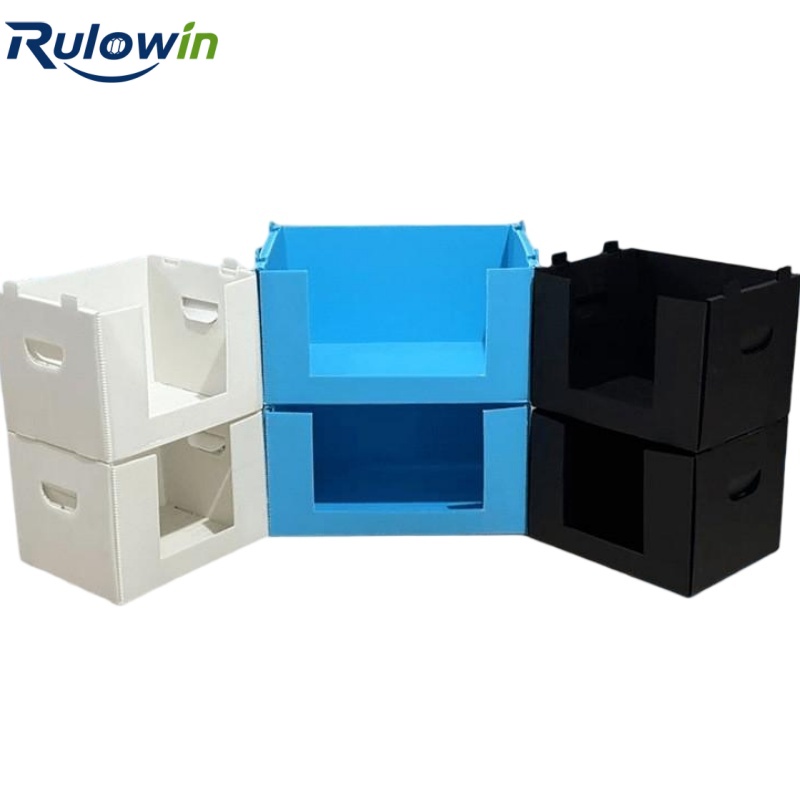
High-bay storage is bought for density, and density is a ratio: usable volume divided by building volume. The container decides the numerator, and the most common way it does so badly is by not using the depth of the slot. A box that leaves eighty millimetres at the back of every slot is giving away a percentage of the entire installation, and because it is a percentage it does not look like much on a drawing.
How the loss happens
Slot depth is set by the rack structure and is usually a round module. Box length is set by the product being carried and is usually not. The remainder is dead space, and it is repeated in every slot in the building. Where a container family has several lengths, the system is normally built for the longest, which means every slot carries the dead space of the worst case. Choosing lengths that share a module is one of the few decisions that improves density without changing the building or the machine.
Double-deep and the reach problem
Double-deep storage doubles density and requires the machine to reach past the first load to the second. That reach has a tolerance: the second load has to be at a predictable distance, and where containers vary in length the reach may come up short or overshoot. Where double-deep storage is planned, the length tolerance matters more than in single-deep, and it is worth checking with the machine supplier before assuming a container family will work in it.
Orientation and which way the box goes in
A box can go into a slot lengthwise or crosswise, and the choice changes both the density and the extraction. Lengthwise usually uses depth better. Crosswise can be better for access to the contents, and it may be required where the load has to be presented to a station in a particular orientation. Where both are possible, the density calculation should decide, and it should be done before the rack is built rather than after.
What the overhang rule costs
Most systems require the load to sit fully within the slot, with no overhang into the aisle, because an overhanging load is a collision risk for the machine. That rule converts any box longer than the slot into a non-starter, and it also means the tolerance has to be one-sided: the longest box must still fit, so the fleet should be specified with an upper bound rather than a symmetric tolerance. Where a supplier quotes plus or minus, the plus is the number that matters.
When a shorter box is worse
A box much shorter than the slot wastes depth, but it can also cause a handling problem: some extraction mechanisms need a minimum engagement length, and a very short box may not present enough. There is therefore a window – long enough to engage, short enough to fit with margin – and it is worth getting in writing from the machine supplier before choosing the container. The height equivalent of this is discussed in height tolerance in AMR handling.
Counting the cost of the dead space
Take the dead depth per slot, multiply by the number of slots, multiply by the width and height, and the result is the volume being paid for and not used. Converted into building cost it is usually a surprising number, and it is the single most persuasive figure in a conversation about standardising container lengths. Where a plant runs several lengths, the argument for reducing them is usually won on this calculation rather than on handling convenience.
What to do
Ask the machine supplier for the usable slot envelope, then choose container lengths that fill it, then check the extraction engagement length. Three steps, in that order. Doing them in any other order produces a system where the container and the machine are each correct and the combination wastes space.