
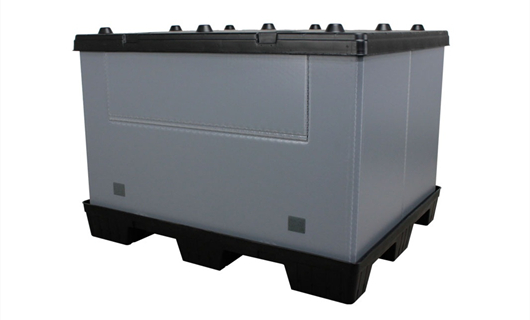
A sleeve box system is forgiving when people move it. On automated equipment there is nobody to notice that the sleeve is not fully home, that the lid is sitting slightly proud, or that the base is a few millimetres out – and the equipment will keep going until something jams.
What automation needs from the system
Consistent external dimensions. A shuttle or a transfer needs to know where the load is. A sleeve that varies in outside dimension between units will foul, or will trigger an over-size alarm.
A base that is flat and rigid. Conveyors and roller beds need a consistent bearing surface. A base that flexes under load changes the relationship between the load and the conveyor, and the failure is usually a jam at a transfer point.
A properly seated sleeve. The sleeve has to engage the base location fully. Partially seated, it moves during transport and the load shifts – which the equipment cannot detect.
A lid that stays put. An automated system will not check that the lid is on. If it can move, it will.
Predictable friction. Same issue as any container on a conveyor, but compounded because a sleeve system has more surfaces in contact.
Where these systems typically fail in automation
- De-nesting. Empty sleeves stacked for return are often nested tightly, and separating them automatically is harder than it looks. A design that nests beautifully by hand can be unworkable mechanically.
- Base wear. The base is what the equipment touches. Worn base corners change the load’s behaviour on rollers and at stops.
- Partial engagement. The most common cause of a shifting load, and it happens silently.
- Lid lift. Vibration over a long conveyor run works a loose lid up.
- Collapsed sleeves. Folded sleeves in an automated return flow need to be flat and consistent, or they jam in the handling equipment.
What to check before committing
- Run samples on the actual equipment, loaded at both ends of the weight range, and empty. Bench testing tells you nothing about a transfer point.
- Test with used bases as well as new ones. A system validated with new bases can fail once the fleet has a year on it.
- Check de-nesting with the real stack heights you will use.
- Check the collapsed sleeve through the equipment that handles empties, not just the loaded one.
- Check the door and height clearances on any shuttle or lift, including the lid.
Design features that help
- Positive sleeve location in the base, so partial engagement is difficult rather than easy.
- A lid with a positive engagement rather than one that simply rests.
- Reinforced base corners, since that is where automated handling damage concentrates.
- Consistent nesting geometry so de-nesting is predictable.
- Identification that a scanner can read from the angle it will actually be read from, not just in theory.
Maintenance changes
In a manual operation, a marginal base gets worked around. In an automated one it causes a stoppage, so the inspection interval has to be tighter and the retirement criteria stricter. A base that is slightly bowed may be perfectly usable by hand and unacceptable on a conveyor.
That usually means a higher replacement rate than a manual operation would have, and it is worth building that into the business case rather than discovering it in the first year.
What we can do
We supply pallet sleeve systems with bases and lids built for repeated handling, and we will ask about your conveying and storage equipment before recommending a construction. If you are specifying for an automated warehouse, tell us the equipment types and we will tell you what the base and sleeve need – and where a heavier base is worth the money.