
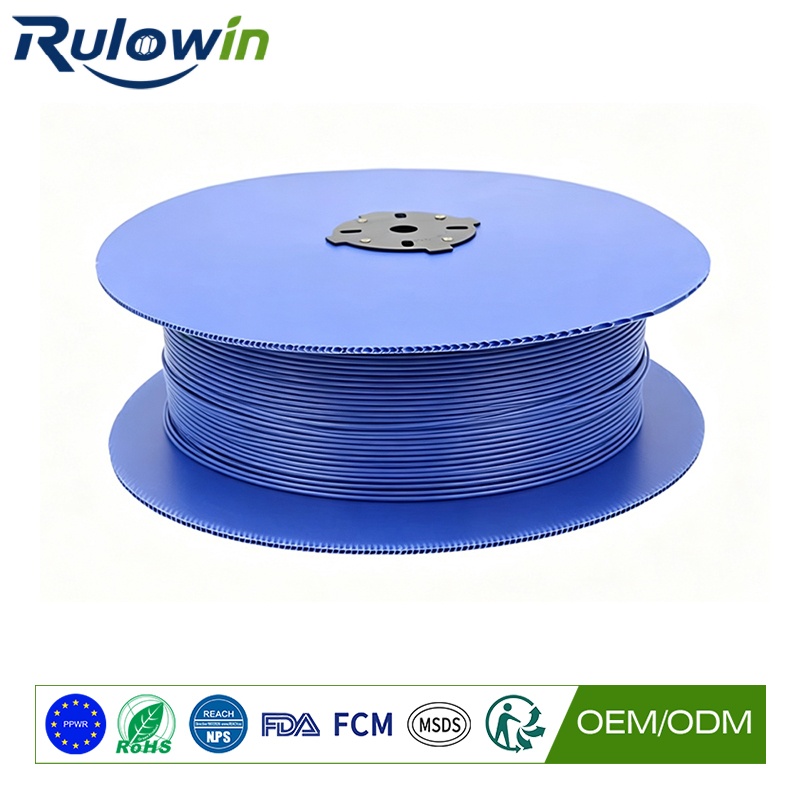
Somebody hands you a spool and asks for more like it. There is no drawing, or the drawing is wrong, or the original supplier is gone. Measuring it properly is straightforward, and there are three things that get missed often enough to be worth stating.
What to measure
Flange diameter — across the outside, at several positions around the circumference, and record the range rather than an average. Spools are not perfectly round and the variation is informative.
Core diameter — the surface the product sits on, again in several places.
Traverse width — the gap between the inner faces of the flanges. Measure at several points around, because if it varies, the flanges are not parallel, which matters.
Bore — diameter at both ends and at several angles. Taper and ovality are both common and both matter. Then measure the shaft it goes on, because the fit is the difference between the two.
Overall length across the outside of both flanges.
Wall or material thickness — wherever you can get a measurement, and note where you took it.
Weight. Crude and useful for checking you have the material right.
The three things that get missed
First: concentricity and squareness. Every dimension can be correct and the spool can still run badly. Check that the flange is square to the core and that the bore is concentric — the methods are in our concentricity article. These are rarely recorded because they are harder to measure, and they are often the difference between a copy that works and one that does not.
Second: the material. You can measure geometry and you cannot easily measure what it is made of. Worth noting:
- Weight, which narrows it down
- Whether it is hollow board or solid — look at an edge or a cut
- Colour and surface finish
- Any marking on it, including moulded material identification
- Flexibility and how it behaves when a sliver is cut
Assuming a material rather than establishing it is a common cause of a replacement spool that is dimensionally identical and performs differently.
Third: the features. Ribs, reinforcement, cut-outs, drainage, joint type, surface texture. All are easy to overlook in a list of dimensions and all affect behaviour. Photograph the spool from several angles alongside the measurements — it is the cheapest insurance there is.
What the measurements will not tell you
- Tolerances. You have one sample; you do not know the range. Measuring one tells you what that one is, not what the specification was.
- Whether the original was any good. If you are replacing it because it failed, copying it faithfully reproduces the failure.
- What the duty was. Dimensions do not tell you tension, speed or handling.
- Whether the design was deliberate. Some dimensions on some spools are whatever the tooling produced.
That second point is worth labouring. The most common mistake in replacement is reproducing something that was never quite right, because it is the only reference anyone has.
Better question than “make one like this”
“This is what we use, this is what goes wrong with it, what would you recommend?” That gives a supplier the information needed to improve rather than replicate — and for a fabricated spool, changing one dimension is usually easy.
Photographs and a drawing
Even a rough sketch with dimensions and a few photographs is better than either alone. If you can produce a simple drawing, do — it removes ambiguity about what each number refers to, which is a real source of error when measurements come as a list.
What we can do with it
Send us dimensions, photographs and — ideally — the shaft measurement and the duty, and we will tell you what we think you have and what we would build. For our hollow board spools we can usually match a geometry closely, and we will tell you where we would deliberately differ and why.
We will also tell you when we think the sample you sent has a problem built into it. That is not always welcome, and it is usually worth hearing.