
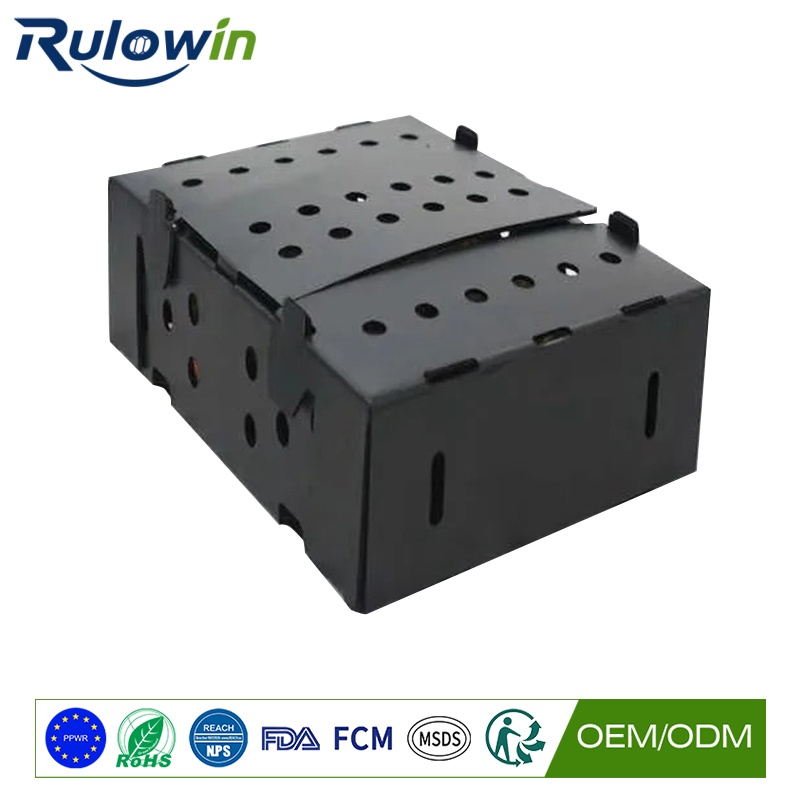
Most packaging waste reporting asks for weight or volume of packaging placed on the market or sent to waste. A returnable crate fleet changes that number dramatically, because the packaging is placed on the market once a decade rather than once per load. Getting the benefit of that in a customer report is straightforward, provided the numbers are assembled properly.
What changes in the numbers
The recurring packaging purchase disappears from the waste line and appears as a capital asset with an annual top-up. The waste becomes: crates retired in the year, plus any single-use items still in use – liners, pads, labels, stretch wrap. That is a much smaller number, and it is a real one rather than an accounting reclassification, because the material genuinely is not being thrown away each trip.
What to keep recording
Crates purchased in the year. Crates retired in the year, with a destination – recycled, downgraded, or unaccounted. And any single-use components still used. Three numbers, and they support both a waste report and a purchasing decision. A fleet that records retirements finds out its real service life, which is useful for the next order.
Weight is easier than volume
Crate weight per unit is on the datasheet, so converting retired crates to kilograms is arithmetic. Volume reporting is harder because a whole crate is bulky but a ground one is not – so state which form the material left the site in. A crate that was ground before collection is a much smaller volume than one collected whole, and reporting the difference is legitimate and worth doing.
Where the benefit is largest
Operations replacing a high volume of single-use packaging see the biggest movement. Where the previous packaging was cartons, the change is dramatic – the carton waste line effectively disappears, which is the point made in measuring the carton waste you no longer produce. Where the previous packaging was already lightweight, the absolute change is smaller even though the relative one is large.
What customers want to see
Evidence. A claim of reduced packaging waste supported by purchase and retirement records is credible; one supported by an assertion is not. Where a retailer has a packaging reduction target and is asking suppliers for contributions, a well-evidenced returnable switch is one of the largest and cheapest contributions available – and having the numbers ready is most of the work.
The wider reporting question
Packaging waste reporting is increasingly tied to producer responsibility obligations, where the liable party and the reporting party may not be the same. It is worth confirming who reports the crates – the grower, the packer, the retailer or a pooling operator – because double counting and zero counting both happen. The framework is discussed in extended producer responsibility and reusable packaging.
The retirement record is the useful one
Most operations record purchases and almost none record retirements, which means the service life of the fleet is unknown and the waste figure is a guess. Recording what leaves the fleet each year – and where it went – gives both numbers, and it is the input to sizing the next order.
A simple version works: a tally at the yard of crates scrapped, crates downgraded and crates unaccounted for, updated when crates are sorted. It takes minutes a week and it turns arguments about crate life into arithmetic. It also catches the moment a fleet starts failing early, which is usually a wash or a handling problem worth finding sooner rather than later.
What we can do
We supply returnable produce crates with the unit weight stated so the waste arithmetic is simple, and we can provide a take-back route for retired crates so the destination is documented rather than assumed.