
“Anti-static” on a datasheet is a marketing adjective until somebody puts a number and a test method next to it. And in ESD packaging the number matters, because the wrong one does not fail loudly — it just quietly stops protecting the product, usually after the packaging has been in service for a while.
The three bands
Most ESD packaging standards describe three ranges of surface resistivity, broadly:
- Conductive: low enough that charge moves freely. Used where you need rapid equalisation, and generally avoided where a live circuit could be shorted by the packaging.
- Static dissipative: the middle band, and the one most packaging for electronics handling targets. Charge drains at a controlled rate rather than instantly.
- Antistatic / insulative: higher resistivity. The material does not readily generate a charge, or is treated to reduce triboelectric charging, but it does not drain one.
The boundaries between these bands are defined by the standard you are working to, and they are not identical across ANSI/ESD, IEC and MIL specifications. State the standard in your enquiry. Asking for “antistatic” without one will get you whatever the supplier happens to make.
Surface resistivity versus volume resistivity versus resistance
These get conflated constantly, and they measure different things.
- Surface resistivity is measured across the surface and is the usual figure quoted for sheet and boxes. It is expressed in ohms per square, which is not the same unit as ohms, and is the source of endless confusion.
- Volume resistivity is measured through the material.
- Resistance point-to-point is what many ESD programmes actually audit, because it can be measured on a finished box in the field with a hand-held meter.
If your incoming inspection uses a surface resistance meter on finished boxes, specify the packaging in those terms — point-to-point resistance — not in ohms per square. Otherwise you will be comparing numbers that were never measuring the same thing.
The question that matters more: is it topical or permanent?
There are two ways to make polypropylene dissipative. One is to compound a conductive additive into the resin, so the whole sheet is dissipative. The other is to apply a topical antistatic coating, which sits on the surface.
Topical treatments work and they are cheaper. They also wear off, wash off, and lose effectiveness at low humidity. A coated box can measure perfectly on arrival and fail six months into service — or fail the day after it goes through a wash.
None of that makes topical treatment wrong. It makes it wrong for a reusable programme. If the packaging is going to be washed, reused over a long period, or stored in a dry environment, specify a compounded material and say so.
Humidity dependence
Many antistatic mechanisms depend on absorbed moisture, which means performance varies with relative humidity. A box that measures in-band at 50% RH can drift out of band at 15% RH — and dry winter air in a heated warehouse is exactly that condition.
Ask for figures at more than one humidity level. If the datasheet quotes a single number with no conditioning stated, treat it as indicative rather than as a specification.
What to put in the enquiry
- The standard you work to, and the band you need — dissipative, conductive, or antistatic
- Surface resistivity or point-to-point resistance, and which one you will be auditing
- Whether the property must be permanent (compounded) or topical is acceptable
- The humidity range in service, and whether the packaging will be washed
- Whether the packaging must also be low-outgassing or compatible with a cleanroom
A note on colour
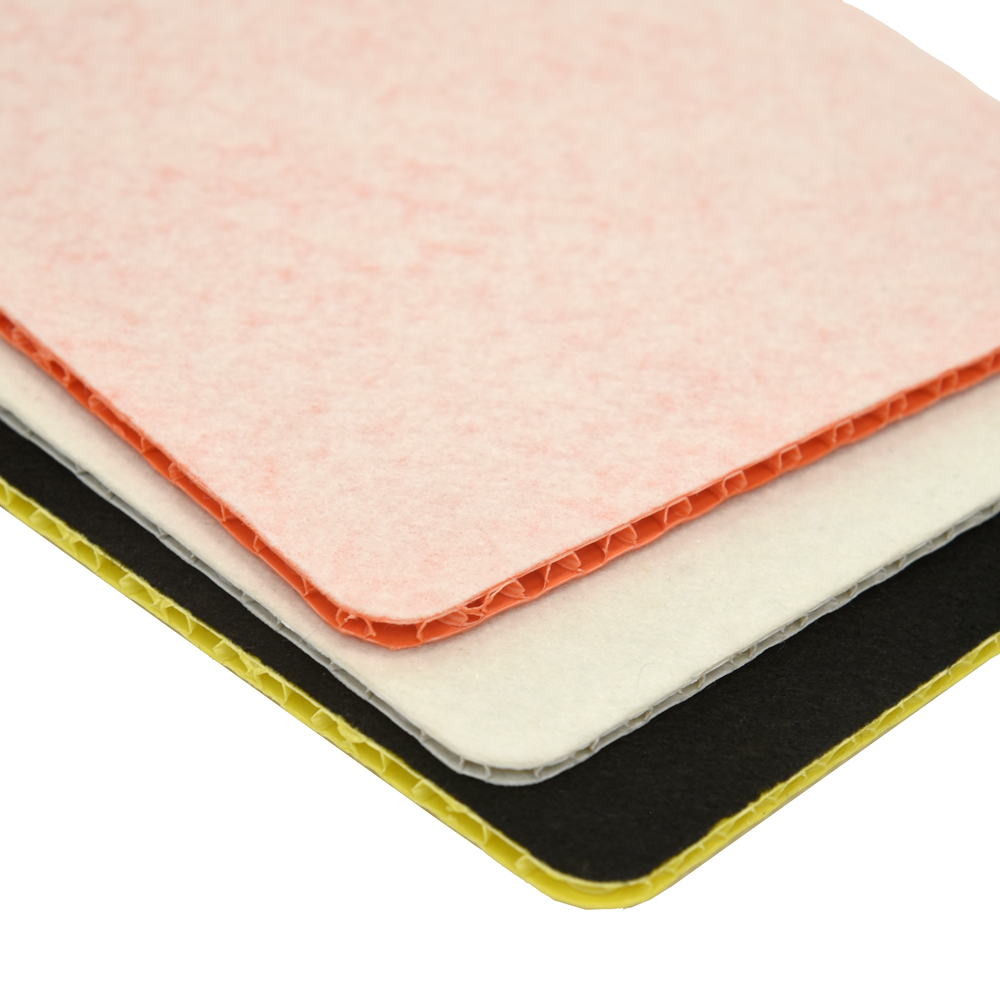
Black ESD sheet is common because carbon black is an effective and cheap conductive additive. It is not automatically dissipative — a black box with a decorative pigment is just a black box. And pink or blue antistatic sheet is usually topical.
Colour tells you nothing. Ask for the number and the test method.
If you send us your ESD programme requirements and the audit method you use, we can recommend a material and tell you what it will measure in your conditions rather than in the lab.