
Engineered wood and laminate are the finishes most often damaged by protection that was specified for a hard floor. Both have a thin wear layer over a core, both are floated rather than bonded in most installations, and both fail at the joints rather than on the board surface.
How thin the wear layer actually is
A laminate wear layer is a fraction of a millimetre of melamine over a printed layer. An engineered board has a real timber veneer, typically somewhere between 2 mm and 6 mm, which sounds generous until you consider that a deep scratch only has to reach the layer below to be unrepairable. Both surfaces are hard enough to resist a scuff and thin enough to be ruined by an abrasive dragged across them – which is the normal site condition.
Joints are where water wins
The click or tongue-and-groove joint between boards is the entry point for water, and once water is in a wood-based core it swells, and swelling does not reverse. A spill on the surface that is wiped up does nothing; the same spill sitting in a joint for a day lifts the board edges permanently. Any protection over a floated floor has to be impermeable and has to keep water off the joints, not just off the boards.
Why a fibrous face is the right contact
A needled felt face holds grit away from the wear layer and grips the floor so the cover does not slide and open gaps at the joints. It is the right choice against both surfaces. What it is not is waterproof – so on a floated floor the specification is a felt face for contact plus an impermeable layer above it if there is any chance of water. One without the other leaves the joints exposed.
Floating floors move
A floated floor expands and contracts with the seasons and it is laid with a perimeter gap. A heavy cover fixed at the edges can restrain that movement and produce ridging, particularly in the first heating season after installation. Keep the cover friction-held rather than fixed, and leave the perimeter gap alone rather than covering into it.
What to ask the flooring contractor
Whether the floor is floated or bonded, what the wear layer thickness is, and whether there is a manufacturer’s position on site protection – some warranties are voided by particular adhesive products. Three questions, and the answers change the specification. Asking after the floor is damaged is too late and asking before costs nothing.
Underfloor heating over a floated floor
A floated wood or laminate floor over underfloor heating moves more than one without it, and it dries out and shrinks in the first heating season. A cover that restrains the perimeter, or that traps heat against the surface, makes both worse. Keep the perimeter gap clear, keep the cover friction-held, and check the joints for opening at the end of the heating season rather than at handover.
Spare boards and what they are for
Keep a few boards from the original delivery. Engineered and laminate floors are batch-matched and a replacement from a later batch can differ in colour and in click profile. A damaged board replaced from stock is a twenty-minute job; the same damage without spares is a partial re-lay. It costs nothing to ask for at installation.
What happens when the wear layer is breached, and what the repair actually costs, is set out in repairing a scratched timber floor after handover.
What we can do
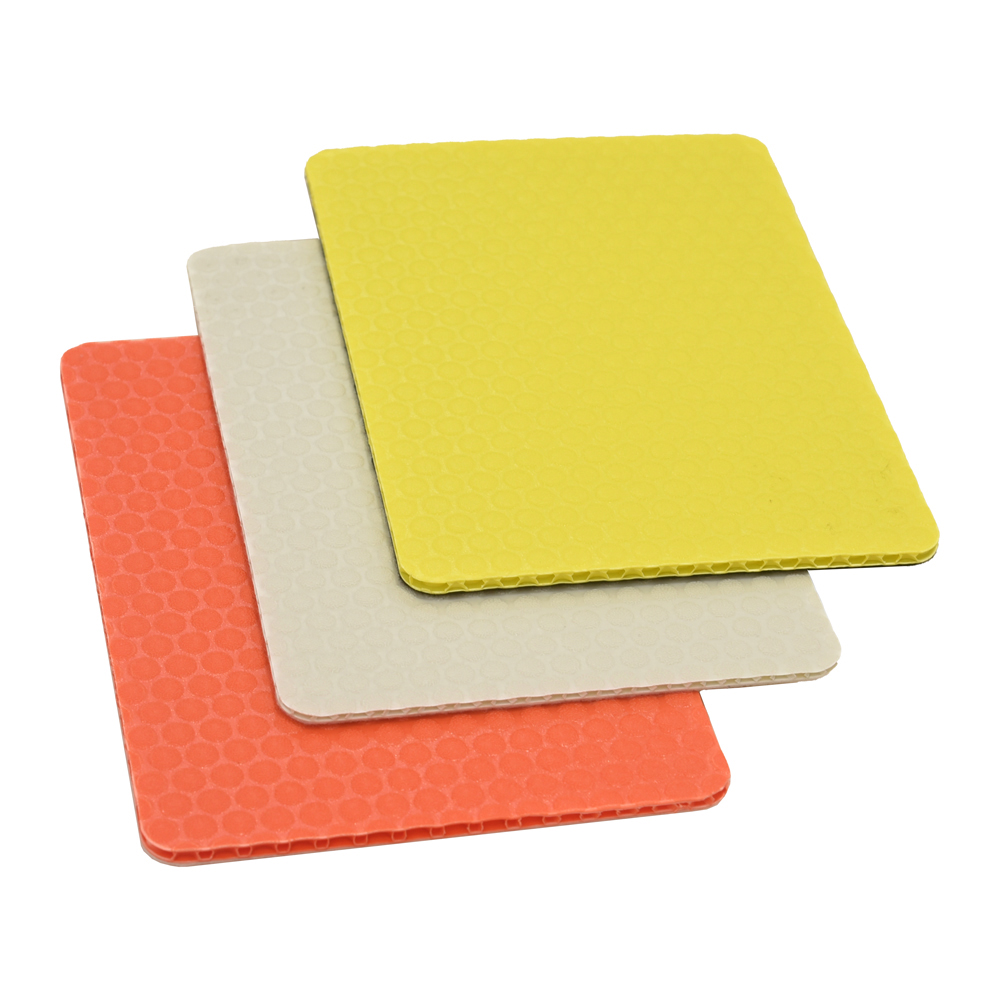
We supply felt-faced honeycomb panels for wood and laminate, and can add an impermeable face where water is a risk. Tell us how the floor is laid, what the wear layer is and whether there is any wet work, and we will specify accordingly – including when a cheap disposable sheet is all that is needed.