
A basement or cellar floor has one dominant characteristic: it is damp, and it is damp from below as well as from above. That reverses several of the usual protection assumptions, and it is why covers that work perfectly upstairs cause problems down there.
Damp comes up as well as down
A below-ground floor without a working damp-proof membrane is taking moisture from the ground continuously. Cover it with anything impermeable and that moisture accumulates at the interface, and on a timber or vinyl floor over a basement slab that produces lifting, mould and a smell within weeks. Breathability is more important here than anywhere else in a building.
Ventilation is usually poor
Basements have little airflow, which means anything that gets wet stays wet. A cover that would dry in an hour upstairs stays damp for days below ground. Where a cover has to go down, it needs an air gap underneath and some forced ventilation in the space, or it needs lifting and drying periodically.
Basements get used as storage
Whatever the plan says, the basement becomes the material store. That means heavy stacks, dragged materials and standing loads for months – all on a floor that is damp and soft. Load-spreading panels under the stacks, and a rule that stacks go down flat rather than on a corner, prevent most of the damage.
What to do before covering anything
Find out whether there is a membrane and whether it works. A simple relative humidity test or a few days with a hygrometer tells you more than any amount of specification. Covering a floor that is actively taking ground moisture is a mistake regardless of what the cover is.
Where no cover is the right answer
A bare concrete basement slab that is being used for storage needs nothing. A basement that is going to be tanked and finished later needs nothing now. Protecting a basement floor properly is only worthwhile where there is a finished surface worth keeping, and that is a smaller proportion of basements than people assume.
Sumps, gullies and where the water goes
A basement with a sump or gully relies on it, and a cover over it blocks the only drainage there is. Cut around gullies and keep them clear, and check them after heavy rain. A blocked gully in a basement produces standing water that gets under everything and is far harder to deal with than a damaged floor.
Lighting, and what gets missed
Basements are usually poorly lit during works, which means damage goes unnoticed until handover and covers get kicked out of position without anyone seeing. Temporary lighting in a working basement is a protection measure as much as a safety one – it is the reason damage gets noticed while it can still be dealt with cheaply.
Access and the stair down
The stair into a basement is usually narrow, steep and the route for everything going in and out. It takes more traffic per square metre than any other stair in the building and it is almost never protected. If anything is worth covering in a basement job, it is that flight – even where the floor at the bottom needs nothing.
What we can do
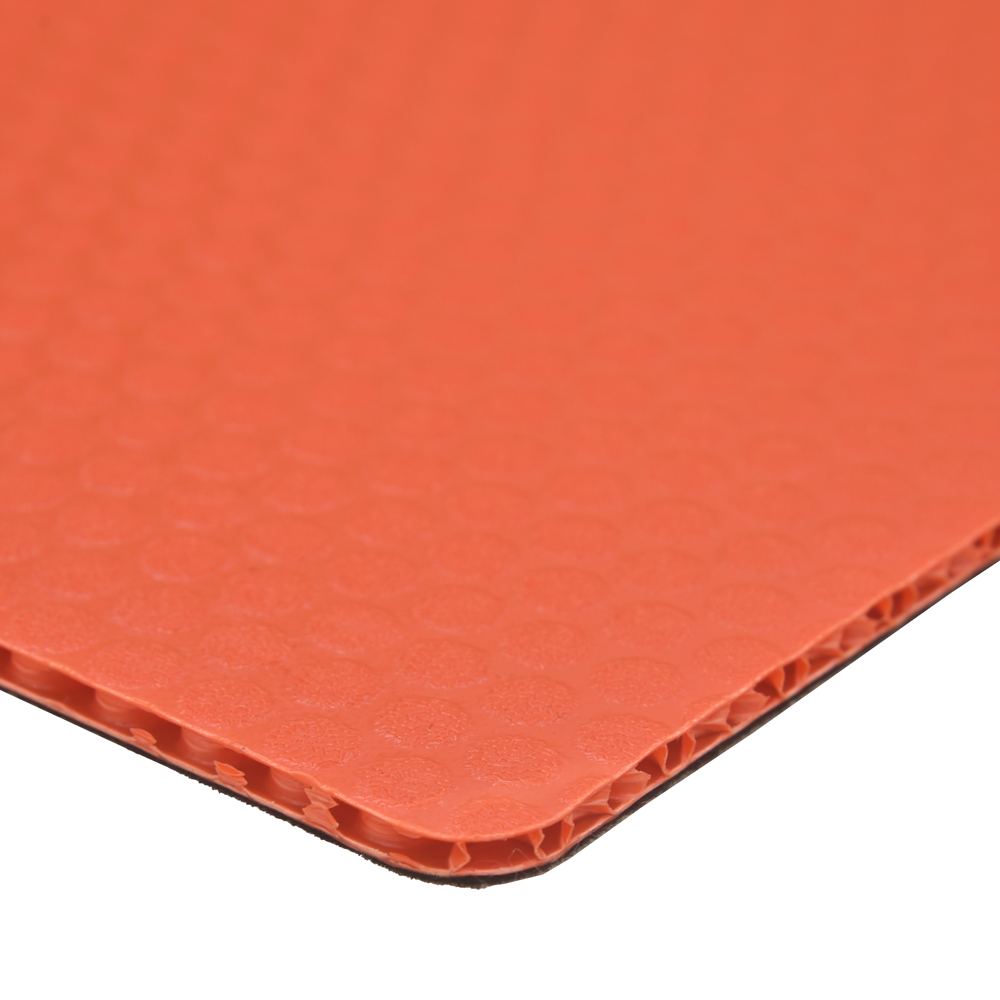
We supply honeycomb panels with an embossed face for airflow underneath and cut items for load spreading under stacks. Tell us what the floor is, whether there is a membrane and what the space is being used for, and we will say honestly whether covering it is worth doing. Moisture behaviour is set out in moisture trapping under floor protection.