
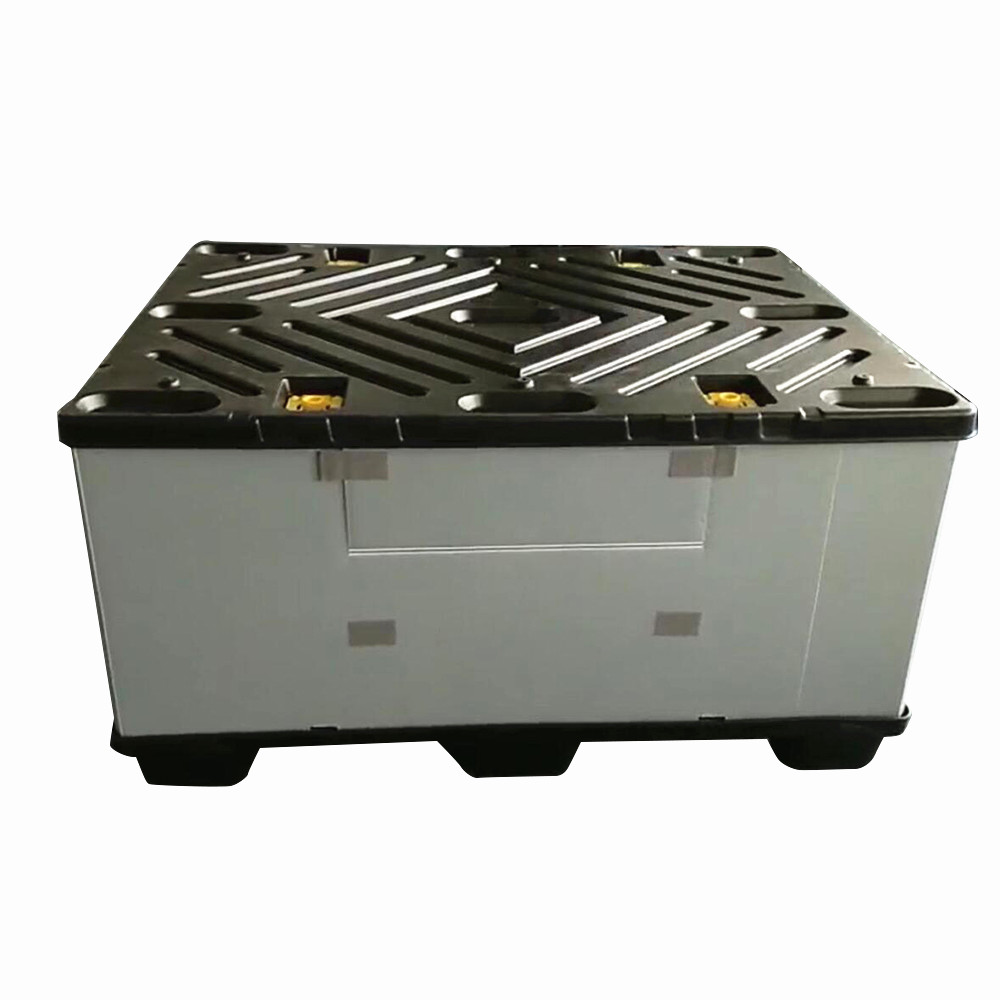
A peak season fails on containers in two ways: there are not enough of them, and the ones available are in worse condition than the rest of the year. Both are predictable, and both are addressed in the quiet months rather than during the peak – because by the time the shortage appears, the lead time to fix it is longer than the peak lasts.
How many more are actually needed
The peak requirement is the peak flow rate multiplied by the cycle time, and the cycle time usually lengthens during a peak because everything else is congested. That second effect is what makes the peak requirement larger than a simple proportional scaling suggests. Where a fleet was sized from average throughput, the peak shortfall is often substantial.
Condition matters as much as quantity
A fleet that has been running all year contains containers at every stage of wear, and the worn ones are the ones that fail during the peak – under heavier loads, faster handling and longer hours. Sorting the fleet before the peak, so that marginal containers are repaired or retired in advance, does more for peak reliability than buying extra containers.
When to do the work
Inspection and repair in the quiet months, when containers are not needed and there is space to work. Buying in the quiet months too, because a container order placed during a peak arrives after it. Where a fleet has a seasonal pattern, the calendar for fleet work should be built backwards from the peak rather than fitted around it.
What to buy, and what to hire
A peak that lasts weeks may not justify buying containers that will be surplus for the rest of the year. Short-term hire or a rental pool exists for exactly this, and the comparison is the purchase cost against the hire cost plus the storage cost of containers that are idle for most of the year. Where the peak is short and sharp, hire usually wins.
Where the extra containers go
A fleet sized for the peak is larger than the site normally holds, and the surplus needs somewhere to be for the rest of the year. That storage is a real cost and it is usually omitted from the comparison between buying and hiring. Where space is tight, the storage cost can decide the question on its own.
What happens at the end of the peak
Containers come back, and they come back in worse condition and in a rush. The inspection capacity to process them is usually not planned for, so damaged containers go straight into storage and are discovered the following year. A post-peak inspection round is worth scheduling before the peak rather than after.
The return surge
Empties return faster than they were dispatched, because everyone returns at once. That surge needs space and a process, and it is the point at which loss typically spikes – containers stacked in a yard, unrecorded, for weeks. Where a fleet has a seasonal pattern, the return surge is a distinct event worth planning for. The general empty-flow problem is described in the empty return path.
What to review afterwards
Peak shortfall against plan, retirement rate during the peak against the normal rate, and loss during the return surge. Three numbers, recorded at the time, which make next year’s plan accurate. Where a peak has run without those records, next year’s plan is the same guess with a slightly larger number.