
Why Wall Protection Pays Off
Walls may seem sturdy, but a knocked ladder or a dragged panel leaves marks that buyers and inspectors notice immediately. Prevention is far cheaper than correction.
What Sets Felt-Backed PP Honeycomb Apart
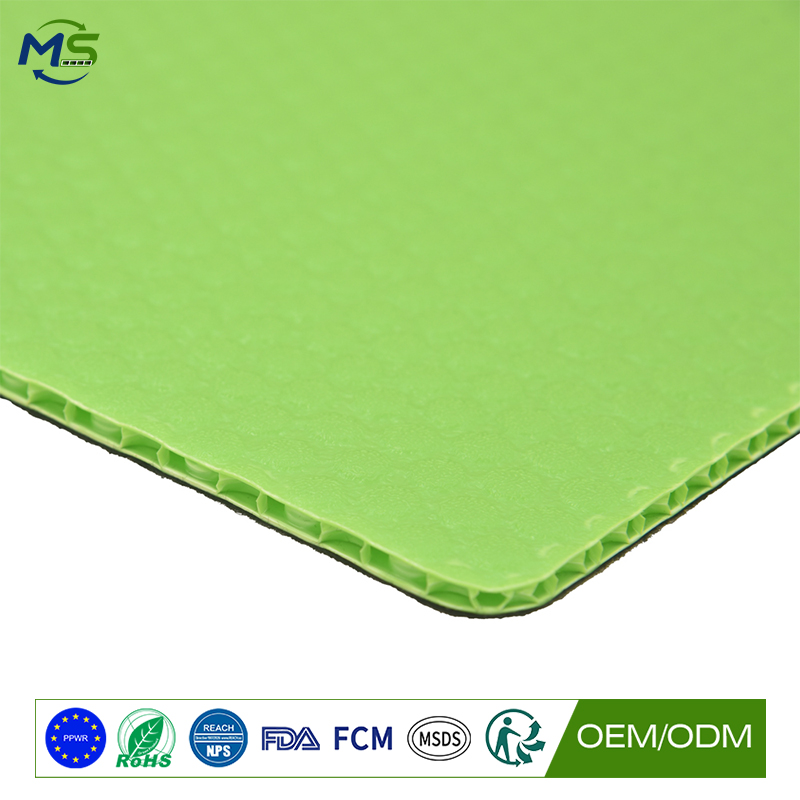
Walls take a beating from carts and ladders, but a felt-backed honeycomb panel stands between the trade and the finish. Light to move, it absorbs the knock instead of the plaster.
- Load Bearing — The honeycomb core supports carts, scaffolding, and staged materials, so protection does not mean closing off the workspace.
- Reusable for Dozens of Cycles — The PP honeycomb core springs back after impact and stays flat, so one board protects job after job instead of being discarded after a single use.
- Lower Total Cost — Reuse beats repaint. A small fleet of boards replaces repeated purchases of disposable film and the labour of fixing avoidable damage.
- Shields Finish & Substrate — It forms a shock layer between the floor, stair, or wall and the work happening above, protecting both the visible finish and the structure beneath.
- Fire-Retardant Variants — Sites with strict fire codes can specify retarded boards without giving up the reusable honeycomb advantage.
- Water, Paint & Dust Resistant — Spills bead on the surface and paint splatter wipes away, keeping the protected area clean through messy stages of the build.
Best Uses for Felt PP Honeycomb Wall Board
On real sites, the board proves its value wherever finished surfaces meet ongoing work:
- Interior painting and plastering
- Protection during demolition
- Moving large furniture and panels
- Hallway and corridor traffic
- Elevator lobbies and entrances
Choosing Thickness, Size and Backing
Match thickness to traffic. Light foot traffic is fine with 3-5 mm; cart and scaffolding zones need 8-10 mm. Choose felt backing where grip matters, and size sheets to cover the run with a small overlap. Standard boards suit most projects; bespoke sizes are available on request.
FAQ
Will it protect against cart impacts?
Yes. The rigid honeycomb core takes the hit that would otherwise dent plasterboard or scuff paint.
How is it fixed to the wall?
Most sites lean or hang the panel and secure the top edge, avoiding adhesive that could mark the finish.
Can it be reused between rooms?
Absolutely. Lift, move, and re-stand the same panel across multiple spaces on one project.
Protect More, Waste Less
Protect the surface and the budget at the same time. A small reusable fleet of PP honeycomb boards replaces rolls of disposable film and the cost of fixing avoidable damage.