
Paper filter media is cheap, efficient and the right choice in a great many applications. It is also the wrong choice wherever the filter gets wet, which is a larger set of places than people expect – and the failure is not gradual or obvious until it has already happened.
What water does to paper media
Cellulose loses a large part of its dry strength when saturated. A wet paper panel sags, and a sagging panel pulls away from its frame and bypasses. In the worst case it tears and the torn section passes air unfiltered, and nothing about that is visible from outside the plant.
Then there is what grows on it. Wet paper with captured dust is a good substrate for mould, and a filter that smells musty is distributing that smell through the building. Once that starts, the only remedy is replacement and a look at why it got wet.
Where filters get wet without anyone planning it
Evaporative coolers, by design. Fresh air intakes in driving rain. Coastal plant with salt-laden humid air. Any system where the coil produces carry-over. Kitchens and wash-down areas. And anywhere a filter sits downstream of a cooling coil that occasionally floods.
In most of these the wetting is intermittent, which is worse in a sense – the media dries out often enough that nobody connects the failures to moisture, and the damage accumulates quietly.
What polypropylene does instead
It does not absorb water, so it does not soften, sag or lose strength when wet. It does not provide a food source for mould, which removes the odour problem at its root rather than treating it. And it does not corrode, which matters in coastal and chemically aggressive air.
None of this makes it a better fine filter – paper and glass media reach efficiencies polypropylene coarse screens do not. The argument is about where the filter works, not how efficient it is.
Where paper is still the right choice
In dry indoor air, paper media is cheap, efficient, and available in efficiencies that polypropylene coarse screens do not reach. For the fine stage of an office air handler it remains the sensible default, and there is no argument for changing it.
The argument is only about position. Where a filter gets wet – by design, by weather, or by accident – paper’s advantage disappears and its failure mode is not graceful. That is the entire decision.
Recognising moisture failure
A sagging panel, a musty smell that appears when the plant starts, and dust on surfaces downstream of a filter that looks lightly loaded are the three signs. The third is the diagnostic one: dust downstream means bypass, and on a paper panel the usual cause is that it has sagged away from its frame after getting wet.
Once you have seen it, the question is where the water came from – a leaking coil tray, an intake in driving rain, carry-over. Fixing the moisture is the real remedy; changing the media manages the symptom.
What we can do
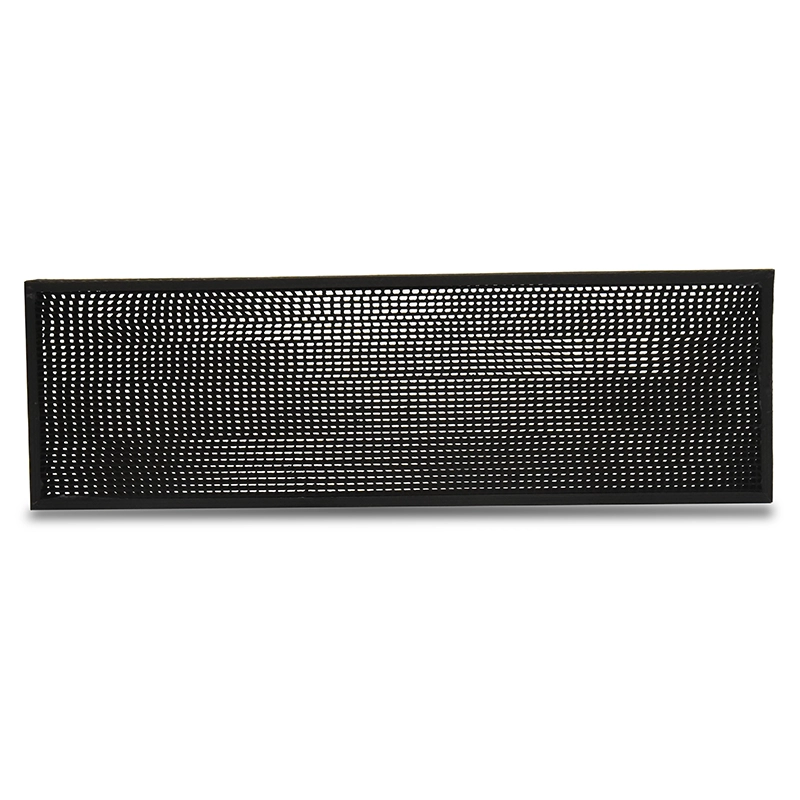
We supply durable reusable plastic honeycomb filter screens for service where paper media fails and metal mesh corrodes. Tell us where the filter sits and what it gets exposed to, and we will tell you whether polypropylene is the right call – or whether paper media would serve you just as well.