
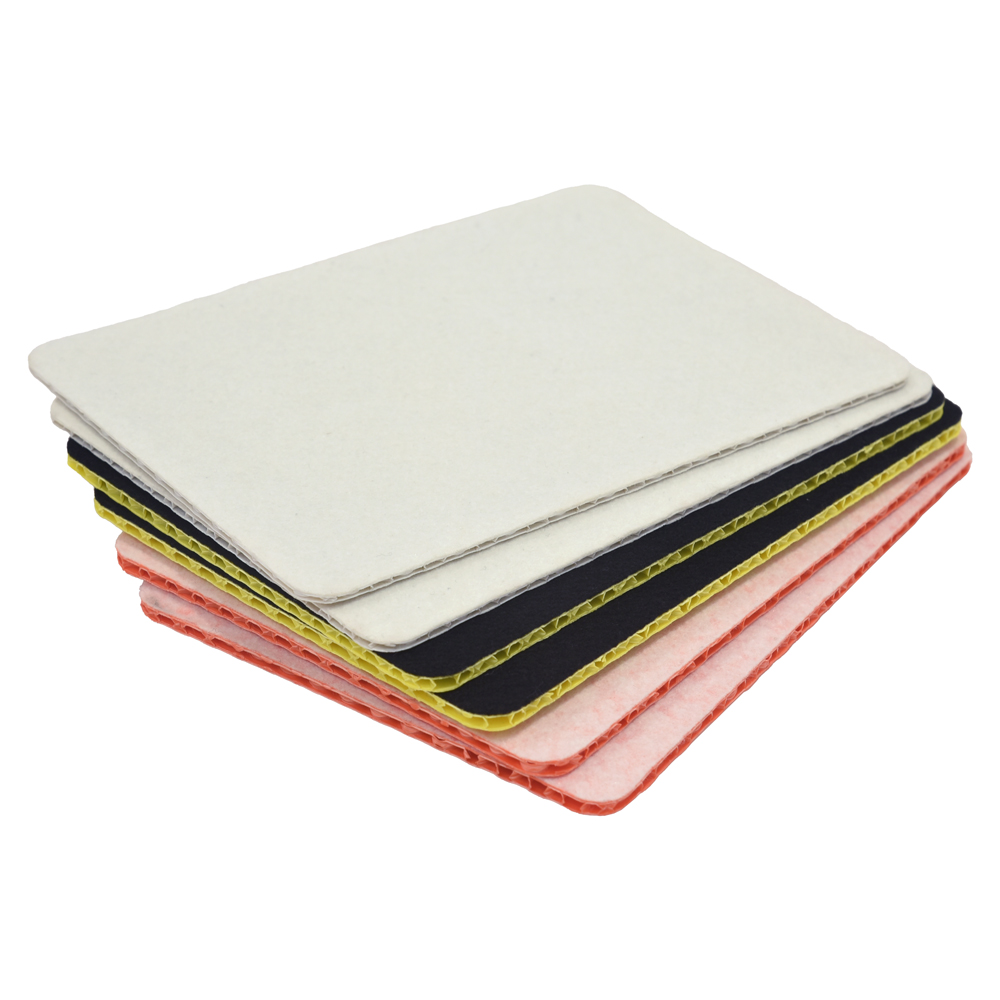
Hydro-cooling is brutal on packaging. The crate is submerged or deluged in near-freezing water, often chlorinated, then stacked wet, then moved into a cold store, then sent out on a truck, then washed again. Cardboard does not survive it. That is why plastic dominates in field packing and packhouse operations — but not all plastic performs equally, and the failures are predictable enough to design around.
What the water does
Polypropylene does not absorb water, so the material itself is unaffected by immersion. Everything about a wet environment is a question of what happens at the joints, the surfaces and the trapped spaces.
- Trapped water. Any closed section — a hollow handle, a box section rim, a double wall — will hold water and add weight. It also becomes a hygiene problem if it stagnates. Drainage paths should be part of the design, not an afterthought.
- Mineral and biofilm build-up. Over repeated cycles, hard water deposits and biofilm make surfaces slippery and dull. Smooth, radiused internal surfaces with no sharp internal corners clean better and dry faster.
- Chemical exposure. Chlorine at packhouse dosing levels is not aggressive to polypropylene. Concentrated sanitiser left to dwell, or a mis-dosed batch, is a different matter. If the process uses quaternary ammonium or peracetic acid at elevated temperature, check compatibility rather than assuming.
Temperature cycling and the differential expansion problem
A crate that goes from ambient to 1°C water and back, several times a day, is being thermally cycled harder than most packaging ever is. The material expands and contracts, and any joint between two different materials — a label, an insert, a moulded-in metal thread, a welded-on component — sees shear stress at every cycle.
This is where moulded-in labels beat applied ones, and where a single-material design beats a composite one. If something has to be attached, attach it in a way that allows a little movement, or specify an adhesive rated for both wet service and the temperature range.
Mechanical handling: where crates actually get broken
In most packhouses, crates are not broken by the water. They are broken by the equipment.
- Conveyor transfers. A gap between two belt sections that is a millimetre too wide catches a crate lip and tears it. Transfers deserve more attention than they get in equipment specifications.
- Stackers and de-stackers. These apply concentrated loads to rims and corners. A crate designed for manual handling may not have the rim section for automated de-stacking.
- Forklift damage. Predictable and universal. Generous radii on corners and a rim that sheds a glancing blow reduce it.
Worth noting: crates that are designed for a specific stacker behave beautifully in that machine and poorly in everything else. If your equipment changes, revisit the crate design rather than blaming the crate.
Washing parameters worth specifying
If you are writing a specification for a wash line, or buying crates to go through an existing one, four numbers matter:
- Maximum water temperature
- Detergent or sanitiser type and concentration
- Dwell time at temperature
- Whether there is a heated drying stage, and to what temperature
Polypropylene’s useful service temperature runs comfortably above what a produce wash line needs, but sustained exposure near the top of that range under mechanical load will cause creep. If the line has a hot rinse or a hot-air drying tunnel, give the supplier the actual temperature — it changes material and wall-section recommendations.
Making the reusable case work here
Wet processing is one of the strongest cases for reusable plastic there is, because the single-use alternative fails so visibly. A carton that has been through a hydro-cooler is a liability; a properly specified PP produce box is not affected at all.
The condition is volume and return. Crates have to come back from the retailer or the processor, and in produce that usually means a pooled arrangement or a captive lane. Where that exists, the arithmetic is usually not close. Where it doesn’t, the crates end up in a skip at the receiving end and the whole exercise costs more than cartons.