
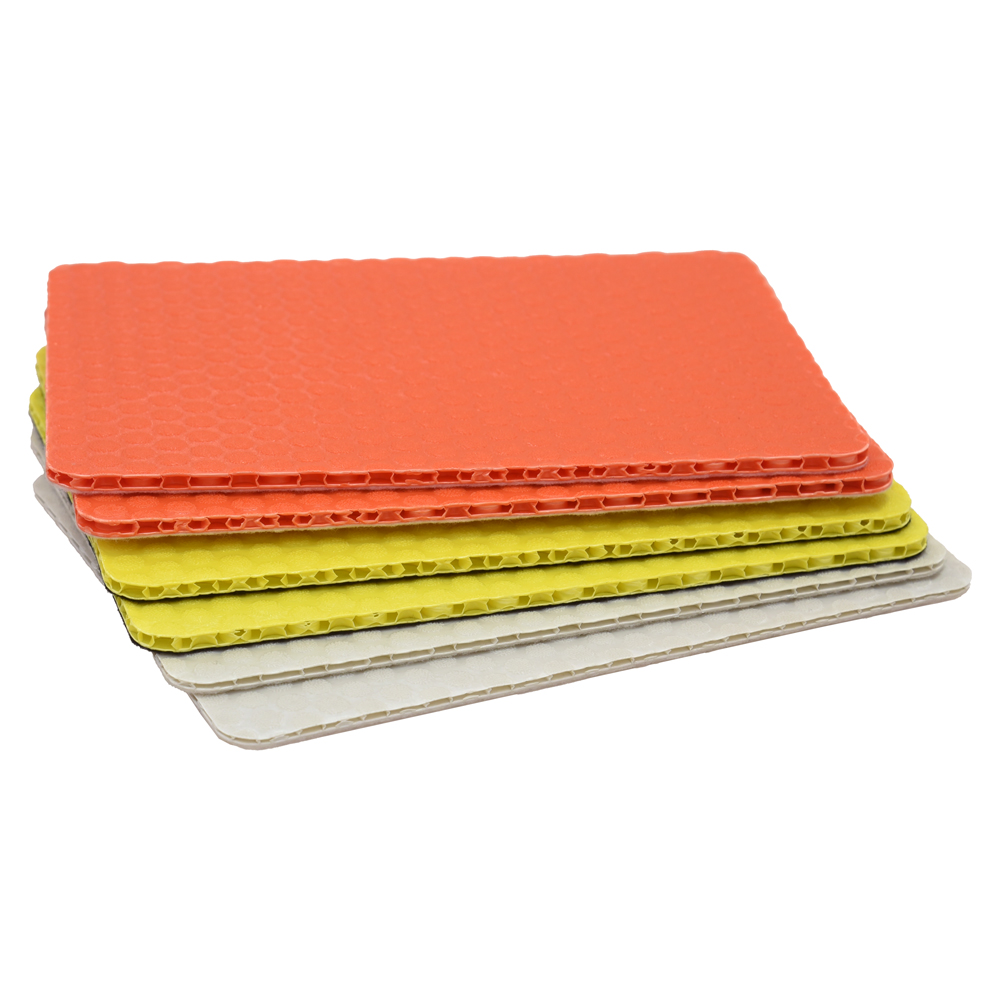
Honeycomb polypropylene panels turn up in maintenance areas, parts wash cells and fabrication shops because they are light, rigid and do not rust. Then somebody wipes a flange down with a solvent that has never been near the panel before, and three months later there is a crack running across a face that was never overloaded.
What polypropylene tolerates well
Dilute acids and alkalis, most water-based detergents, alcohols, and a good range of aqueous degreasers are fine at room temperature. PP has no real hydrolysis problem, which is why it survives washdown regimes that destroy other materials. This is well covered in what we wrote about honeycomb in washdown areas.
Room temperature matters in that sentence. Resistance tables are almost always quoted at ambient, and every step up in temperature roughly accelerates everything, including the attacks that look harmless at twenty degrees.
Where it goes wrong
Chlorinated solvents and aromatic hydrocarbons – the fast degreasers, the ones in the aerosol can that everybody likes because they work instantly – are the problem group. PP swells and softens in contact with them. Worse, in the presence of stress they can trigger environmental stress cracking, which produces brittle cracks at loads far below the panel’s rated capacity.
Stress is the missing ingredient most people overlook. A panel that merely sits next to solvent vapour usually survives. The same panel carrying a point load, or fixed with fasteners that preload the face, cracks at a fraction of its normal service life.
Strong oxidisers
Concentrated nitric and chromic acid mixtures, and some peroxide-based systems, oxidise polypropylene and it embrittles. This shows up first as loss of flexibility at the cell walls, then as edge crumbling. UV exposure accelerates the same degradation, so a panel that sits in sunlight and gets solvent splash has two problems compounding.
Testing rather than guessing
Do not rely on a compatibility chart alone for a specific proprietary degreaser. Take a coupon of the actual panel, apply the solvent the way it is actually used – wipe, splash, or continuous contact – and keep it under whatever load the panel sees. Look at it weekly for a month.
Wipe contact and immersion contact are different problems, and in many cells the solvent never gets near the panel except via a rag that then sits on the surface. Test the real mechanism.
Design around it instead
Where a cell genuinely needs aggressive solvent cleaning, we would rather you did not use polymer there at all – a stainless or aluminium work surface in the splash zone and polymer panels outside it usually outperforms trying to find a plastic that tolerates everything. That is not a sales answer but it is the honest one.
If the panel must stay, specify sealed edges so solvent cannot wick into the cell structure, avoid stressed fixings in the splash zone, and set a replacement interval rather than waiting for visible damage.
Ventilation is a legitimate control
Most failures we see involve vapour accumulating in an unventilated enclosure. Getting air moving often solves the problem for less money than changing materials, and it is the first thing worth trying.
How long before damage shows up
Environmental stress cracking is slow and then sudden. A panel exposed to the wrong solvent under load typically looks completely normal for weeks or months, then develops a crack that appears to come from nowhere and then propagates quickly. This is why compatibility decisions cannot be made by looking at panels after a fortnight.
It also means the inspection interval should be shorter than you would think necessary, focused on the loaded and fastened areas. Finding the first short crack costs nothing; finding it after it has run across the face means replacing the panel and whatever was standing on it.
What we can do
We supply PP honeycomb panels with sealed edges and can send coupons from the actual production grade for your own compatibility testing. Tell us what is being used in the cell – including the aerosol can nobody writes down – and we will say whether PP is reasonable there or whether you should be looking at metal.